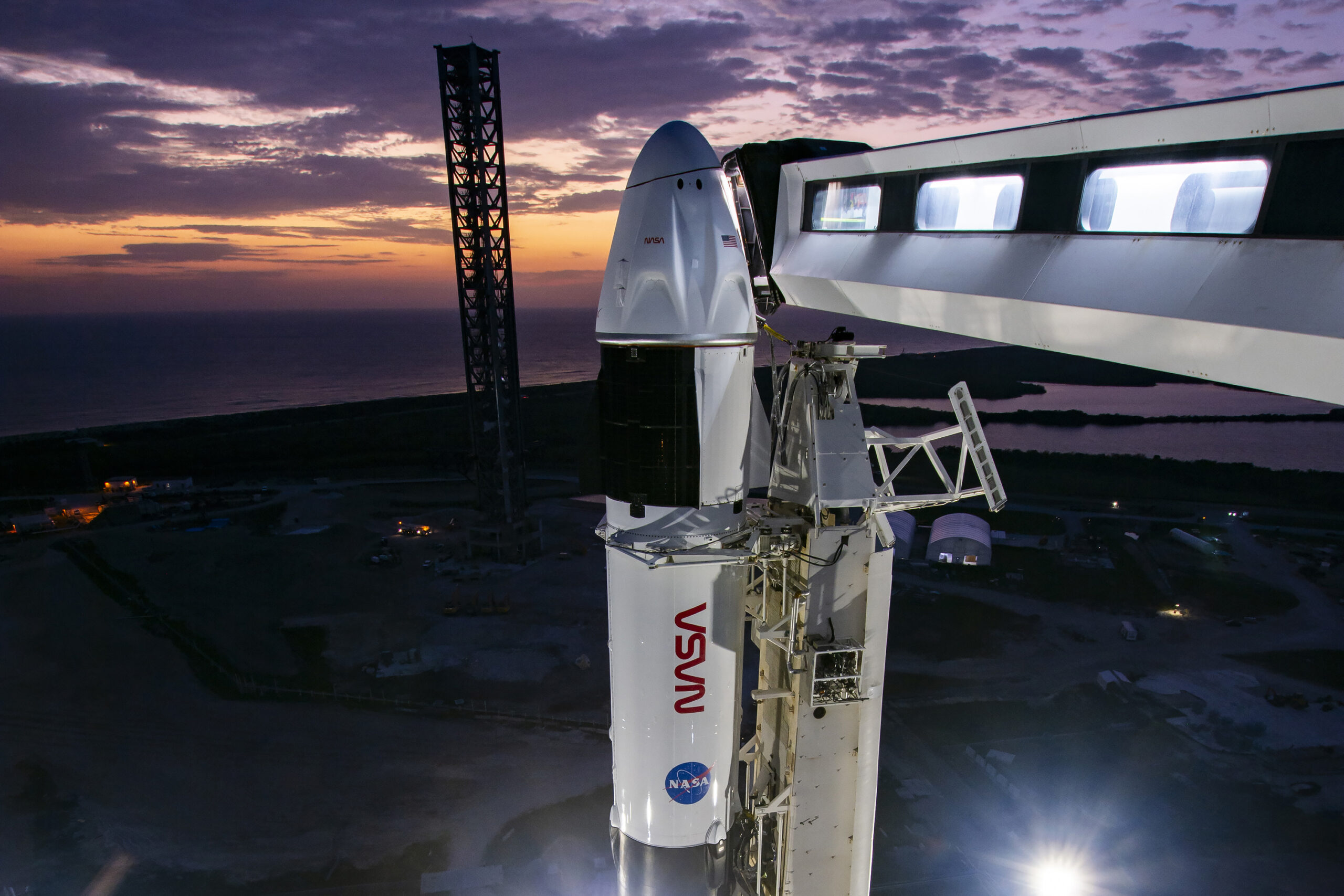
In a remarkable demonstration of human ingenuity and international collaboration, a SpaceX Falcon 9 rocket, crowned with the company’s Dragon spacecraft, stands poised for launch at sunrise. This breathtaking scene unfolds at NASA’s Kennedy Space Center in Florida, marking the prelude to the anticipated SpaceX Crew-10 mission slated for Tuesday, March 11, 2025.
A Diverse Crew Embarks on a Critical Mission
The Crew-10 mission comprises a diverse team of astronauts, bringing together expertise and experience from multiple space agencies. NASA astronauts Anne McClain and Nichole Ayers lead the charge, alongside Takuya Onishi from JAXA, the Japan Aerospace Exploration Agency, and Kirill Peskov representing Roscosmos, the Russian space agency. This international team is set to launch from the renowned Launch Complex 39A at Kennedy Space Center, a site steeped in space exploration history.
Upon reaching the International Space Station (ISS), the Crew-10 team will engage in a series of scientific endeavors aimed at advancing our understanding of space and its effects on human physiology. Their research is pivotal for preparing future manned missions beyond low Earth orbit, pushing the boundaries of human exploration in space.
Groundbreaking Research and Experiments
The mission’s scientific agenda is both ambitious and critical. One of the focal points of the mission involves conducting material flammability tests. These experiments are essential for ensuring the safety and effectiveness of future spacecraft designs, particularly those intended for long-duration missions to destinations such as Mars or lunar bases.
In addition to these safety-focused tests, the crew will utilize ham radio equipment to interact with students on Earth. This outreach effort serves to inspire the next generation of scientists and engineers, fostering a global interest in space exploration and STEM (Science, Technology, Engineering, and Mathematics) fields.
Moreover, the crew will test a backup lunar navigation system using existing ISS hardware. This innovative approach could provide a reliable navigation method for future lunar missions, adding a crucial layer of redundancy and safety for astronauts venturing to the moon.
Finally, the team will participate in an integrated study to explore the physiological and psychological impacts of space travel on the human body. Understanding these changes is vital for ensuring the health and well-being of astronauts on extended missions, such as those proposed for Mars exploration.
A New Era of Space Exploration
The SpaceX Crew-10 mission epitomizes the fusion of cutting-edge technology and international cooperation. As humanity stands on the cusp of a new era in space exploration, missions like Crew-10 are instrumental in laying the groundwork for future endeavors that will take us deeper into the cosmos.
For those keen to witness this monumental event, NASA has made it possible to watch the launch live. Coverage will commence at 3:45 p.m. EDT on March 12, 2025, with the launch scheduled for 7:48 p.m. EDT. This live stream allows viewers from around the world to join in the excitement and share in the spirit of exploration that drives these missions.
The Broader Impact of Space Research
While the primary goal of missions like Crew-10 is to advance our capabilities in space, the benefits of such research extend far beyond the confines of the ISS. The technologies and insights gained from space exploration often find applications here on Earth, improving our daily lives in myriad ways. From advancements in telecommunications to the development of new materials and medical technologies, the ripple effects of space research are profound and far-reaching.
As the Crew-10 mission prepares for launch, it serves as a reminder of what humanity can achieve when we work together towards a common goal. The spirit of exploration and discovery that fuels these missions not only propels us into the stars but also enriches our understanding of the universe and our place within it.
In conclusion, the SpaceX Crew-10 mission is more than just a journey to the ISS; it is a testament to human innovation, collaboration, and the relentless pursuit of knowledge. As we look to the future, missions like these remind us of the limitless possibilities that await as we continue to explore the final frontier.
For additional details and to stay updated on the latest developments, you may visit the NASA website.
For more Information, Refer to this article.