






























The Evolution of Mars Imaging: A Journey Through NASA’s Lens
The exploration of Mars has always been a topic of fascination and intrigue for scientists and enthusiasts alike. Sixty years ago, a pivotal moment in space exploration occurred when NASA’s Mariner 4 spacecraft provided humanity with its first ever glimpse of the Martian surface. This event marked the beginning of a new era in planetary exploration, one that has seen tremendous advancements in imaging technology and scientific understanding. The journey from Mariner 4 to the latest missions has been nothing short of extraordinary, and it has continually reshaped our perspective of the Red Planet.
The Historic Mariner 4 Mission
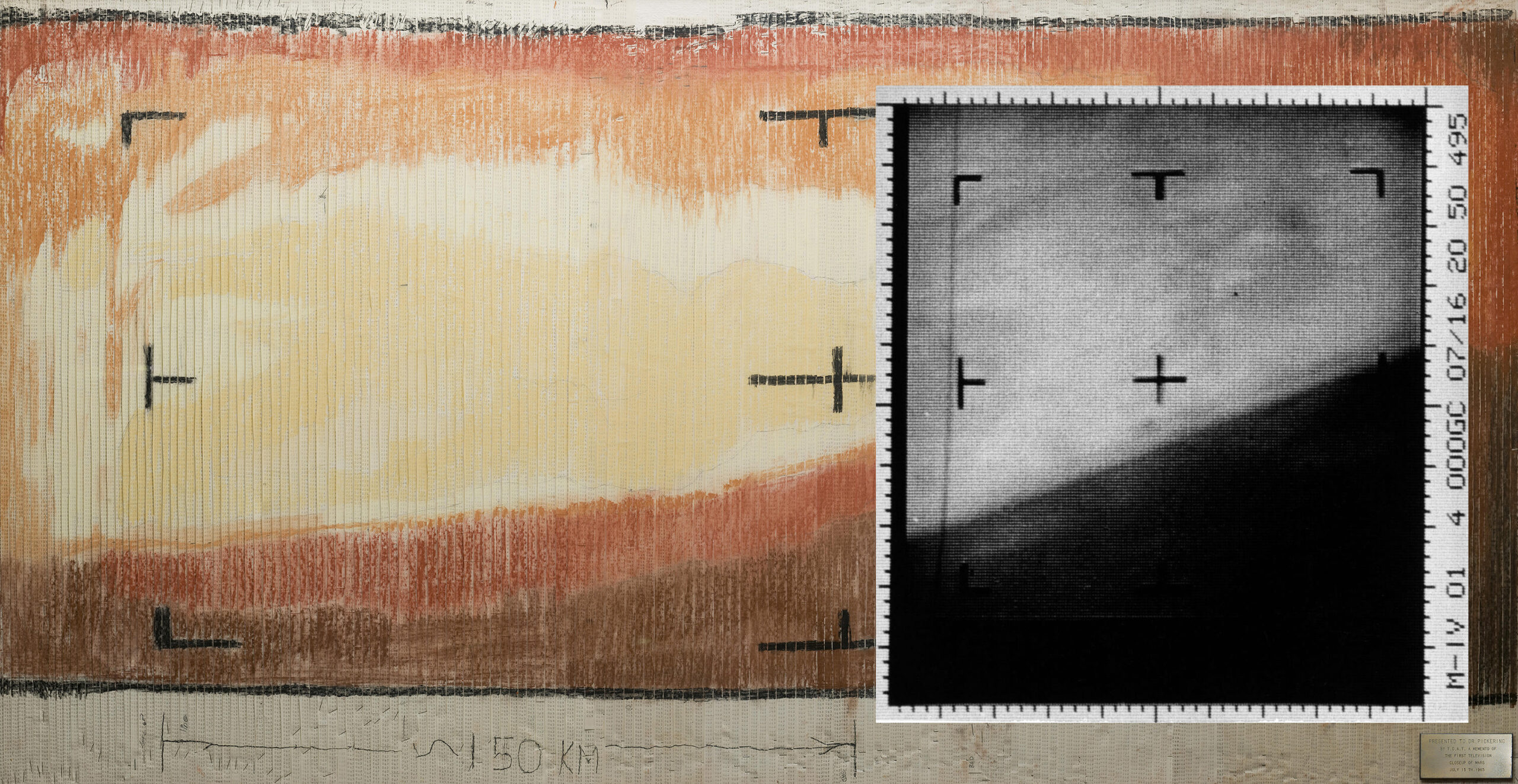
In the summer of 1965, NASA’s Mariner 4 mission made history by capturing the first images of another planet. As the spacecraft flew as close as 6,118 miles (9,846 kilometers) above Mars, it transmitted a series of 21 images back to Earth. These images, though grainy and black-and-white, offered an unprecedented view of Mars, revealing a cratered and desolate landscape that sparked the imagination of scientists and the general public alike.
The anticipation surrounding the images was immense. The mission team, eager to see the results, resorted to using a color-by-numbers technique to visualize the data before the actual images arrived. This innovative approach, while rudimentary, was surprisingly accurate and showcased the barren terrain of Mars. The images captured by Mariner 4 ignited a passion for space exploration and set the stage for future missions aimed at unraveling the mysteries of the Red Planet.
Viking 1: A Groundbreaking Landing
Fast forward to July 20, 1976, when Viking 1 became the first spacecraft to successfully land on Mars. This milestone marked a significant leap in our ability to study planetary surfaces. Upon landing, Viking 1 transmitted high-resolution images that portrayed a dry, rocky landscape, quelling any immediate hopes of finding life on Mars. However, these images were a testament to the importance of viewing Mars from the ground, offering a perspective that would prove invaluable for future missions.
The Viking landers, supported by orbiters equipped with advanced cameras, continued to capture images that expanded our understanding of Mars. One of the key achievements during this period was the creation of a composite image of Valles Marineris, often referred to as the "Grand Canyon of Mars." This image, created by stitching together multiple photographs, provided a breathtaking view of one of Mars’ most iconic geological features.
The Pathfinder and Sojourner Era
By the time NASA’s Pathfinder mission reached Mars in 1997, technology had advanced significantly. The Pathfinder lander, accompanied by the microwave-oven-sized Sojourner rover, marked a new chapter in Martian exploration. This mission coincided with the rise of the internet, allowing people worldwide to follow the mission’s progress in real-time. The panoramic images captured by Pathfinder offered a detailed view of the Martian terrain, rekindling public interest in space exploration.
The Pathfinder mission was part of NASA’s "faster, better, cheaper" initiative, emphasizing cost-effective and efficient exploration. The Sojourner rover, though small, demonstrated the potential of mobile exploration on Mars, paving the way for more sophisticated rovers in the future.
Spirit and Opportunity: Roving the Martian Surface
The arrival of the twin rovers, Spirit and Opportunity, in 2004 marked another significant advancement in Martian exploration. These golf-cart-sized rovers were equipped with an array of imaging tools, including panoramic and microscopic cameras. This technology allowed scientists to examine the Martian surface in unprecedented detail. The rovers captured stunning vistas and close-up images of features like "blueberries," small mineral formations that provided insights into Mars’ geological history.
Spirit and Opportunity transformed our understanding of Mars, revealing a world with diverse landscapes and complex geological processes. Their discoveries made Mars feel less like a distant, alien world and more like a place with familiar features and recognizable landmarks.
The Mars Reconnaissance Orbiter
Since the Viking era, a series of increasingly advanced orbiters have been deployed to Mars. These orbiters, equipped with sophisticated cameras and scientific instruments, have mapped the planet’s surface in extraordinary detail. The Mars Reconnaissance Orbiter, operational since 2006, has played a crucial role in this endeavor. Its High-Resolution Imaging Science Experiment (HiRISE) camera has captured images of dunes, boulders, and craters with remarkable clarity.
HiRISE has also identified potential landing sites for future missions and has provided invaluable data for scientists studying Mars’ climate and geology. The orbiter’s ability to capture detailed images from orbit has been instrumental in planning and executing subsequent missions.
Curiosity and Perseverance: Advanced Imaging Capabilities
In 2012 and 2021, NASA’s Curiosity and Perseverance rovers landed on Mars, equipped with state-of-the-art cameras capable of capturing high-resolution images with millions of pixels. These rovers have taken exploration to new heights, offering insights into Mars’ surface and atmosphere.
Curiosity’s cameras have provided detailed images of sand particles and rock textures, helping scientists piece together the planet’s geological history. Perseverance has taken imaging to another level, with high-speed cameras that captured its landing sequence, offering a new perspective on the challenges of landing on Mars. Additionally, Perseverance’s upgraded hazard-avoidance cameras enhance its ability to navigate the Martian terrain safely.
Ingenuity: A New Dimension of Exploration
The Perseverance mission also brought a groundbreaking addition to Mars exploration: the Ingenuity helicopter. This small, autonomous rotorcraft demonstrated the feasibility of powered flight in Mars’ thin atmosphere. Equipped with a commercial off-the-shelf color camera, Ingenuity has captured aerial views of the Martian landscape, providing a unique perspective that complements ground-based exploration.
Ingenuity’s success has opened new possibilities for future missions, where helicopters could scout ahead of rovers or even assist astronauts in exploring challenging terrains. The ability to capture images from above offers a broader understanding of the Martian environment and aids in identifying scientifically valuable sites for study.
Concluding Thoughts
The journey from Mariner 4 to the latest advancements in Mars imaging has been a remarkable evolution, driven by technological innovation and scientific curiosity. Each mission has built upon the successes of its predecessors, enhancing our understanding of Mars and our ability to explore it. As we continue to push the boundaries of exploration, the images captured by these missions will remain a testament to human ingenuity and our relentless pursuit of knowledge.
For those interested in delving deeper into the history and impact of these missions, additional information can be found on NASA’s official website here. This journey of discovery continues to inspire and captivate, revealing a dynamic and ever-changing Martian landscape that awaits further exploration.
For more Information, Refer to this article.







