

















NASA’s SpaceX Crew-11 Mission: Preparing for the Next Frontier in Space Exploration
In a significant stride towards advancing human space exploration, four crew members are gearing up for a mission to the International Space Station (ISS) as part of NASA’s SpaceX Crew-11 mission. This mission is pivotal, not only for the experiments and maintenance activities planned aboard the orbiting laboratory but also for its role in simulating lunar landing scenarios. These simulations are part of NASA’s Artemis campaign, which aims to prepare astronauts for potential challenges they might face while landing near the Moon’s South Pole.
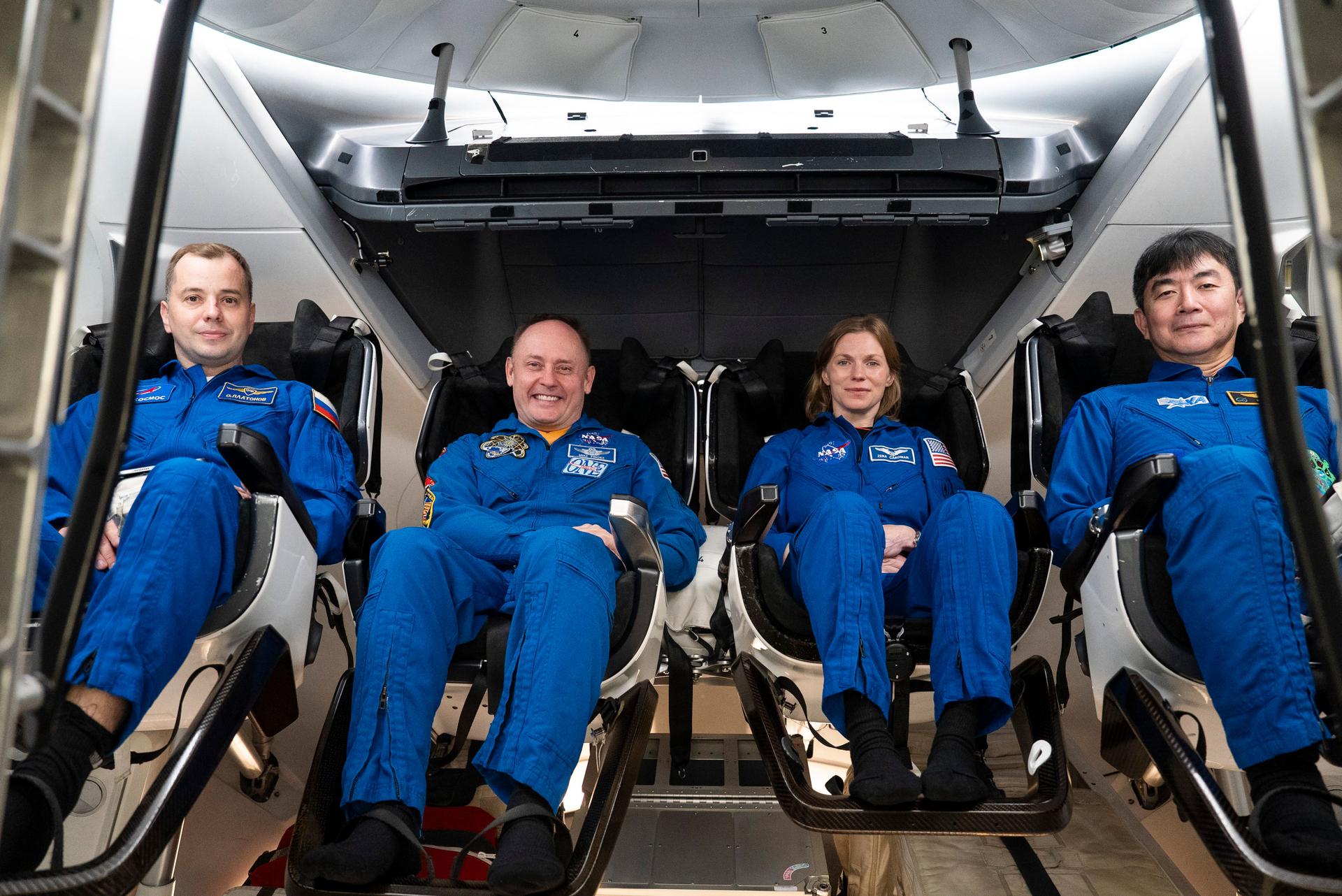
The Crew-11 mission team is composed of NASA astronauts Zena Cardman and Mike Fincke, JAXA (Japan Aerospace Exploration Agency) astronaut Kimiya Yui, and Roscosmos cosmonaut Oleg Platonov. They are scheduled to launch aboard the SpaceX Dragon spacecraft, named Endeavour, from the Kennedy Space Center in Florida. This particular spacecraft has a notable history, having previously supported several crucial missions, including NASA’s SpaceX Demo-2 and Crew-2 missions, among others.
The Importance of Crew-11 in NASA’s Commercial Crew Program
The Crew-11 mission signifies the 11th crew rotation to the ISS in collaboration with SpaceX under NASA’s Commercial Crew Program. In total, this marks the 16th crewed flight of the Dragon spacecraft to the station. The mission is not only a testament to the growing collaboration between NASA and private space organizations but also underscores the importance of leveraging commercial partnerships for sustained human presence in space.
As preparations for the Crew-11 mission progress, support teams are diligently working through the preflight milestones for the Dragon spacecraft. Simultaneously, a SpaceX Falcon 9 rocket booster is being readied for its third flight. Once all system checks are satisfactorily completed, the Dragon spacecraft will be integrated with the Falcon 9 rocket, which will then be transported to the launch pad for final rehearsals and tests.
Meet the Crew: Diverse Backgrounds and Expertise
NASA astronaut Zena Cardman, embarking on her first spaceflight, brings a wealth of knowledge in biology and marine sciences. With a background in geobiology and geochemical research, Cardman has contributed significantly to lunar surface exploration planning. Her expertise will be invaluable in conducting scientific research during the mission.
Veteran astronaut Mike Fincke is no stranger to space, having spent 382 days in orbit across three previous missions. His extensive experience, including nine spacewalks, makes him an asset to the Crew-11 team. Fincke has played a pivotal role in advancing NASA’s Commercial Crew Program, particularly in the development and testing of the Dragon and Boeing’s Starliner spacecraft.
JAXA astronaut Kimiya Yui, who has previously spent 142 days in space, will be making his second trip to the ISS. Known for his work with JAXA’s H-II Transfer Vehicle, Yui has a strong track record in conducting experiments and managing space station operations. His leadership experience as the chief of the JAXA Astronaut Group further enhances the crew’s capabilities.
Oleg Platonov, representing Roscosmos, will be making his inaugural journey into space. With a solid educational background in engineering and air traffic management, Platonov’s skills in various technical areas, including zero gravity training and wilderness survival, will be critical for the mission’s success.
Mission Objectives: Research, Simulations, and Beyond
Once the Falcon 9 rocket propels the Dragon spacecraft into orbit, the crew will conduct a series of maneuvers to dock with the ISS’s Harmony module. While the Dragon is designed to dock autonomously, the crew retains the capability to manually control the spacecraft if required. Upon successful docking, they will be greeted by the seven-member Expedition 73 crew, enabling a seamless transition and handover of responsibilities from Crew-10.
A key aspect of the Crew-11 mission is conducting research to pave the way for human exploration beyond low Earth orbit. The crew will participate in simulations of lunar landings, evaluate strategies to protect astronauts’ vision in space, and contribute to other vital human spaceflight studies. Among the experiments planned are investigations into plant cell division, the effects of microgravity on bacteriophages (viruses that kill bacteria), and the production of human stem cells and on-demand nutrients.
Preparing for Future Missions and Sustained Human Presence in Space
The Crew-11 mission is integral to preparing for future deep-space missions, such as those to the Moon and Mars. The data and insights gained from this mission will not only enhance understanding of space travel’s impact on human health but also contribute to the development of technologies essential for long-duration space missions.
While aboard the ISS, Crew-11 will also witness the arrival of a Soyuz spacecraft carrying new crew members, including NASA astronaut Chris Williams. Additionally, they will oversee the departure of the Soyuz carrying NASA astronaut Jonny Kim and the arrival of resupply missions from Dragon, Roscosmos, and Northrop Grumman’s Cygnus spacecraft.
Milestones and Legacy: Celebrating 25 Years of Human Presence on the ISS
Notably, the Crew-11 mission coincides with a significant milestone—the 25th anniversary of continuous human presence on the ISS. Over the years, the space station has facilitated over 4,000 groundbreaking experiments in microgravity, contributing to scientific advancements and the development of a low Earth orbit economy. The ISS continues to serve as a crucial platform for NASA’s future exploration endeavors.
For those interested in learning more about the ISS, its research, and the crew involved, further information can be found on NASA’s official website at NASA’s ISS Page.
As NASA’s SpaceX Crew-11 mission prepares to embark on this exciting journey, it represents a significant step forward in human space exploration, promising to uncover new knowledge and technologies that will shape the future of space travel.
For more Information, Refer to this article.