The Next Chapter in Martian Exploration: Navigating the Boxwork Region
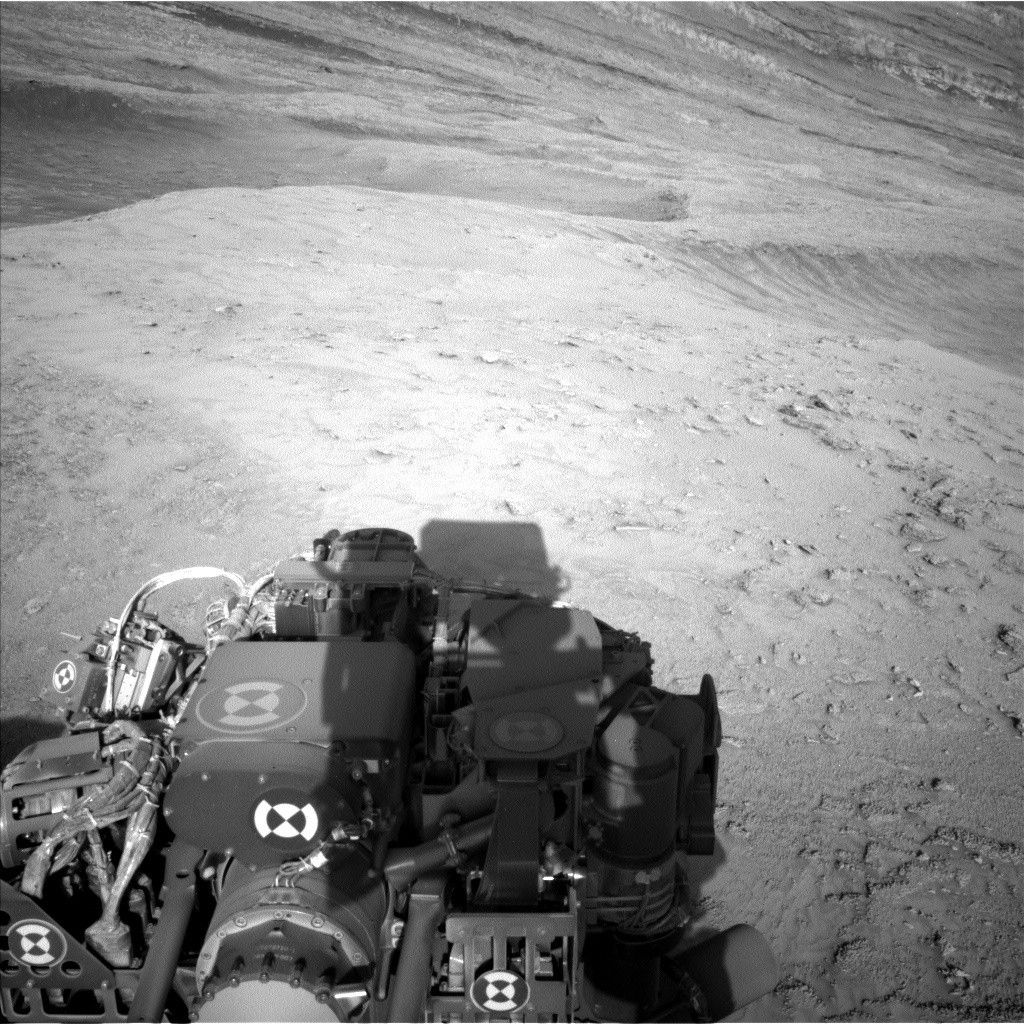
Set your calendars for Wednesday, July 16, 2025, as we delve into the latest milestone achieved by our Mars exploration team. After successfully negotiating an 11-meter ramp, equivalent to approximately 36 feet, our mission has reached the summit of a ridge, marking the beginning of an intriguing geological feature known as the boxwork region. This development signifies the transition into a new phase of our exploration efforts, where our primary focus will be on examining these unique structures and determining the best methods to traverse them safely while gathering as much data as possible about their composition.
Understanding Boxwork Ridges: A New Frontier
To support this mission, our team is meticulously observing the boxwork ridges using advanced instruments such as the ChemCam and Mastcam. These tools are essential for capturing mosaics of the distant ridges, providing us with a comprehensive overview of their characteristics. As we shift our focus closer, Mastcam is set to capture additional mosaics of specific areas, including “El Corral” and “Chapare,” which were identified in previous plans, as well as “Meson,” the ridge earmarked for further exploration during today’s 15-meter drive, equivalent to about 49 feet.
However, our efforts are not solely directed towards future targets. The immediate vicinity offers a wealth of information as well. Mastcam is poised to examine nearby linear features within our workspace, which is abundant with nodular bedrock. This bedrock is receiving thorough scrutiny, with ChemCam deploying its Laser-Induced Breakdown Spectroscopy (LIBS) laser on a target named “Altamora.” Simultaneously, our MAHLI and APXS instruments are set to analyze another target called “Nocarane.”
Complementary Environmental Monitoring
Amid the geological investigations, we are also allocating time to monitor the environmental conditions on Mars. Although often unmentioned, instruments like REMS, RAD, and DAN are consistently active, diligently gathering data to enhance our understanding of the Martian environment. Complementing our primary objectives, today’s plan also includes capturing a suprahorizon cloud movie and conducting a comprehensive 360-degree dust-devil survey.
Explaining the Instruments and Techniques
To provide a clearer understanding, let’s delve into the technical aspects of the instruments employed during this mission. The ChemCam (Chemistry and Camera complex) is a sophisticated tool designed for remote chemical analysis of rocks and soil. It utilizes a laser to vaporize a tiny portion of the target, enabling the spectrometer to analyze the resulting plasma and determine its chemical composition. This capability is crucial for identifying the elemental makeup of Martian materials.
Meanwhile, the Mastcam, or Mast Camera, serves as the mission’s primary imaging tool. It captures high-resolution images and mosaics, offering panoramic views of the Martian landscape. This visual data is invaluable for selecting areas of interest and guiding subsequent exploration activities.
Additionally, the MAHLI (Mars Hand Lens Imager) and APXS (Alpha Particle X-ray Spectrometer) instruments provide up-close analyses of rock textures and elemental compositions. These tools allow scientists to gain insights into the geological history and processes that have shaped the Martian surface.
Environmental Monitoring: A Continuous Effort
In parallel with geological investigations, our environmental monitoring instruments play a vital role in understanding Mars’ climate and atmospheric conditions. The REMS (Rover Environmental Monitoring Station) system measures temperature, humidity, wind speed, and atmospheric pressure, providing a comprehensive picture of the Martian weather.
The RAD (Radiation Assessment Detector) monitors radiation levels on the surface, crucial for assessing potential risks to future human missions. Lastly, the DAN (Dynamic Albedo of Neutrons) instrument assesses hydrogen presence in the soil, aiding in the search for water and understanding subsurface composition.
Implications and Future Prospects
This mission’s success in reaching the boxwork region opens new avenues for exploration and scientific inquiry. Understanding the composition and formation of these geological features provides insights into Mars’ past and its potential habitability. Moreover, the data collected will inform future missions, helping scientists refine exploration strategies and develop technologies for sustainable exploration.
Community and Scientific Reactions
The scientific community and space enthusiasts worldwide eagerly anticipate the findings from this mission. The boxwork region represents a geological puzzle that, once deciphered, could unveil critical information about Mars’ geological history and its potential for supporting life. Scientists from various disciplines are collaborating to interpret the data and share their insights with the broader public.
Conclusion
The journey into the boxwork region is a testament to human ingenuity and our relentless pursuit of knowledge. As we continue to explore the Martian surface, each discovery brings us closer to unraveling the mysteries of our neighboring planet. Stay tuned for more updates as we navigate this fascinating landscape, uncovering the secrets of Mars one ridge at a time.
For more detailed information about this mission and its progress, you can visit the official NASA Science blog here.
For more Information, Refer to this article.