
























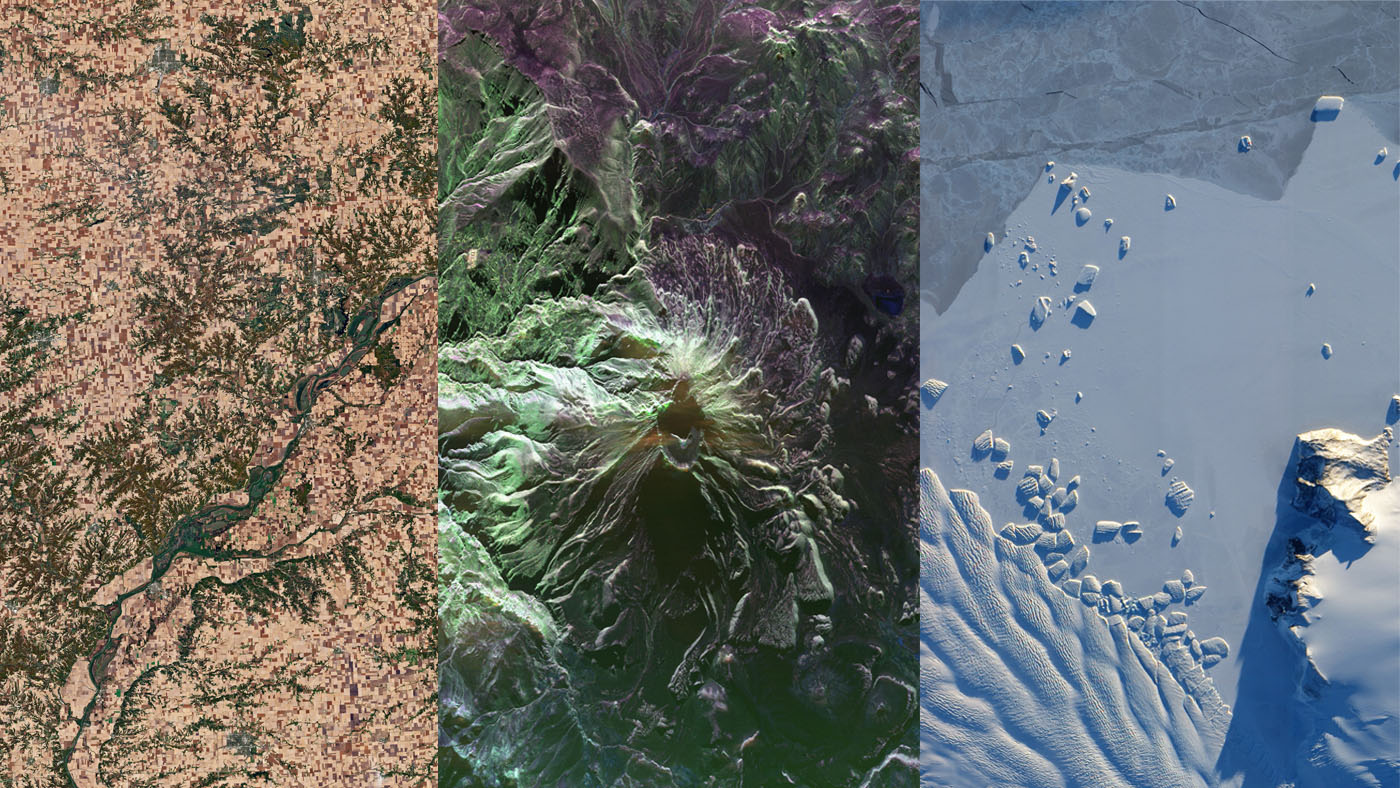
NISAR Satellite: A New Era in Earth Monitoring
A groundbreaking collaboration between the United States and India has resulted in the development of the NISAR satellite, a highly advanced tool set to revolutionize how we monitor changes on Earth’s surface. Officially known as the NASA-ISRO Synthetic Aperture Radar, or NISAR, this satellite promises to deliver high-resolution data that will allow scientists and decision-makers to observe the planet’s land and ice surfaces with unprecedented accuracy. This initiative marks a significant milestone in U.S.-India civil space cooperation, a development that was celebrated by then-President Donald Trump and Prime Minister Narendra Modi during their meeting in Washington.
A Milestone in U.S.-India Space Collaboration
NISAR represents the first joint satellite mission between NASA and the Indian Space Research Organisation (ISRO), symbolizing a new chapter in the partnership between these two space agencies. This mission builds on a history of successful collaborations, including the Chandrayaan-1 mission and the Axiom Mission 4, which facilitated unprecedented cooperation between ISRO and NASA astronauts on the International Space Station.
The data provided by NISAR will be pivotal for various sectors. It will assist in improving agricultural management, understanding natural hazards like landslides and earthquakes, and preparing for disasters such as hurricanes, floods, and volcanic eruptions. Furthermore, the satellite will offer insights into global changes affecting ice sheets, glaciers, permafrost, forests, and wetlands.
Scheduled Launch and Mission Goals
The NISAR mission is scheduled to launch no earlier than July 30 from the Satish Dhawan Space Centre, located on India’s southeastern coast. It will be deployed aboard an ISRO Geosynchronous Satellite Launch Vehicle. Here are some critical aspects of the mission:
The NISAR Satellite Offers a 3D Perspective
Equipped with two synthetic aperture radars (SARs), NISAR will detect minute changes on Earth’s surface, even down to fractions of an inch. The satellite transmits microwave signals towards Earth and captures the returning signals with a radar antenna reflector, which spans 39 feet (12 meters) across. This capability allows NISAR to "see" through clouds and light rain at any time of day, enabling continuous monitoring of regions prone to earthquakes and landslides. It will also provide unmatched coverage of Antarctica, aiding in the study of the continent’s evolving ice sheet.
Crucial Insights for Hazard Preparedness
NISAR’s ability to detect subtle surface changes will prove invaluable in monitoring hazards, potentially allowing decision-makers more time to prepare for disasters. For example, it can identify parts of a fault that move without triggering earthquakes versus those that might slip suddenly. The satellite will also monitor areas around volcanoes for land movements that might precede eruptions. Additionally, NISAR’s data will help assess the integrity of vital infrastructure like levees, aqueducts, and dams by detecting land motion that could compromise these structures.
Cutting-Edge Radar Technology
NISAR boasts the most advanced radar system ever launched by NASA or ISRO, producing more daily data than any previous Earth satellite from either agency. The satellite’s main body, about the size of a pickup truck, contains a dual-radar payload. This includes an L-band system with a 10-inch (25-centimeter) wavelength and an S-band system with a 4-inch (10-centimeter) wavelength. These radars are sensitive to varying land and ice features and specialize in detecting attributes such as moisture content, surface roughness, and motion. By combining both radars, NISAR achieves capabilities beyond previous SAR missions. Throughout its prime mission, NISAR will generate approximately 80 terabytes of data daily — equivalent to filling about 150 512-gigabyte hard drives each day. This data will be processed, stored, and distributed using cloud technology, ensuring accessibility for all.
Ecosystem Monitoring Across the Globe
The two radars onboard NISAR will scan Earth’s land and ice-covered surfaces twice every 12 days, providing comprehensive coverage of areas that previous Earth-observing radar satellites did not frequently cover. The L-band radar penetrates deep into forest canopies, offering insights into forest structures, while the S-band radar is optimal for crop monitoring. This data will aid researchers in understanding the dynamics of forests, wetlands, agricultural fields, and permafrost over time.
A Historic Collaboration
The NISAR mission is a testament to the growing collaboration between NASA and ISRO. Engineers from both agencies have worked together to develop the satellite, with the S-band radar constructed at ISRO’s Space Applications Centre in Ahmedabad and the L-band radar developed by NASA’s Jet Propulsion Laboratory (JPL) in California. After integration and testing, ISRO transported NISAR to the launch site at Satish Dhawan Space Centre in May 2025 for final preparations.
Synthetic Aperture Radar (SAR) technology, first invented in the U.S. in 1952, has since been adopted by many countries for various missions. NASA utilized the technique with a space-based satellite in 1978 with Seasat, which featured the first spaceborne SAR instrument for scientific purposes. In 2012, ISRO began launching SAR missions with the Radar Imaging Satellite (RISAT-1), followed by RISAT-1A in 2022, supporting a wide range of applications in India.
Managed by Caltech in Pasadena, JPL leads the U.S. component of the project, providing the L-band SAR, radar reflector antenna, deployable boom, high-rate communication subsystem for science data, GPS receivers, solid-state recorder, and payload data subsystem. NASA’s Goddard Space Flight Center manages the Near Space Network, which will receive NISAR’s L-band data.
On the Indian side, the ISRO Space Applications Centre is responsible for the S-band SAR, while the U R Rao Satellite Centre provides the spacecraft bus. The rocket is provided by Vikram Sarabhai Space Centre, with launch services through Satish Dhawan Space Centre, and satellite mission operations managed by the ISRO Telemetry, Tracking and Command Network. The National Remote Sensing Centre is tasked with S-band data reception, operational product generation, and dissemination.
For more information on NISAR, you can visit the official website at https://nisar.jpl.nasa.gov/.
By embracing technology and international cooperation, the NISAR mission promises to enhance our understanding of Earth’s dynamic systems and equip us with critical data to tackle future challenges. This initiative not only advances scientific knowledge but also strengthens the bonds between two leading spacefaring nations, setting a precedent for future collaborations.
For more Information, Refer to this article.