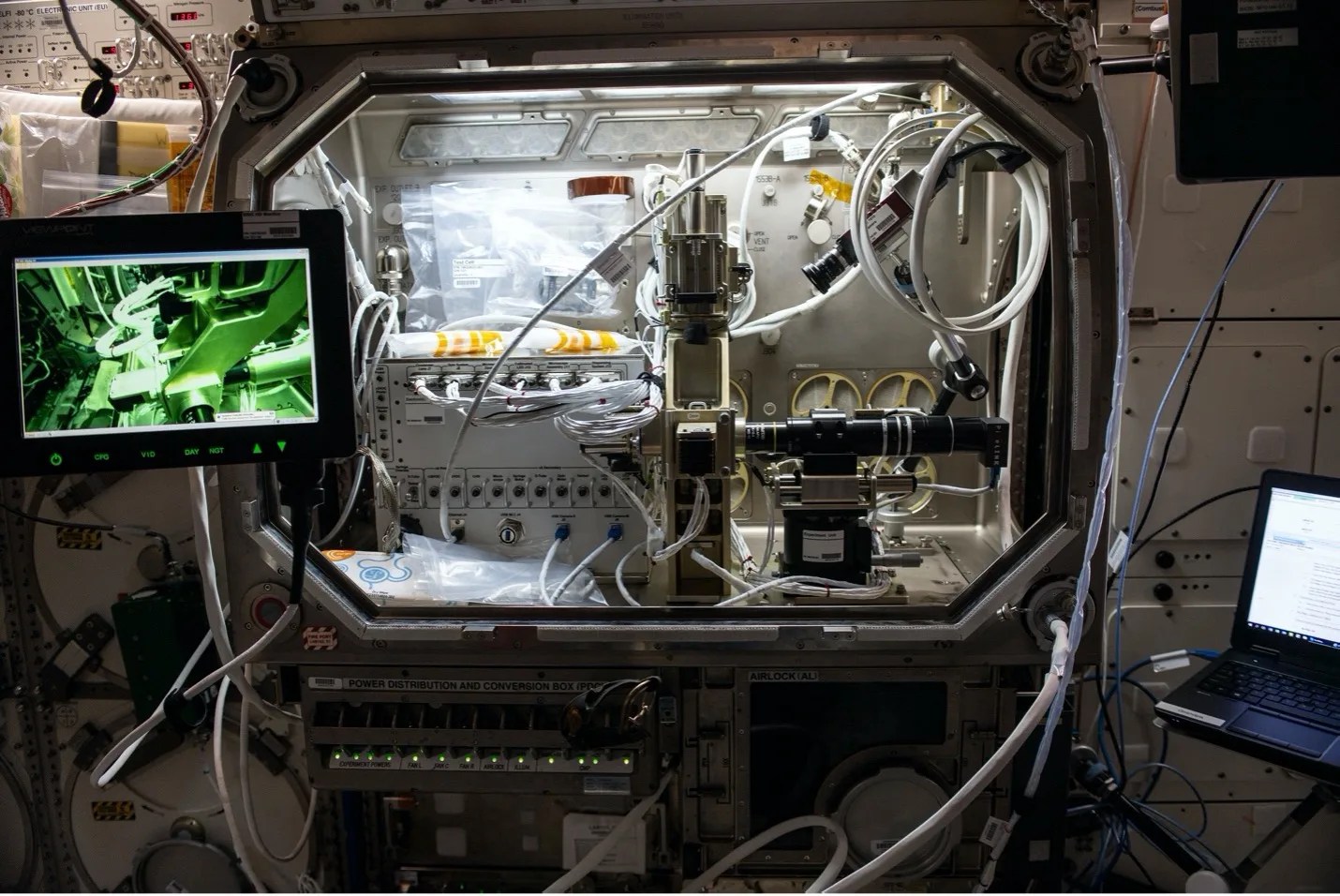
Innovative Space Research: The Ring-Sheared Drop Experiment
Space exploration has always been at the forefront of scientific achievement, pushing the boundaries of what we know about our universe and ourselves. Recently, an exciting development in the field of microgravity science has emerged from the collaborative efforts of researchers across Space Biology and Physical Sciences. At the heart of this breakthrough is the Ring-Sheared Drop (RSD) experiment, a project that launched in July 2019 to the International Space Station (ISS) with the aim of advancing our understanding of fluid dynamics in space.
Understanding the Ring-Sheared Drop (RSD) Experiment
The RSD experiment was designed to explore shearing flow without the interference of solid walls, a condition that is challenging to replicate on Earth due to gravity. In microgravity conditions, scientists can observe how fluids behave in a more natural state, free from the forces that typically influence them on our planet.
The primary goal of the RSD project was to adapt and utilize the module to develop predictive models for the non-Newtonian flow of high-concentration proteins at the interface. Non-Newtonian fluids are those that do not follow Newton’s law of viscosity, meaning their flow behavior changes under stress or strain. This is a crucial area of study as it applies to various industrial and biomedical applications.
Presentation at the Physical Sciences Informatics (PSI) User Group
In May, the PSI User Group meeting featured a special presentation by Dr. Joe Adam, a Research Scientist at Rensselaer Polytechnic Institute and the University Payload Director of the RSD module. He detailed the history of the RSD project, its research campaigns, and the data that will be released in PSI. The investigation was spearheaded by Principal Investigator, Professor Amir Hirsa of Rensselaer Polytechnic Institute.
Dr. Adam’s presentation, titled "Protein Solution Hydrodynamic Studies in the Ring-Sheared Drop," provided an in-depth look at the advancements made through this experiment. His discussion highlighted the importance of this research in understanding fluid dynamics in space, which has far-reaching implications for both spaceflight and terrestrial applications.
The RSD-IBP-I Campaign: A Focus on Protein Dynamics
One of the key components of the RSD project is the Ring-Sheared Drop Interfacial Bioprocessing of Pharmaceuticals-I (RSD-IBP-I) campaign. This initiative aimed to delve into the non-Newtonian interfacial hydrodynamics of blood transport proteins, specifically bovine serum albumin (BSA) and human serum albumin (HSA), under microgravity conditions. The research focused on how the primary structure of these proteins, their concentration, and the interfacial shear rate influenced fluid flow in space.
By using velocimetry—a technique for measuring the velocity of fluid flow—scientists were able to analyze how hollow glass microsphere tracer particles moved within the protein samples. This data is invaluable for gaining a deeper understanding of interfacial protein flows and their relevance to physiology, environmental conditions, and industrial processes.
The findings from this research could potentially revolutionize in situ pharmaceutical production, tissue engineering, and offer insights into diseases such as Alzheimer’s, Parkinson’s, infectious prions, and type 2 diabetes. These applications highlight the critical importance of understanding fluid dynamics not only for space exploration but also for improving life on Earth.
Fostering Collaboration Across Disciplines
One of the overarching goals of the PSI User Group meeting was to foster collaboration between researchers from different fields. To this end, PSI invited Ryan Scott, the ALSDA lead Scientist, and members of the ADBR (Alzheimer’s Disease & Brain Resilience) and Parkinson’s AWG subgroups to attend the meeting. This diverse group of experts fueled discussions and led to meaningful connections that could drive future research.
During these discussions, two significant collaborative publications were shared:
- McMackin, P., Adam, J., Griffin, S., et al. "Amyloidogenesis via interfacial shear in a containerless biochemical reactor aboard the International Space Station." This publication, featured in npj Microgravity, explores the formation of amyloid fibers, structures associated with diseases like Alzheimer’s, in a microgravity environment. The research provides insight into how these harmful proteins form and interact in the absence of gravity.
- Ali, N., Beheshti, A., & Hampikian, G. "Space exploration and risk of Parkinson’s disease: a perspective review." This paper, resulting from collaboration within the Parkinson’s AWG subgroup, examines the potential implications of space travel on neurological health, particularly concerning Parkinson’s disease. Published in npj Microgravity, it presents a comprehensive review of the risks astronauts may face and the underlying biological mechanisms involved.
Access to Research Data and Future Prospects
The data generated from the RSD-IBP-I campaign is now accessible through the Physical Sciences Informatics (PSI) platform, providing researchers worldwide with the opportunity to explore and build upon these findings. Access to such data is crucial for advancing our collective understanding and fostering further innovation in both space and biological sciences.
The RSD experiment exemplifies the power of interdisciplinary collaboration and the potential for space research to inform and enhance our knowledge of complex scientific phenomena. As scientists continue to push the boundaries of what is possible in microgravity research, the implications for both space exploration and life on Earth are vast and promising.
Conclusion
In conclusion, the Ring-Sheared Drop experiment represents a significant leap forward in our understanding of fluid dynamics in microgravity. By exploring the behavior of non-Newtonian fluids in space, researchers are unlocking new possibilities for pharmaceutical production, disease research, and industrial applications. The collaborative efforts showcased at the PSI User Group meeting underscore the importance of cross-disciplinary partnerships in driving scientific progress.
As we look to the future, the insights gained from the RSD experiment and similar studies will undoubtedly pave the way for innovative solutions to some of the most pressing challenges facing humanity. The journey to unravel the mysteries of fluid dynamics in space is just beginning, and its impact will be felt across a wide range of fields for years to come.
For more Information, Refer to this article.