






























Unveiling the Sun: Insights from the SOHO Mission and Future Endeavors
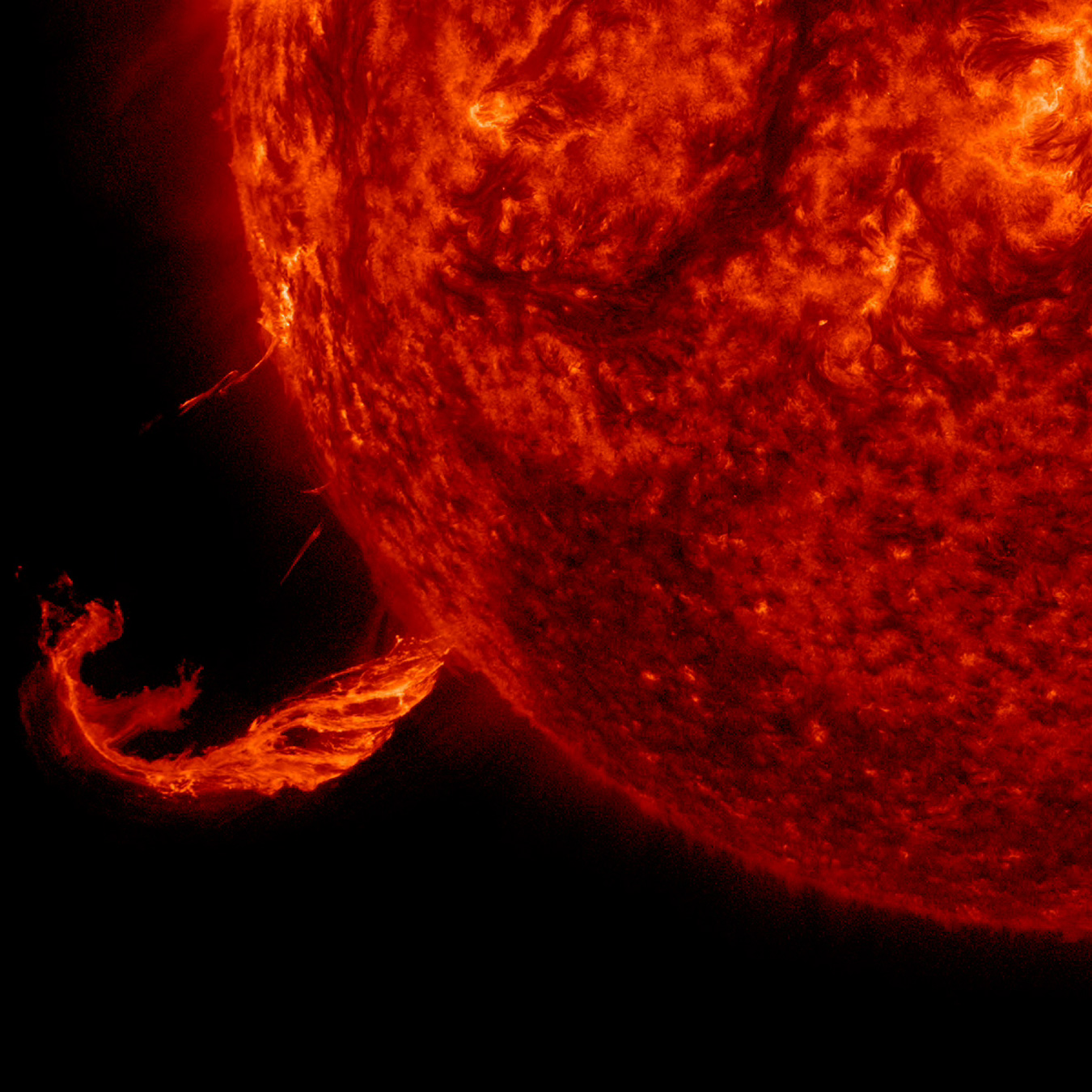
In a remarkable feat of technological and scientific collaboration, the Solar and Heliospheric Observatory (SOHO), a joint mission between NASA and the European Space Agency (ESA), has provided us with an extraordinary glimpse into the dynamic nature of our Sun. On February 24, 2015, SOHO captured an awe-inspiring image in the extreme ultraviolet wavelength, showcasing a coronal mass ejection (CME) that the Sun unleashed alongside part of a solar filament. While some of these solar strands fell back into the star, a significant portion surged into space as a luminous cloud of particles, offering scientists an invaluable opportunity to study these phenomena.
SOHO was launched in December 1995 with the ambitious goal of studying the Sun comprehensively, from its deep core to its outer corona. Originally slated to run until 1998, the mission has far exceeded expectations, continuing to function and transmit data that enrich our understanding of the Sun. Over the years, SOHO has not only enhanced our knowledge of solar dynamics but also contributed to the discovery of over 5,000 comets, underscoring its pivotal role in solar and space science.
The Enduring Legacy of SOHO
SOHO’s ability to exceed its intended mission timeline is a testament to the robust engineering and foresight of the teams at NASA and ESA. The spacecraft’s instruments have enabled it to monitor solar activity in unprecedented detail. Coronal mass ejections, like the one captured in 2015, are massive bursts of solar wind and magnetic fields rising above the solar corona or being released into space. These events can have significant effects on space weather, potentially impacting satellite operations, communication systems, and even power grids on Earth.
The data provided by SOHO has been instrumental in improving our predictive models of such solar events. Scientists utilize this information to better understand how the Sun’s activity can influence the solar system, including its impact on Earth’s magnetosphere. By observing the Sun’s behavior over extended periods, researchers can identify patterns and potentially forecast future solar activity.
Future Prospects: Expanding Our Solar Observations
Building on the success of SOHO, NASA continues to push the envelope in solar observation. An exciting development in this field is the impending launch of a series of advanced spacecraft. These include NASA’s IMAP (Interstellar Mapping and Acceleration Probe), the Carruthers Geocorona Observatory, and NOAA’s SWFO-L1 (Space Weather Follow On-Lagrange 1) spacecraft. Scheduled for no earlier than September 23, these missions aim to deepen our understanding of the Sun’s influence across the entire solar system.
IMAP: Charting the Interstellar Frontier
The Interstellar Mapping and Acceleration Probe (IMAP) is designed to explore the boundary of our solar system and the interstellar space beyond. It will help scientists understand how particles from the Sun interact with the interstellar medium—a region filled with gas and dust that exists between stars. By doing so, IMAP will provide critical insights into the heliosphere, the vast bubble of space influenced by solar winds, which acts as a shield protecting the planets from harmful cosmic radiation.
Carruthers Geocorona Observatory: An Insight into Earth’s Atmospheric Halo
Named after the pioneering African American scientist Dr. George Carruthers, the Carruthers Geocorona Observatory will focus on studying the geocorona—a tenuous cloud of hydrogen atoms that envelops Earth. Understanding the geocorona is important as it represents the outermost layer of Earth’s atmosphere, extending into space and interacting with solar radiation. This observatory will shed light on the processes affecting this part of our atmosphere and enhance our comprehension of how solar and terrestrial forces interact.
SWFO-L1: Monitoring Space Weather
The SWFO-L1 spacecraft, positioned at the Lagrange Point 1 (a gravitationally stable point between the Earth and the Sun), will play a crucial role in space weather monitoring. It will provide real-time data on solar wind conditions and magnetic field variations. This information is vital for predicting space weather events, which can have significant implications for satellites, astronauts, and even terrestrial technologies.
The Broader Implications of Solar Studies
Understanding the Sun’s influence is not just a matter of scientific curiosity; it has practical implications for our technology-dependent world. Solar activity can disrupt satellite communications, GPS systems, and power grids. By advancing our knowledge of solar phenomena, we can better prepare for and mitigate these potential disruptions.
The ongoing and upcoming missions underscore the importance of international collaboration in space exploration. By pooling resources and expertise, agencies like NASA and ESA can achieve more than they could individually. This spirit of cooperation extends beyond the scientific community, fostering a sense of global unity in the pursuit of knowledge.
Conclusion: A New Era of Solar Exploration
As we stand on the brink of a new era in solar exploration, it’s essential to reflect on the legacy of missions like SOHO. These endeavors have not only expanded our understanding of the Sun but also laid the groundwork for future discoveries. With new missions poised to launch, we are set to uncover even more about the Sun and its far-reaching effects on the solar system.
For those interested in the ongoing developments in solar science, the NASA website offers a wealth of information and updates on these missions. As we continue to probe the mysteries of our closest star, the insights gained will undoubtedly enhance our understanding of the universe and our place within it.
For more Information, Refer to this article.







