
























NASA’s Latest Resupply Mission: Delivering Science and Innovation to the International Space Station
In a landmark event for space exploration, NASA has successfully launched its Northrop Grumman Commercial Resupply Services 23 mission, also known as CRS-23. This mission is set to deliver an array of scientific experiments, technology demonstrations, and essential supplies to the International Space Station (ISS). The mission underscores NASA’s commitment to advancing space research and technology development, as well as maintaining a continuous human presence in space.
A Milestone Launch
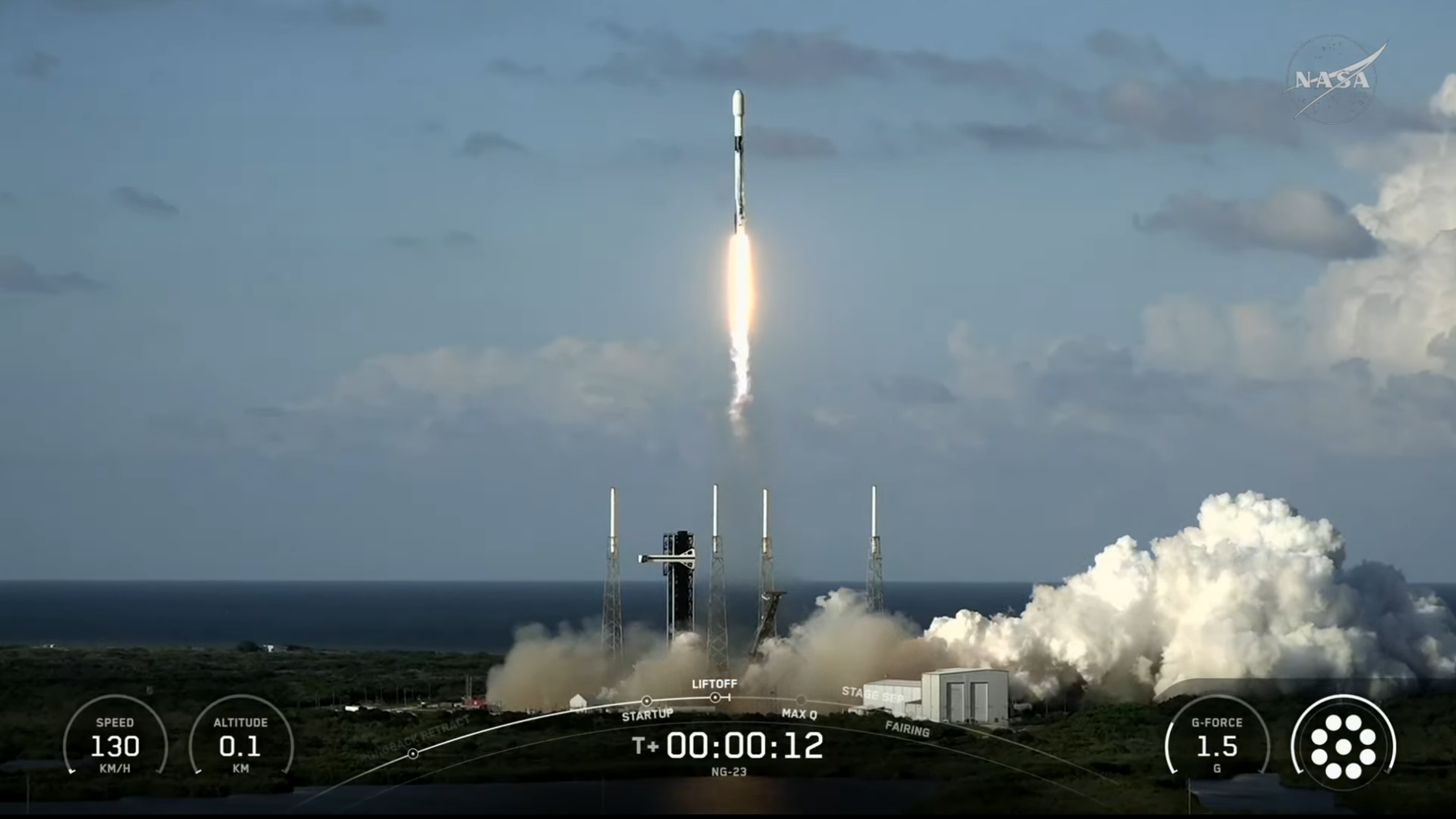
The Northrop Grumman CRS-23 mission took flight on a SpaceX Falcon 9 rocket from Space Launch Complex 40 at Cape Canaveral Space Force Station in Florida. This launch is notable for being the first to utilize the larger and more cargo-capable version of the Cygnus spacecraft, known as the Cygnus XL. This solar-powered spacecraft is designed to carry over 11,000 pounds of cargo, marking a significant enhancement in NASA’s ability to support the ISS.
Key Mission Objectives
The Cygnus XL spacecraft is scheduled to be captured by the ISS’s robotic arm, Canadarm2, on the morning of September 17. NASA astronauts Jonny Kim and Zena Cardman will be operating the arm to facilitate the capture and installation of the spacecraft onto the Unity module’s Earth-facing port. This procedure will enable the unloading of the cargo, which includes a variety of scientific research materials and technology development equipment.
Scientific and Technological Endeavors
The CRS-23 mission is set to deliver numerous scientific investigations to be conducted during Expedition 73 aboard the ISS. Some of the key projects include:
- Semiconductor Crystals Production: The mission will carry materials that will help in the production of semiconductor crystals in the unique microgravity environment of space. This research aims to yield crystals with fewer defects and potentially better performance characteristics than those produced on Earth.
- Cryogenic Fuel Tanks Development: Equipment for developing improvements in cryogenic fuel storage will be delivered. This research is critical for advancing the storage and handling of super-cold fuels used in space exploration.
- UV Light System: A specialized ultraviolet (UV) light system will be tested to prevent the growth of microbial communities in the water systems aboard the ISS. This technology could have significant implications for maintaining the health and safety of astronauts on long-duration space missions.
- Pharmaceutical Crystals: The mission will also include supplies for producing pharmaceutical crystals. These crystals could lead to the development of more effective treatments for cancer and other diseases.
These projects are just a fraction of the hundreds of scientific investigations conducted aboard the ISS. The research spans various fields including biology, biotechnology, Earth and space science, and physical sciences. These endeavors are essential for understanding how living and working in space affects humans and for developing technologies that support extended space exploration.
Long-Term Vision and Impact
For nearly 25 years, NASA has maintained a continuous U.S. human presence aboard the ISS. This ongoing commitment is a testament to the agency’s dedication to space exploration and research. The ISS serves as a platform for developing a sustainable low Earth orbit economy and as a stepping stone for future deep-space missions, including NASA’s Artemis missions to the Moon and planned human missions to Mars.
Coverage and Real-Time Operations
NASA has scheduled comprehensive coverage of the spacecraft’s arrival, capture, and installation. The schedule is as follows (note that all times are Eastern and subject to real-time operational changes):
Wednesday, Sept. 17
- 5 a.m. – Arrival coverage begins on NASA+ and Amazon Prime.
- 6:35 a.m. – Capture of Cygnus XL with the space station’s robotic arm.
- 8 a.m. – Installation coverage begins on NASA+ and Amazon Prime.
These coverage times are estimates and may be adjusted based on operations post-launch. For the latest updates, interested parties are encouraged to follow NASA’s space station blog.
The Legacy of Cygnus XL
The Cygnus XL spacecraft is named the S.S. William “Willie” C. McCool, in honor of the NASA astronaut who tragically lost his life in 2003 during the space shuttle Columbia accident. The spacecraft is expected to remain docked at the ISS until March 2026. After completing its mission, the Cygnus XL will help dispose of several thousand pounds of waste by burning up harmlessly upon re-entry into Earth’s atmosphere.
Conclusion
The Northrop Grumman CRS-23 mission is a pivotal moment in NASA’s ongoing efforts to advance human space exploration and research. By delivering cutting-edge scientific experiments and technology demonstrations to the ISS, NASA continues to push the boundaries of what is possible in space. This mission not only supports current research and development but also lays the groundwork for future explorations beyond Earth’s orbit. For more detailed information on this mission, interested readers can visit NASA’s official mission page.
For more Information, Refer to this article.