Unveiling MAGEQ: A Collaborative Endeavor in Atmospheric Science
In a groundbreaking initiative, scientists and researchers from various prestigious organizations have come together under the project name MAGEQ, which stands for Mid-Atlantic Gas Emissions Quantification. This project marks a significant collaboration between NASA centers across the United States, the National Oceanic and Atmospheric Administration (NOAA), the University of Maryland Baltimore County, and several other academic and governmental partners. The initiative aims to gather extensive data on air quality, forestry, and fire management through a series of coordinated aircraft missions.
The MAGEQ Mission
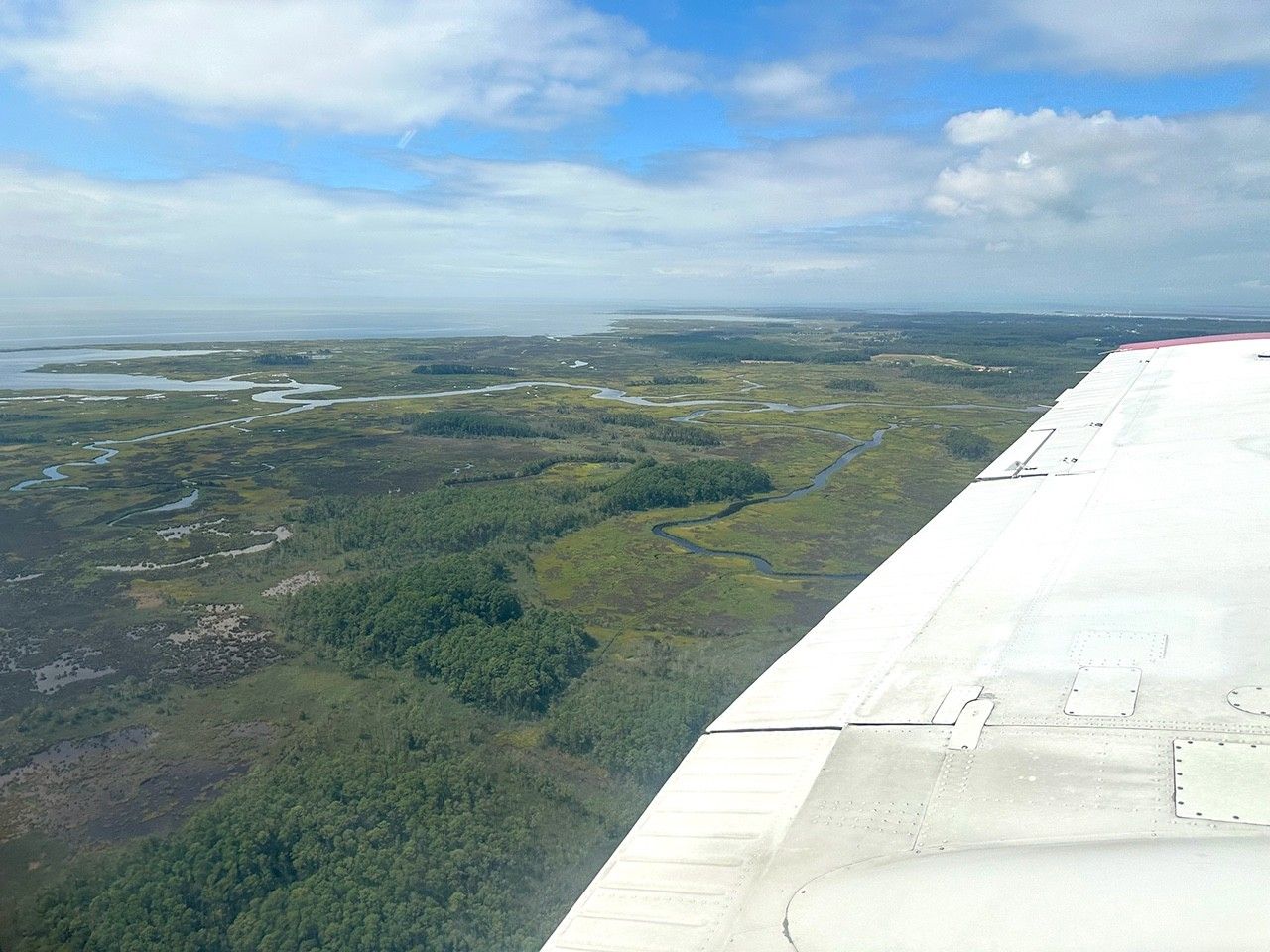
During the summer, a fleet of six aircraft undertook over 400 hours of flight across the mid-Atlantic United States. This ambitious endeavor was designed not as a singular mission but as a collection of multiple missions uniting more than a dozen organizations and agencies. The project also welcomed the involvement of university students, providing a rich educational experience. Over approximately six weeks, these aircraft flew over various terrains, including urban areas, wetlands, agricultural lands, and coal mining regions, collecting invaluable data.
Glenn Wolfe, a research scientist at NASA’s Goddard Space Flight Center and project lead for the MAGEQ initiative, highlighted the complexity of the mission. He explained that each aircraft team comprised skilled personnel capable of optimizing their flights to achieve specific scientific objectives. The challenge lay in ensuring that each aircraft’s capabilities complemented or supplemented the others effectively.
Overcoming Challenges
Coordinating these flights required meticulous planning and adaptability, primarily due to the unpredictability of weather conditions. The team had to navigate around cloudy skies, strong winds, and storms to ensure the safety and success of each flight. Each aircraft was equipped with different instruments, dictating unique operational requirements. For instance, some planes needed to fly at high altitudes to simulate a satellite’s perspective of the atmosphere and Earth’s surface, while others operated below cloud cover to measure air particles directly, as long as there was no rain.
Despite these challenges, the flight teams collaborated to maximize the number of multi-aircraft flight days, successfully achieving the primary goals of the MAGEQ campaign.
Lesley Ott, a research meteorologist and lead carbon cycle modeler at NASA’s Global Modeling and Assimilation Office, expressed her admiration for the teamwork displayed throughout the project. She emphasized that the collective data collection efforts not only enhance scientific understanding but also produce datasets that are more applicable to various stakeholders.
Real-World Applications
The data gathered from MAGEQ has significant implications for various sectors. For state resource managers in North Carolina and Virginia, the information can aid in monitoring the health of wetlands, crucial ecosystems that mitigate storm impacts, sequester atmospheric carbon, and bolster local tourism. Additionally, energy facility operators can utilize the data to swiftly detect methane leaks or equipment malfunctions, enabling prompt intervention to minimize environmental harm and resource wastage.
Stakeholders played a pivotal role in the planning process of MAGEQ, offering insights into measurement sites and data requirements that informed the flight strategies. This collaborative approach ensures that the data collected meets the diverse needs of various industries and sectors.
Complementing Satellite Data
An essential aspect of the MAGEQ project is its ability to validate satellite data from both public and commercial providers. Instruments like the Tropospheric Emissions: Monitoring of Pollution (TEMPO) satellite gather similar atmospheric data. By comparing airborne data with satellite observations, scientists can obtain a more comprehensive understanding of atmospheric conditions. Furthermore, the data from MAGEQ will support the evaluation of atmospheric chemistry models, such as NASA’s Goddard Earth Observing System (GEOS) model, which integrates atmospheric, oceanic, and terrestrial data to create a holistic representation of Earth’s systems.
Steve Brown, who leads the tropospheric chemistry and atmospheric remote sensing programs at NOAA’s Chemical Sciences Laboratory, acknowledged the diverse contributions of each aircraft. He noted that although compiling and analyzing the datasets will be a substantial task, the richness of the measurements will greatly enhance scientific research.
A Collaborative Achievement
The MAGEQ project exemplifies the power of collaboration in scientific research. By pooling resources and expertise from multiple organizations, the initiative has successfully gathered a wealth of data that will inform future environmental and atmospheric studies. This project not only advances scientific knowledge but also provides practical benefits to various stakeholders, illustrating the critical role of interdisciplinary collaboration in addressing complex global challenges.
For more insights and detailed information about the MAGEQ project, you can visit the original report at NASA Science.
For more Information, Refer to this article.