























NASA and Blue Origin Reopen Media Accreditation for ESCAPADE Mission Launch
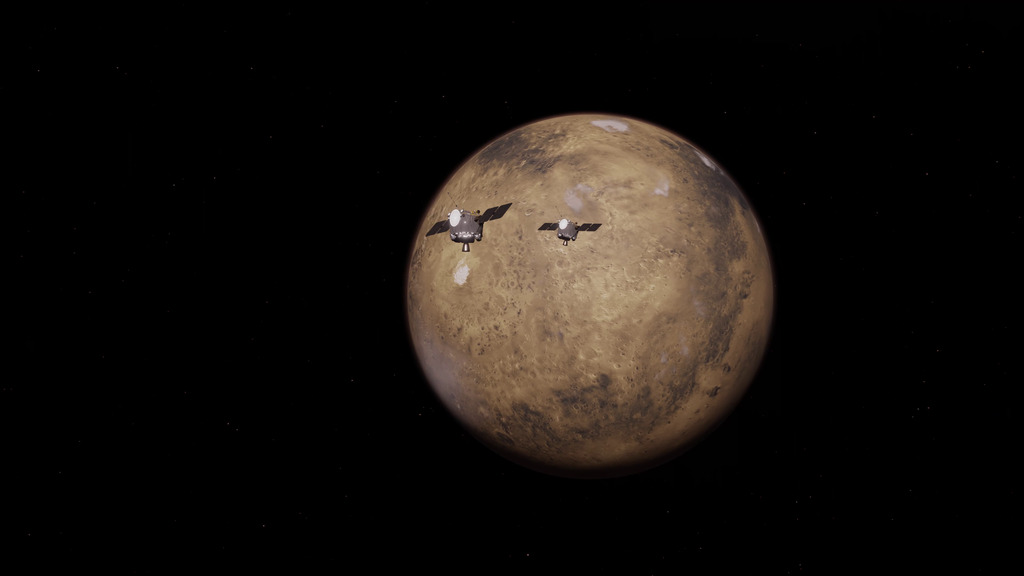
NASA, in collaboration with Blue Origin, has announced the reopening of media accreditation for the upcoming launch of the ESCAPADE mission. This mission is particularly exciting as it features a pair of spacecraft designed to study the interaction of solar wind with Mars. Such a study is expected to provide valuable insights into how the Martian atmosphere responds to space weather and the role solar activity plays in atmospheric escape. Notably, this mission will mark the second launch of Blue Origin’s New Glenn rocket, a milestone in itself for the aerospace company.
Prospective media representatives interested in covering the ESCAPADE launch must apply for media credentials. For those who have already applied for media access, there is no need to reapply. This application process is crucial to ensure that media personnel are adequately prepared and accredited to cover this significant event.
U.S. media personnel and U.S. citizens who represent international media must submit their applications by 11:59 p.m. EDT on Monday, October 13. These applications should be submitted online through NASA’s media accreditation website. For those unfamiliar with the process, NASA provides an online copy of its media accreditation policy, ensuring that all parties understand the requirements and expectations.
Blue Origin has scheduled the launch of New Glenn’s second mission, referred to as NG-2, for later this fall. The launch will take place from Space Launch Complex 36 at Cape Canaveral Space Force Station in Florida. Accredited media will not only have the chance to cover the launch but also participate in prelaunch media activities. As the launch date approaches, NASA and Blue Origin will release more details regarding the event schedule to ensure comprehensive coverage.
NASA is committed to providing updates on the preparations for the twin orbiters designed for Mars exploration through the ESCAPADE blog. This blog will serve as a vital resource for both the media and the public, offering insights into the mission’s progress and developments.
The ESCAPADE mission is a part of NASA’s Small Innovative Missions for Planetary Exploration (SIMPLEx) program. This program aims to encourage innovative approaches to planetary exploration. The mission receives funding from NASA’s Heliophysics Division, which focuses on understanding the Sun and its interactions with the Earth and the solar system. The University of California, Berkeley Space Sciences Laboratory leads the mission, bringing a wealth of experience and expertise to the table. The spacecraft themselves have been designed by Rocket Lab, a company well-known for its capabilities in launching small satellites.
NASA’s Launch Services Program, based at the Kennedy Space Center in Florida, has arranged the launch services through the VADR (Venture-class Acquisition of Dedicated and Rideshare) contract. This contract facilitates the commercial launch capability necessary for missions like ESCAPADE, ensuring that NASA can continue to explore and understand our cosmic neighborhood.
For those eager to learn more about the ESCAPADE mission and stay updated on its progress, NASA has provided a dedicated URL: https://science.nasa.gov/mission/escapade. This site will serve as an invaluable resource for information about the mission’s objectives, timeline, and scientific relevance.
The launch of the ESCAPADE mission is a significant event in planetary exploration, offering fresh insights into the dynamics of Mars’ atmosphere and its interaction with solar wind. As we continue to explore the universe, missions like ESCAPADE help us not only understand other planets but also offer context for Earth’s own atmospheric processes and responses to solar activities.
Blue Origin’s New Glenn rocket, which is set to carry the ESCAPADE mission into space, represents a notable advancement in commercial spaceflight capabilities. This rocket is designed to handle significant payloads, making it a valuable asset for future space exploration endeavors. The successful launch and operation of New Glenn will further establish Blue Origin’s role in the space industry, potentially leading to more collaborative missions with NASA and other agencies.
The partnership between NASA and Blue Origin exemplifies the growing collaboration between public and private sectors in space exploration. Such partnerships are crucial for advancing technology, reducing costs, and increasing the frequency and scope of exploratory missions beyond Earth.
In conclusion, the ESCAPADE mission is an exciting step forward in our understanding of Mars and its atmospheric dynamics. With NASA and Blue Origin at the helm, this mission underscores the importance of collaborative efforts in pushing the boundaries of what is possible in space exploration. As we await the launch, the anticipation continues to build, promising new discoveries and insights into our neighboring planet, Mars.
For more Information, Refer to this article.