
























Understanding the Importance of Identity in Emerging AI Systems
As artificial intelligence (AI) systems evolve to become more autonomous and function as independent agents, one of the most pressing challenges is ensuring their identity and trustworthiness. Traditional identity management frameworks, which were designed primarily for human users and static credentials, do not adequately address the needs of these dynamic, non-human entities. This gap highlights the significance of utilizing a robust identity framework like SPIFFE in these emerging AI environments.
Introduction to SPIFFE
SPIFFE, which stands for Secure Production Identity Framework For Everyone, is an open standard that provides a secure identity framework tailored for workloads. Initially developed to facilitate secure authentication among microservices in cloud-native settings, SPIFFE offers a method to issue and verify identities that are cryptographically secure, eliminating the reliance on long-lived secrets such as passwords or API keys.
Core Features of SPIFFE
- Workload Identity: Each service or process is assigned a unique identity, known as a SPIFFE ID.
- Federated Trust: Identities can be authenticated across different organizations and environments, enabling seamless collaboration.
- Dynamic Credentialing: Identities are automatically issued and rotated, minimizing the risk of credential exposure.
The Relevance of SPIFFE for Agentic AI Systems
Agentic AI systems, including autonomous agents, bots powered by large language models (LLMs), and robotic systems, often function independently. They make decisions and interact with other systems or agents, necessitating a robust mechanism to:
- Prove their Identity: Establishing a credible identity is crucial for these systems to interact securely with other services.
- Build Trust: In environments where multiple agents operate, trust is paramount for effective collaboration.
- Maintain Security Across Networks: Operating securely across diverse networks and organizations is essential.
SPIFFE provides a strong foundation for these requirements by offering the following capabilities:
1. Verifiable Non-Human Identity
Unlike traditional identity systems tied to individuals, SPIFFE IDs are associated with workloads. This makes them particularly suitable for AI agents, robotic systems, and other non-human entities. Each agent can be assigned a unique SPIFFE ID that verifies its origin, capabilities, and trustworthiness.
2. Zero Trust Architecture
The zero trust model operates on the principle that no entity is trusted by default. SPIFFE supports this by enabling mutual TLS (mTLS) between agents, ensuring that every interaction is authenticated and encrypted. This is crucial to prevent impersonation and unauthorized access in AI-driven systems.
3. Federation Across Domains
Agentic AI systems often span multiple clouds, organizations, or networks. SPIFFE’s federation model allows identities to be authenticated across these trust domains, facilitating secure collaboration between agents from different environments.
4. Dynamic Identity Lifecycle
Given that AI agents can be rapidly deployed and decommissioned, SPIFFE supports ephemeral identities that align with this dynamic nature through automatic rotation and revocation. Short-lived credentials reduce the attack surface and enhance operational security.
Use Case: AI Agents in a Multi-Agent System
Consider a scenario where a multitude of AI agents collaborate to manage a smart city’s infrastructure, including traffic control, energy distribution, and emergency responses. Each agent must:
- Authenticate itself to other agents.
- Demonstrate the authority to execute certain actions.
- Securely exchange sensitive information.
By leveraging SPIFFE, each agent can receive a SPIFFE ID (SVID) and certificate from a centralized SPIRE (SPIFFE Runtime Environment) server. These identities serve to establish trust, enforce policies, and ensure secure communication, all achieved without human intervention.
Enhancements with Vault Enterprise
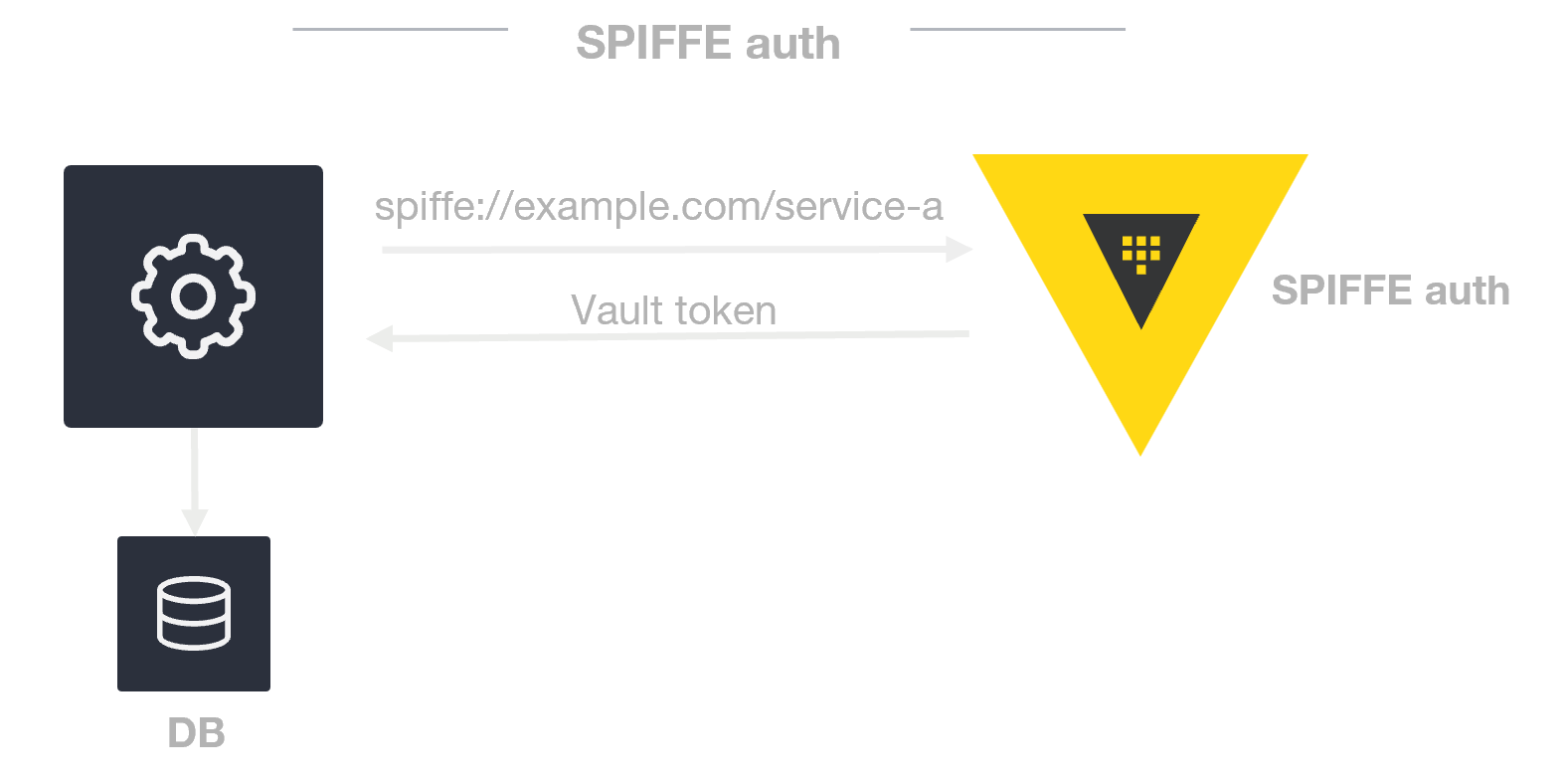
With the release of version 1.21, Vault Enterprise now natively supports SPIFFE authentication. This development simplifies and expands the way non-human identities, such as AI agents, are authenticated. Essentially, Vault can now issue SPIFFE IDs by providing X509-SVIDs to these Vault-authenticated non-human workloads, allowing them to operate within the SPIFFE ecosystem and implement zero trust security practices.
Key Benefits of Vault’s SPIFFE Support
- Automated Authentication and X-509-SVID Issuance: Vault automatically assigns and issues the necessary X-509-SVID certificates for authenticated workloads, thereby removing the need for manual intervention.
- Enhanced Traceability: Vault generates detailed logs of all authentication and SVID issuance events, offering complete visibility for security and audit teams.
By incorporating SPIFFE capabilities, Vault significantly enhances its ability to manage the issuance, rotation, and validation of workload identities and credentials, empowering customers to deploy zero trust models across a wider range of use cases.
Looking Forward
As AI systems continue to grow more autonomous and interconnected, the demand for secure, scalable identity frameworks will undoubtedly increase. The integration of SPIFFE with HashiCorp Vault presents a powerful solution for validating and securing non-human identities, fostering trust in agentic AI systems and paving the way for safer, more resilient digital ecosystems.
For further insights into HCP Vault or Vault Enterprise, please visit the Vault product page.
This exploration into SPIFFE illustrates its critical role in the evolving landscape of AI and non-human identity management. As technology progresses, frameworks like SPIFFE will be vital in ensuring secure interactions and trustworthy operations in our increasingly digital world.
For more Information, Refer to this article.