The partnership between the NASA Earth Science Education Collaborative (NESEC) and Earth to Sky (ETS) is transforming the way visitors experience national parks and other public lands. This collaboration, which also involves the National Park Service and a variety of federal, state, and local organizations, is introducing an engaging activity that bridges the gap between complex satellite data and the general public. This initiative aims to enhance the understanding of NASA Earth and space science among millions of park visitors through a creative and interactive approach.
One of the central components of this initiative is the Color-a-Pixel activity, a project developed by NESEC. This activity simplifies the intricate world of satellite imagery by converting it into a collaborative art project. Through the Earth to Sky training programs, this technique is being integrated into the skillsets of park interpreters and outdoor educators, showing them how NASA’s satellite perspectives can enrich visitor experiences at parks, refuges, and nature centers.
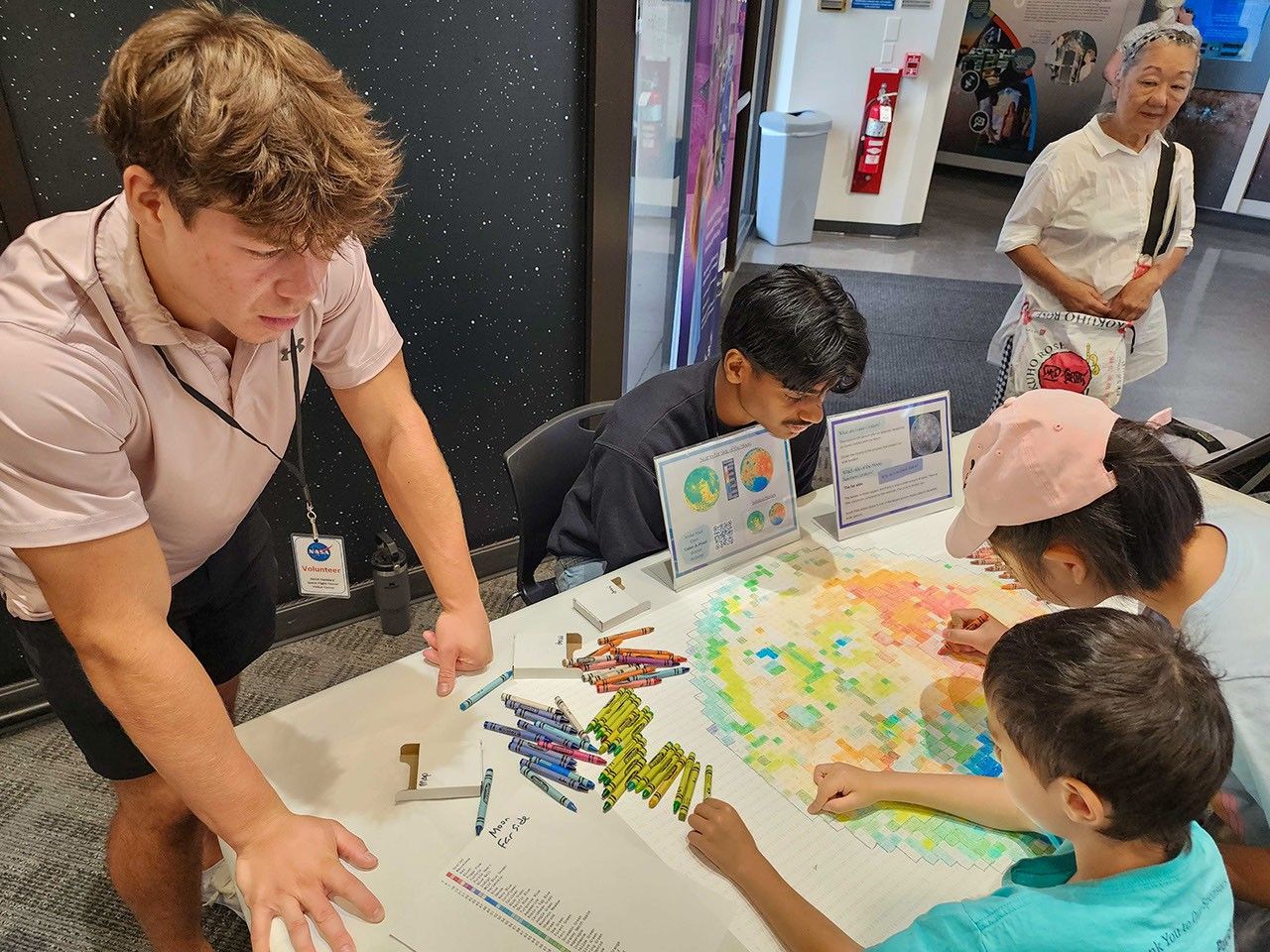
According to ETS Space Science Coordinator Brandi Stewart, the strength of the Color-a-Pixel activity lies in its straightforwardness. Participants only need to pick up a crayon and follow a simple guide to uncover the stories embedded in the satellite images from missions like Landsat, the Mars Reconnaissance Orbiter, or the Lunar Reconnaissance Orbiter. The technology, developed by the Institute for Global Environmental Strategies, transforms these images into a large poster composed of numbered squares, each matched to one of the 120 standard Crayola crayon colors. This transformation allows participants to engage with scientific data in a tactile and enjoyable manner.
During Earth to Sky workshops, the activity’s appeal is immediately apparent as rangers and educators eagerly participate. The task of coloring becomes a collective mission, fostering team-building and reducing stress among participants. As Geneviève de Messières, Earth to Sky Program Lead, remarks, by the end of the session, the image is fully colored, serving as a visual representation of their collaborative effort.
Incorporating this activity into public lands communication efforts turns it into a powerful tool for interpretive messaging. As visitors color the images, park rangers can discuss scientific concepts, environmental changes, and space exploration stories. This activity also underscores the fact that satellite imagery is more than just captivating visuals; each pixel represents data that scientists use to gain a deeper understanding of Earth and the broader solar system.
The Color-a-Pixel activity has been successfully implemented in various special events on public lands, such as:
- At the Death Valley Dark Sky Festival in California, visitors colored Landsat imagery of Earth’s Badwater Basin and MRO imagery of Mars’ Belva Crater. This activity facilitated discussions on finding signs of water in arid landscapes on both planets.
- During the Park After Dark event in Minnesota, attendees worked on topographical maps of the Moon, sparking discussions about the Moon’s geological differences and formation.
- At the Patuxent Wildlife Refuge Open House in Maryland, the activity highlighted the refuge’s role as a "cool island" amidst urban heat, helping visitors understand the importance of green spaces.
All these activities are accessible in a ready-to-print format on the Institute for Global Environmental Strategies (IGES) website.
The collaboration between NESEC and Earth to Sky effectively conveys complex scientific ideas to a wide audience in engaging and relevant ways. Earth to Sky’s community of practice, now comprising over 2,000 interpreters and environmental educators, reaches millions of visitors annually across the nation’s parks and nature centers.
Theresa Schwerin, who leads NESEC, recounted that the Color-a-Pixel activity began as a simple tabletop endeavor designed to attract people at conferences and public events. She wanted a hands-on experience that would initiate conversations about NASA’s satellite data and missions. The project has since evolved, inviting the public to contribute to NASA’s scientific endeavors through citizen science projects.
Andrew Clark, a data scientist and engineer at IGES, developed the Color-a-Pixel poster generator, which has undergone several iterations for improved effectiveness. Schwerin notes that children enthusiastically participate in these activities at public events, often dragging their parents into the activity, leading to family discussions about the images and NASA’s work.
As environmental challenges increasingly impact public lands, this collaboration helps visitors comprehend these issues through NASA’s unique vantage point from space. The activity also familiarizes learners of all ages with NASA’s Earth science missions, complementing its space exploration efforts.
Looking forward, Earth to Sky plans to continue utilizing this activity at future training sessions. Recently, they engaged 417 visitors at the Goddard Space Flight Center Visitor Center, where families colored Moon maps in preparation for International Observe the Moon Night. Additionally, a webinar recording featuring NESEC’s Theresa Schwerin is available on the Earth to Sky website for interpreters and educators interested in implementing this place-based activity.
The success of this partnership highlights how seemingly simple activities, when enhanced with NASA science, can create profound learning experiences for visitors. For those interested in bringing the Color-a-Pixel activity to their own sites or events, ready-to-use activities are available in the IGES gallery.
NASA’s science initiatives continue to provide humanity with new perspectives on our planet and the universe, one crayon at a time. Learn more about how Science Activation connects NASA experts, content, and experiences with community leaders to inspire scientific exploration and understanding at NASA Science Activation.
For more Information, Refer to this article.