

















Celebrating 25 Years of Human Presence on the International Space Station
November marks a significant milestone in the history of space exploration: 25 years of continuous human presence aboard the International Space Station (ISS). This remarkable achievement stands as a testament to the power of international collaboration and human ingenuity. Since the first crew set foot on the space station on November 2, 2000, NASA, along with its international partners, has conducted a multitude of research investigations and technology demonstrations. These efforts have not only advanced our exploration of the Moon and Mars but have also brought about significant benefits to life on Earth.
The ISS has provided a unique environment for researchers to conduct experiments that would be impossible to replicate on Earth. The microgravity conditions aboard the station have transformed research across various disciplines, leading to more than 4,000 experiments that have pushed the boundaries of science, ignited discoveries, and driven scientific breakthroughs.
"Expedition 1, 25 years ago, marked the beginning of a continuous human presence in space," stated NASA’s acting administrator, Sean Duffy. "This milestone is a result of the dedication and collaboration of NASA and its partners, as well as the astronauts and engineers who ensure the space station remains operational in low Earth orbit."
To commemorate this quarter-century of innovation in microgravity, NASA is highlighting 25 scientific breakthroughs that exemplify the ISS’s profound impact on science, technology, and space exploration.
A Proving Ground for Future Space Missions
The International Space Station has served as an essential proving ground for developing new systems and technologies crucial for missions beyond low Earth orbit. Some notable advancements include:
- Navigation and Communication: Technologies proven on the ISS are being integrated into spacecraft destined for the Moon and Mars, such as advanced navigation, communication systems, and radiation shielding.
- Robotic Systems: The ISS has tested robotic surgeons and autonomous assistants, which expand medical procedures in space and allow astronauts to focus on more critical tasks during missions far from Earth.
- 3D Printing: Astronauts have utilized recycled plastic and stainless steel to 3D print tools and parts, paving the way for on-demand repair and fabrication during future deep space missions.
- Cutting-Edge Technologies: From launching the first wooden satellite to pioneering laser communications and self-healing quantum communication technologies, the ISS is at the forefront of space innovation.
Why It Matters
The journey to the Moon and Mars begins with discoveries made in low Earth orbit. The space station demonstrates how astronauts can live and work in space, test life-support systems, and explore advanced materials. Each innovation aboard the ISS propels NASA’s Artemis program and other exploration initiatives forward, bringing humanity closer to thriving beyond our planet.
As NASA prepares for the Artemis program to return humans to the Moon and eventually reach Mars, sustaining life in space has become increasingly critical. Here are some ways the ISS contributes to this goal:
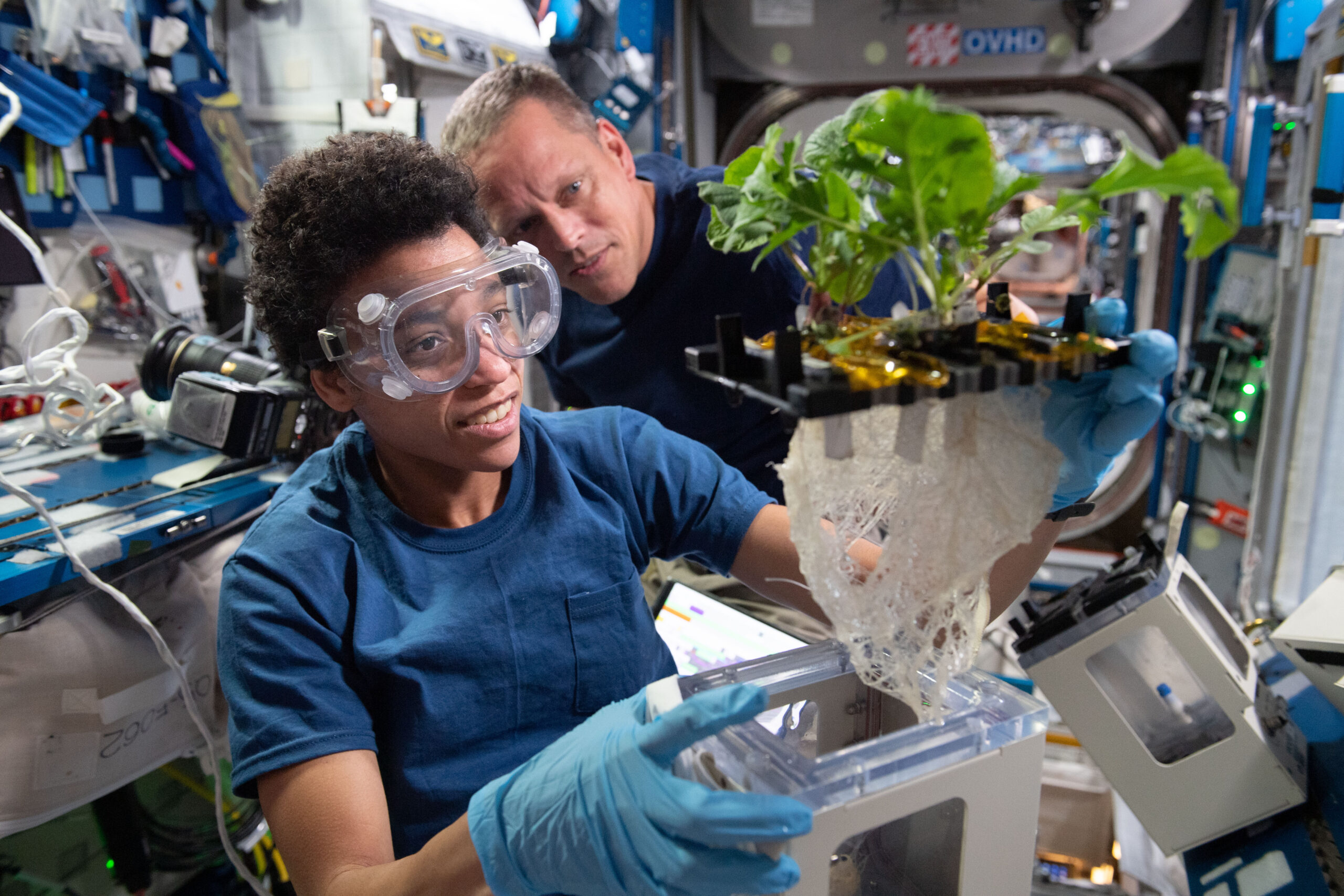
- Space Agriculture: Astronauts have successfully grown over 50 plant species, including tomatoes, bok choi, and chili peppers, in space.
- Water Recycling: Advanced life support systems aboard the ISS can recycle up to 98% of water, a crucial capability for long-duration missions.
- Human Health Research: Studies on how space affects the brain, vision, muscle, and bone density guide strategies to maintain astronaut health during extended missions and improve health on Earth.
- Microbial Research: DNA sequencing in orbit advances techniques for real-time microbial assessment, essential for maintaining astronaut health.
Addressing Global Challenges
The research conducted on the ISS not only extends humanity’s reach into the cosmos but also addresses complex health issues on Earth. The space station serves as a platform for long-term microgravity research, facilitating breakthroughs that yield direct benefits to people on Earth.
- Disease Research: The ISS provides insights into developing treatments for diseases like cancer, Alzheimer’s, and heart disease by revealing how microgravity alters cellular functions.
- Protein Crystallization: Growing protein crystals in microgravity has led to advancements in medicine for conditions such as cancer and muscular dystrophy.
- Stem Cell Growth: High-quality stem cells grown in space contribute to new regenerative therapies for various medical conditions.
- 3D Bioprinting: Efforts in 3D bioprinting have produced human tissue structures, marking a major step toward manufacturing organs in space for transplant patients on Earth.
- Tissue Models: Miniaturized tissue models help researchers study how space affects tissues and organ systems, offering new ways to develop and test medicines.
- Disaster Response: Photos taken by astronauts aid in emergency response to natural disasters, providing targeted views from space.
- Earth Observation: Instruments on the ISS protect space infrastructure and provide valuable data on Earth’s natural patterns and space weather.
Understanding the Universe
The ISS offers scientists a unique perspective to study the universe’s fundamental behaviors. By observing cosmic phenomena typically blocked by Earth’s atmosphere and studying physics at an atomic level, researchers can explore mysteries that are impossible to study from Earth.
The research conducted aboard the space station helps unravel the deepest mysteries of our universe, from quantum particles to cosmic explosions. Observations of collapsing stars and black holes may inspire new navigation tools using cosmic signals and enhance our understanding of space-time. Studies of antimatter and dark matter bring us closer to understanding the 95% of the universe that remains invisible to the human eye. Creating the fifth state of matter in space opens new quantum pathways that could transform technology on Earth and in space.
Physical Science Breakthroughs
Physical processes behave differently in microgravity, offering scientists new opportunities for discovery.
- Fluid Studies: Research on fluid boiling, containment, and flow aids engineers in designing more efficient fuel and life support systems for future spacecraft.
- Material Compositions: Analyzing gels and liquids mixed with tiny particles in space has led to new patents for consumer products.
- Cool Flames: The discovery of cool flames in space, a phenomenon challenging to study on Earth, has opened new frontiers in combustion science and engine design.
Why Physical Science Matters
Breakthroughs in fundamental physics aboard the ISS drive innovation on Earth and advance spacecraft fuel, thermal control, and water purification systems. Research in soft materials improves products in medicine, household items, and renewable energy, while studies of cool flames may lead to cleaner, more efficient engines.
Fostering Commercial and Educational Opportunities
Since its inception in 2000, the ISS has opened doors for private companies, researchers, students, and astronauts worldwide to participate in exploration, propelling humanity toward the Moon and Mars.
- Commercial Space Economy: The ISS serves as a launchpad for the commercial space economy, enabling private astronaut missions and hosting hundreds of experiments from commercial companies.
- Educational Opportunities: CubeSats deployed from the ISS allow students and innovators to test scientific demonstrations in space, while over one million students have spoken with astronauts via radio, inspiring a new generation to engage with STEM fields.
- Global Collaboration: More than 285 crew members from over 25 countries have visited the ISS, making it a symbol of international collaboration.
Why Global Collaboration Matters
The ISS has catalyzed the growth of the space economy, where commercial research and technology demonstrations are shaping a new global marketplace. NASA and its international partners have established a leadership position in low Earth orbit, creating new opportunities for industry and paving the way for exploration missions to the Moon, Mars, and beyond.
For more information about the research aboard the International Space Station, visit NASA’s ISS Science page or revisit the 20th anniversary highlights.
The International Space Station, with its 25-year legacy, continues to be a beacon of innovation, collaboration, and discovery, proving that the sky is not the limit when it comes to human achievement.
For more Information, Refer to this article.