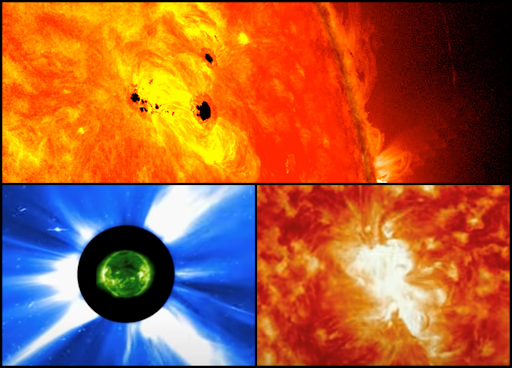
As our Sun embarks on a phase of increased activity, students and educators are being given a remarkable opportunity to delve into its profound effects on Earth and beyond. NASA’s Heliophysics Education Activation Team (NASA HEAT), in partnership with My NASA Data, has unveiled a new collection of educational resources. These resources are designed to allow students to actively engage with actual NASA mission data, enabling them to study space weather events in real-time.
### Immersive Learning with Authentic NASA Data
Crafted as part of NASA HEAT’s initiative to enhance public understanding of heliophysics, these educational tools provide a direct link to the science of the Sun and its impact on the solar system. The resources encompass a variety of materials, including:
– Comprehensive lesson plans and concise mini-lessons designed for swift integration into classroom settings.
– Interactive, web-based tools that empower students to visualize and analyze authentic mission data.
– StoryMaps, which are in-depth digital experiences that guide learners through multi-day investigations of space weather phenomena.
These educational activities draw from data gathered by NASA’s Parker Solar Probe, the Solar Dynamics Observatory (SDO), and the European Space Agency’s Solar Orbiter, among other missions. This data offers students a unique opportunity to explore how scientists monitor and study the Sun’s dynamic behavior.
### Delving into Space Weather
Space weather is primarily driven by the Sun’s activities, which include bursts of energy, radiation, and streams of plasma. When these solar events interact with Earth’s magnetic field, they can create mesmerizing auroras but also pose challenges such as radio communication disruptions, satellite interference, and power grid disturbances.
Through these newly launched resources, students gain insights into how NASA predicts and monitors these solar phenomena. Understanding space weather is crucial for ensuring the safety of astronauts, spacecraft, and technological systems.
### An Educational Opportunity During Solar Maximum
The timing of this resource launch is particularly significant. In late 2024, the Sun entered its solar maximum phase, the peak of its 11-year activity cycle. This period is characterized by heightened solar flares, increased sunspots, and coronal mass ejections. The NASA HEAT and My NASA Data resources are designed to help educators capitalize on this moment, encouraging enriched classroom discussions about magnetism, energy, and the Sun-Earth relationship through observation and data-driven exploration.
### Cultivating the Next Generation of Scientists
Both NASA HEAT and My NASA Data are components of the GLOBE Mission Earth initiative (Global Learning and Observations to Benefit the Environment), which falls under NASA’s Science Activation (SciAct) program. This program connects learners of all ages with genuine NASA science content, experts, and experiences. By integrating real-world data and current scientific phenomena into the educational environment, these innovative tools empower students to adopt a scientific mindset and see themselves as active participants in ongoing scientific discovery.
### A Closer Look at Solar Activity and Its Effects
The Sun is an ever-changing celestial body, and its activity has far-reaching implications for our planet and the broader solar system. Solar flares, for instance, are intense bursts of radiation that can cause significant disruptions to communication systems on Earth. Meanwhile, coronal mass ejections (CMEs) involve massive bursts of solar wind and magnetic fields rising above the solar corona or being released into space. These powerful solar events can have a direct impact on Earth’s magnetosphere, potentially leading to geomagnetic storms.
The resources provided by NASA HEAT and My NASA Data enable students to explore these phenomena in detail, using authentic mission data to understand how scientists predict and respond to space weather events. By equipping students with this knowledge, the program aims to inspire a new generation of scientists who are prepared to tackle the challenges posed by our ever-changing Sun.
### Bridging the Gap Between Science and Education
One of the primary goals of the NASA Science Activation program is to make authentic scientific data accessible and engaging for learners. By providing educators and students with the tools and resources needed to explore real-world scientific phenomena, the program aims to bridge the gap between science and education.
The StoryMaps and interactive tools offered through this initiative are particularly valuable in this regard. They provide students with a platform to engage with scientific data in a hands-on and meaningful way, fostering a deeper understanding of complex topics such as space weather, magnetism, and the Sun-Earth connection.
### The Importance of Heliophysics
Heliophysics, the study of the Sun and its effects on the solar system, is a critical field of research. The Sun is the primary source of energy for our planet, and its activity influences everything from climate patterns to satellite operations. Understanding heliophysics is essential for safeguarding our technological infrastructure and ensuring the continued exploration of space.
Through NASA HEAT and My NASA Data, students are given the chance to explore this fascinating field of study, gaining insights into the processes that drive solar activity and the methods scientists use to study it. This hands-on approach not only enhances students’ understanding of heliophysics but also encourages them to pursue careers in science, technology, engineering, and mathematics (STEM).
### Conclusion
In conclusion, the new educational resources developed by NASA HEAT in collaboration with My NASA Data represent a significant step forward in the field of science education. By providing students with access to authentic NASA mission data and interactive tools, these resources empower learners to explore the dynamic and ever-changing nature of the Sun and its impact on our planet.
As we continue to navigate the challenges and opportunities presented by our Sun’s activity, initiatives like this are essential for inspiring the next generation of scientists and ensuring that they are equipped with the knowledge and skills needed to tackle the complex challenges of the future. By fostering a deeper understanding of heliophysics and space weather, the program not only enriches the educational experience but also contributes to the broader goal of advancing scientific discovery and innovation.
For more information, you can explore the resources provided by NASA HEAT and My NASA Data on their official websites.
For more Information, Refer to this article.