






















NASA’s Mars Reconnaissance Orbiter Unveils New Insights into Martian Subsurface
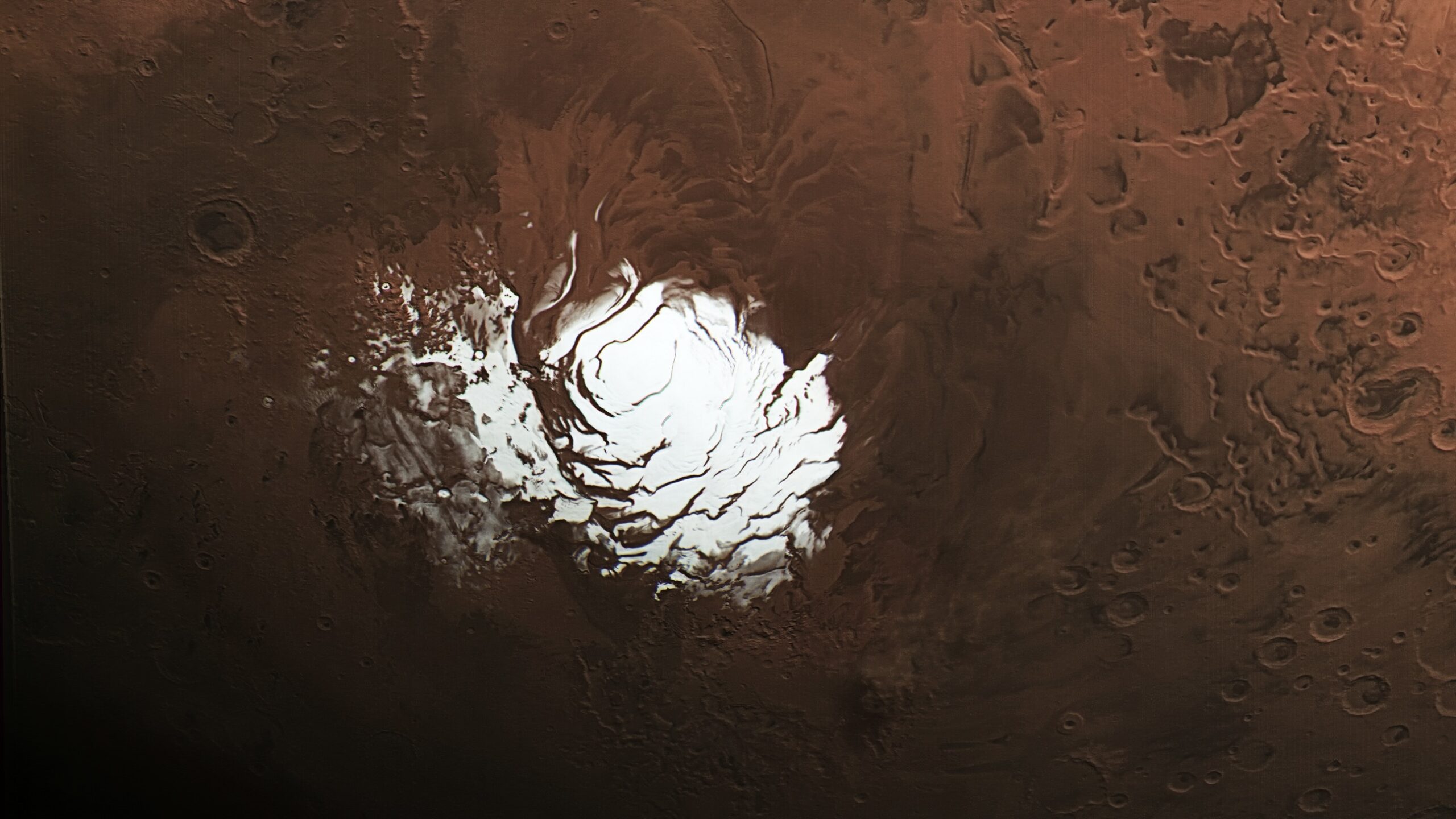
Recent advancements in radar technology have significantly enhanced our understanding of what lies beneath the surface of Mars, specifically at the planet’s south pole. The Mars Reconnaissance Orbiter (MRO), a spacecraft developed by NASA, has revisited an intriguing formation buried beneath several layers of ice, leading to groundbreaking revelations. Through the application of a sophisticated radar technique, researchers have deduced that a feature once thought to be an underground lake is more likely a composite of rock and dust.
The discovery of what was believed to be a subsurface lake in 2018 sparked a wave of scientific curiosity, given that water is a critical indicator of potential life in the solar system. However, the latest data suggests the absence of a lake beneath the Martian surface, although it underscores the utility of this radar method for identifying subsurface resources on Mars, which could be vital for future space missions.
The research findings were published in the Geophysical Research Letters on November 17. The study was spearheaded by Gareth Morgan and Than Putzig, two scientists specializing in MRO’s Shallow Radar (SHARAD) instrument, affiliated with the Planetary Science Institute. Morgan operates from Tucson, Arizona, while Putzig is based in Lakewood, Colorado.
To achieve these observations, the MRO employed an innovative maneuver involving a 120-degree roll of the spacecraft. This technique amplifies the effectiveness of SHARAD, allowing its radar signals to penetrate deeper into Mars’ subsurface, thereby yielding clearer images. Such "very large rolls" have proven so effective that scientists are optimistic about revisiting previously studied locations where ice may be buried beneath the surface.
Morgan, Putzig, and their SHARAD colleagues had previously made multiple attempts to investigate the area thought to harbor a submerged lake but without success. They collaborated with NASA’s Jet Propulsion Laboratory’s operations team to develop the "very large roll" capability. The radar’s antenna is positioned at the back of the MRO, and the spacecraft’s structure obstructs its view, reducing the instrument’s sensitivity. After extensive planning, engineers from JPL and Lockheed Martin Space devised a method to execute a 120-degree roll, which required meticulous preparation to ensure the spacecraft’s safety, to enhance SHARAD’s surface-directed signal.
On May 26, SHARAD executed a very large roll and successfully captured data from the target zone, spanning approximately 12.5 miles (20 kilometers) and located beneath nearly a mile (1,500 meters) of ice. When radar signals reflect off subsurface layers, the intensity of the reflection is contingent on the materials present underground. Most materials either allow the signal to pass through or absorb it, resulting in a weak return. Liquid water, in contrast, creates a highly reflective surface, producing a strong signal similar to a flashlight beam hitting a mirror.
This type of signal was initially identified in 2018 by a team utilizing the Mars Advanced Radar for Subsurface and Ionospheric Sounding (MARSIS) instrument aboard the European Space Agency’s Mars Express orbiter. To account for how such a body of water might remain liquid beneath the ice, scientists speculated it could be a briny lake, as high salt content can reduce water’s freezing point.
"We’ve been observing this area with SHARAD for nearly two decades without detecting anything from those depths," Putzig remarked. However, once the MRO executed the very large roll over the specific location, the team could peer deeper. Unlike the strong signal identified by MARSIS, SHARAD recorded a faint one. A separate very-large-roll observation of a nearby area yielded no signal, indicating that something unusual was affecting the radar signal in the precise location where MARSIS detected a signal.
"The lake hypothesis spurred a lot of innovative research, which is exactly the kind of excitement that scientific discoveries should generate," Morgan noted. "Although this new data doesn’t resolve the debate, it challenges the notion of a liquid water lake."
Mars’ south pole is characterized by an ice cap sitting atop heavily cratered terrain, and most radar images from beneath the ice reveal numerous peaks and valleys. Morgan and Putzig suggest that the bright signal MARSIS observed could simply be a rare smooth region, such as an ancient lava flow.
Both researchers are enthusiastic about applying the very large roll technique to other scientifically intriguing areas on Mars. One such site is Medusae Fossae, an extensive geological formation along Mars’ equator that yields minimal radar return. While some scientists propose it consists of layers of volcanic ash, others speculate that the layers may contain significant amounts of ice deep below the surface.
"If it’s ice, that indicates abundant water resources near the Martian equator, where human missions are likely to be sent," Putzig explained. "The equator receives more sunlight, making it warmer and optimal for astronauts to live and work."
NASA’s Jet Propulsion Laboratory in Southern California oversees the MRO’s operations for the agency’s Science Mission Directorate in Washington, as part of NASA’s Mars Exploration Program. Lockheed Martin Space in Denver is responsible for building the MRO and supports its operations. The SHARAD instrument was contributed to the MRO mission by the Italian Space Agency (ASI).
Overall, these findings highlight the continuous advancements in space exploration technologies. The ability to probe deeper into Mars’ subsurface not only enriches our understanding of the Red Planet’s geology but also enhances the prospects for future human exploration. By refining our techniques and tools, we open new avenues for discovering potential resources that could support human life on Mars, bringing us one step closer to unraveling the mysteries of our neighboring planet.
For more Information, Refer to this article.