NASA’s Groundbreaking In-Space Robotics Mission: The Future of Living and Working in Space
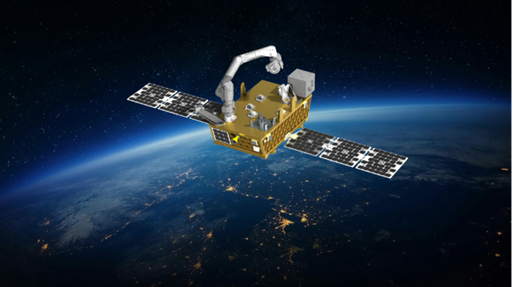
NASA, in collaboration with industry partners, is set to revolutionize in-space operations with the upcoming Fly Foundational Robots mission, scheduled for launch in late 2027. This ambitious mission will deploy a commercial robotic arm in low Earth orbit, marking a significant step towards fostering a sustainable human presence on other planets. By advancing in-space robotics, NASA aims to provide essential tools for future scientific explorations and discoveries, ultimately benefiting life on Earth.
Bo Naasz, a senior technical lead for In-space Servicing, Assembly, and Manufacturing (ISAM) at NASA Headquarters, shared, “Today it’s a robotic arm demonstration, but one day these same technologies could be assembling solar arrays, refueling satellites, constructing lunar habitats, or manufacturing products that benefit life on Earth.” This mission is not just about a single demonstration; it is about laying the groundwork for a dominant space economy and ensuring a sustained human presence on the Moon and Mars.
The Fly Foundational Robots Mission: A Leap Into the Future of Space
The Fly Foundational Robots (FFR) mission will feature a state-of-the-art robotic arm developed by Motiv Space Systems, a small business known for its innovative contributions to space technology. This robotic arm is designed for dexterous manipulation, autonomous tool use, and the ability to traverse spacecraft structures in zero or partial gravity. The versatility of this technology could pave the way for repairing and refueling spacecraft, constructing habitats and infrastructure in space, and maintaining life support systems on the lunar and Martian surfaces. Furthermore, these robotic systems can serve as invaluable assistants to astronauts during prolonged missions.
The implications of advancing robotic systems in space extend beyond the cosmos. The insights gained from this mission could enhance similar technologies on Earth, impacting various industries such as construction, medicine, and transportation. By pushing the boundaries of what’s possible in space, NASA is opening new avenues of innovation and technological growth on our home planet.
Collaborative Efforts and Technological Demonstration
To bring this vision to life, NASA’s Space Technology Mission Directorate is working with Astro Digital to facilitate a hosted orbital test of the FFR’s commercial robotic arm. This collaboration is part of the agency’s Flight Opportunities program, which provides a platform for testing cutting-edge technologies in space.
The FFR mission also opens doors for guest roboticists to participate and contribute. These professionals will have the chance to utilize Motiv’s robotic platform as a testbed, allowing them to perform unique tasks and experiments. NASA will act as the inaugural guest operator, actively seeking other interested U.S. partners to join this pioneering mission.
The future of in-space robotics hinges on the ability to test robotic operations in the harsh environment of space before embarking on more complex servicing and refueling missions. The demonstration of Motiv’s robotic arm operations in space through the FFR mission is just the beginning. This mission is set to unlock a world of possibilities, pushing the envelope of what can be achieved in space.
Funding and Management
NASA’s Fly Foundational Robots demonstration is funded through the NASA Space Technology Mission Directorate’s ISAM portfolio. The mission is managed by NASA’s Goddard Space Flight Center, located in Greenbelt, Maryland. Motiv Space Systems, based in Pasadena, California, will provide the mission’s robotic arm system under a NASA Small Business Innovation Research Phase III award. Astro Digital, headquartered in Littleton, Colorado, will conduct the flight test of Motiv’s robotic payload through NASA’s Flight Opportunities program, which is managed by NASA’s Armstrong Flight Research Center in Edwards, California.
The Broader Impact of In-Space Robotics
As NASA continues to push the boundaries of space exploration, the Fly Foundational Robots mission represents a significant milestone in the development of in-space robotics. The ability to perform complex tasks such as assembling solar arrays, refueling satellites, and constructing habitats in space is crucial for future missions to the Moon, Mars, and beyond. Moreover, advancements in robotic technologies have the potential to transform industries on Earth, from construction to medicine, by providing new tools and methodologies that enhance efficiency and safety.
In conclusion, NASA’s commitment to advancing in-space robotics through the Fly Foundational Robots mission is a testament to the agency’s vision of a sustainable human presence in space. By fostering innovation and collaboration with industry partners, NASA is paving the way for a future where humans can live and work on other planets, while also driving technological advancements that benefit life on Earth.
For more information about In-space Servicing, Assembly, and Manufacturing at NASA, please visit [NASA’s ISAM page](https://etd.gsfc.nasa.gov/capabilities/in-space-servicing-assembly-and-manufacturing/).
For more Information, Refer to this article.