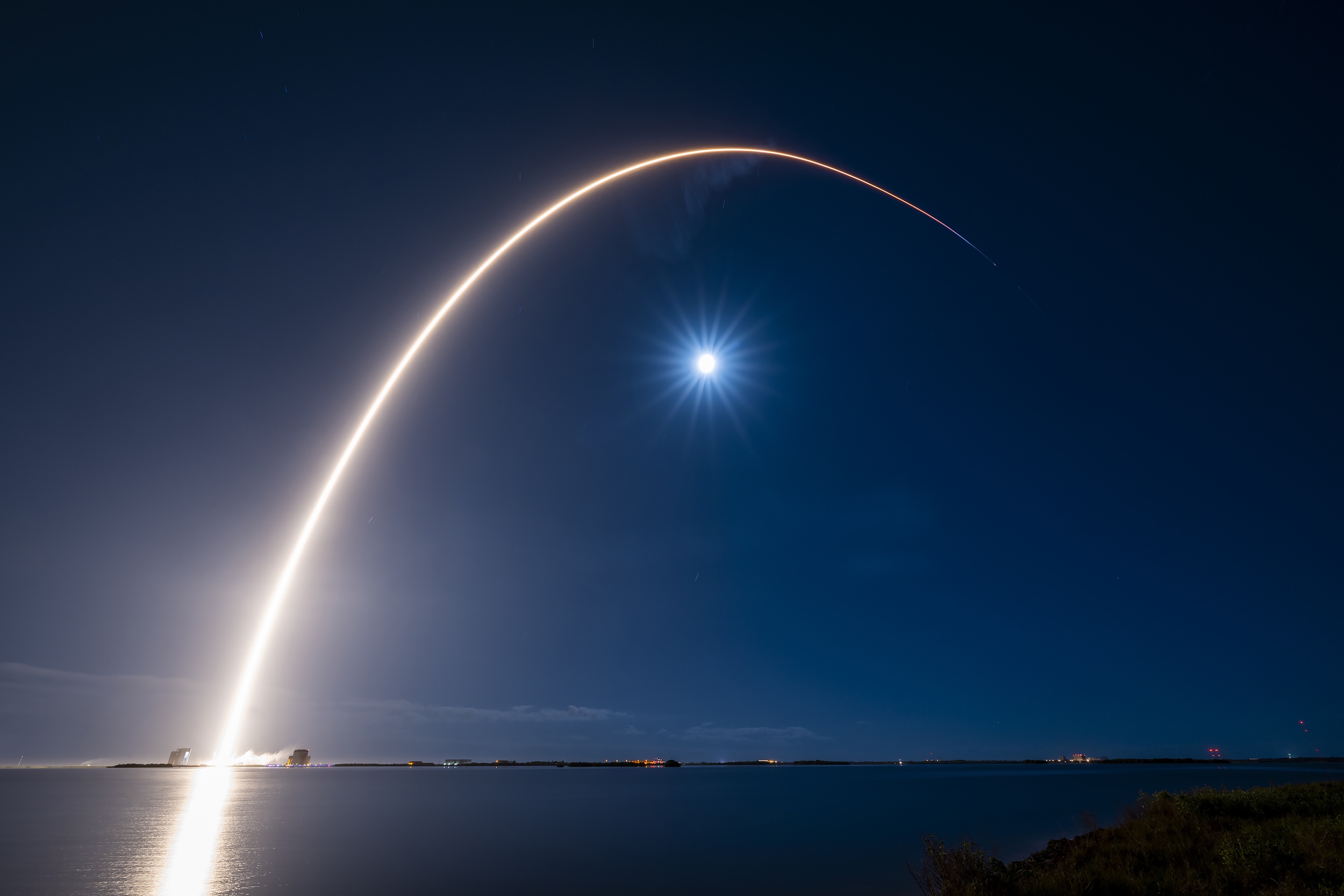
In a remarkable event on November 16, a Falcon 9 rocket launched from Vandenberg Space Force Base in California, showcasing a feat that was once considered groundbreaking but has now become routine: the successful landing of its first stage. This achievement signifies SpaceX’s continued leadership in the field of rocket reusability, a significant development in the aerospace industry.
The launch carried the Sentinel-6B Earth science satellite and marked the 500th reflight of an orbital booster by SpaceX, a milestone that no other aerospace company has yet reached. This achievement underscores SpaceX’s dominance in the reusability arena, setting a benchmark that others are now striving to meet.
However, the landscape of rocket reusability is beginning to evolve. Just three days prior, Blue Origin marked a significant milestone by becoming the second company to land an orbital-class booster. The New Glenn’s first stage successfully landed on the company’s ship, Jacklyn, stationed in the Atlantic Ocean. This event marked the vehicle’s second flight, demonstrating Blue Origin’s progress in the field.
Dave Limp, CEO of Blue Origin, expressed optimism in an interview about the future of their reusable technology. He mentioned that the first stage might be refurbished and prepared for the next New Glenn launch, anticipated in early 2026. The decision will depend on the duration required to turn around the booster and the completion timeline of a new booster. Limp noted, “It’s a bit of a tossup on which one we use next,” indicating the challenges and strategic decisions involved in the process.
Several other companies are also preparing to join the reusability race. In China, multiple firms are gearing up for test flights of vehicles designed for booster recovery and reuse, often employing methodologies similar to those used by SpaceX. Rocket Lab, for instance, is in the final stages of developing its Neutron rocket. The company aims to reuse Neutron’s first stage, although recovery is not planned for its debut flight in 2026.
As booster reuse becomes more prevalent, the focus is shifting towards an even more ambitious goal: the reuse of the entire launch vehicle. SpaceX is once again at the forefront of this endeavor with its Starship vehicle. According to Kiko Donchev, SpaceX’s vice president of launch, Starship is designed to be a rapidly reusable vehicle. Speaking at the Economist Space Summit in Orlando on November 5, Donchev highlighted the transformative potential of Starship, emphasizing that it could reduce the cost of payload launches by a factor of 100 while significantly increasing the payload capacity.
Donchev explained, “That is how you take a leap in what’s going to happen in low Earth orbit, on the moon, and eventually on Mars.” While the Starship program is still in development, and its upper stage has yet to be reused, advancements are expected as SpaceX plans to fly the upgraded version 3 early next year.
In the race towards full reusability, the gap between SpaceX and other companies is narrowing. Stoke Space, a startup, is developing Nova, a vehicle with two reusable stages. Although Nova is smaller in scale than Starship, with a payload capacity of several tons compared to Starship’s 100 tons, it could begin flights as soon as next year. Stoke Space CEO Andy Lapsa emphasized the importance of full reusability, stating that it not only changes the economics of space launches but also enhances the accessibility to orbit by removing the current limitations associated with single-use upper stages.
Lapsa further elaborated on the potential impact of full reusability, suggesting that it could open up new markets previously deemed economically unfeasible, such as microgravity manufacturing and space-based solar power. “That’s the moment when, I think, you’ll see commercialization of space really start to scale,” Lapsa remarked, reflecting the broader implications of such technological advancements.
It is apparent that the reusability race is gaining momentum, and SpaceX will not be the only player in this field. Blue Origin is also exploring the concept of a reusable second stage for its New Glenn rocket under an initiative called Project Jarvis. As companies continue to innovate and compete, the landscape of space launch capabilities is poised for significant transformation.
In conclusion, while SpaceX currently leads the way in rocket reusability, the advancements by companies like Blue Origin, Rocket Lab, and Stoke Space indicate a rapidly evolving industry. The quest for full reusability promises to revolutionize the economics and accessibility of space travel, paving the way for new opportunities and markets. As these developments unfold, the commercialization of space is set to reach new heights, promising an exciting future for space exploration and utilization.
This article originally appeared in the December 2025 issue of SpaceNews Magazine. For further reading, you can visit the publication’s official website.
For more Information, Refer to this article.