
























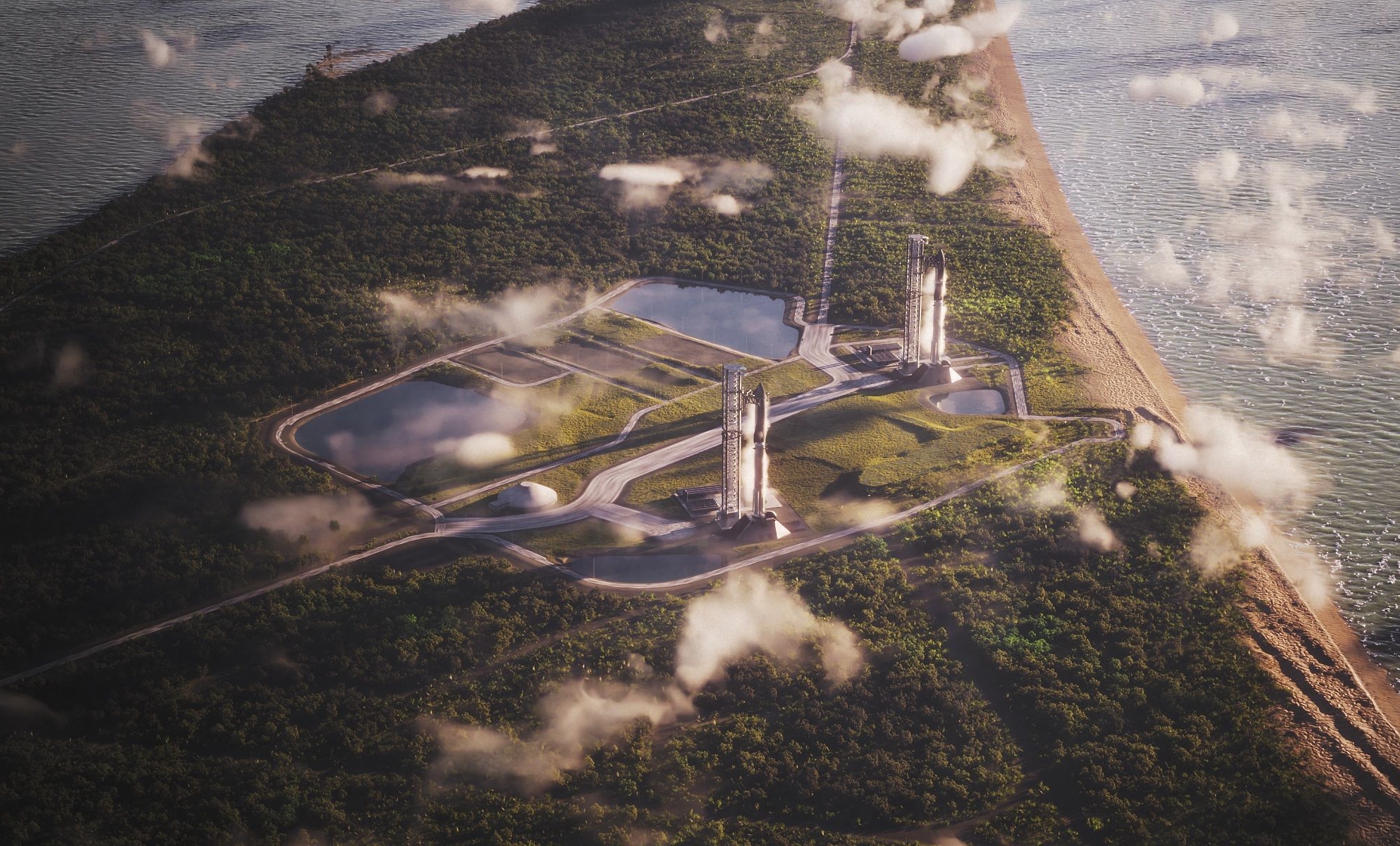
SpaceX Secures Approval for Transforming Launch Site at Cape Canaveral for Starship Operations
In a significant development for space exploration, the Department of the Air Force has sanctioned plans to transform a former Delta 4 launch site at Cape Canaveral into a dedicated complex for SpaceX’s Starship missions. This decision marks a major step forward in SpaceX’s pursuit to enhance its launch capabilities and support both national security and space exploration initiatives.
Background and Approval Process
On November 20, a pivotal decision was made by Michael Saunders, the acting assistant secretary of the Air Force for energy, installations, and the environment. This decision formally endorsed SpaceX’s proposal to redevelop Space Launch Complex 37 (SLC-37) at Cape Canaveral Space Force Station specifically for Starship launches. This approval followed the completion of an extensive environmental impact statement, or EIS, which assessed the feasibility and potential environmental effects of the proposal. The record of decision and the final EIS have been made available on the project website, although the Department of the Air Force has not issued a separate announcement regarding this decision.
The transformation of SLC-37 is a key component of SpaceX’s strategy, which was initially proposed in early 2024 by the U.S. Space Force, a division within the Department of the Air Force. SLC-37 has a rich history, initially built in the 1960s to support the Saturn 1 rockets and later adapted for United Launch Alliance’s Delta 4 missions. The last Delta 4 Heavy mission launched from this site in April 2024, paving the way for its new role in supporting Starship operations.
Environmental Considerations and Technical Challenges
The original plans included not only the conversion of SLC-37 but also the construction of a new Starship launch facility at a site designated SLC-50. This location was a greenfield site situated between SLC-37 and SLC-40, the latter currently used by SpaceX for its Falcon 9 missions. However, SLC-50 was eventually excluded from detailed consideration due to findings from archaeological surveys. These surveys indicated that the area had a high potential for archaeological significance and was home to endangered species, leading to its removal from the study.
The environmental impact study revealed that the development and operation of a Starship launch pad at SLC-37, which includes up to 76 Starship/Super Heavy launches and 152 landings annually, would generally not have significant environmental repercussions. However, one notable exception was the noise generated by launches and landings. The study highlighted that local communities might experience high levels of noise and overpressure, potentially causing community annoyance.
The analysis further concluded that zones experiencing significant structural damage from noise and overpressure would be confined within the boundaries of Cape Canaveral Space Force Station and the neighboring Kennedy Space Center. Nonetheless, buildings that are not reinforced and situated within these zones could be vulnerable to damage. The report emphasized that while infrastructure upgrades have been made at CCSFS, some of the buildings were originally constructed for earlier launch programs and vehicles, making them susceptible to impacts on windows and other structural elements.
Furthermore, parts of Cape Canaveral and Cocoa Beach, Florida, could fall within weaker overpressure contours generated by sonic booms from vehicle landings. Although the potential for structural damage is considered extremely unlikely, with odds ranging from 1 in 10,000 to 1 in 100,000, there remains a higher likelihood of affecting windows and fragile objects.
SpaceX’s Expansion Plans and Strategic Importance
SpaceX intends to construct two Starship pads at SLC-37, along with supporting infrastructure. These new pads will complement the two existing pads at Starbase, Texas, and another currently under construction at Launch Complex 39A at Kennedy Space Center. With these developments, SpaceX aims to position itself as a critical player in supporting America’s national security objectives and the Artemis program, which seeks to return humans to the Moon and potentially beyond.
In a statement following the approval, SpaceX expressed its commitment to advancing its launch capabilities. "With three launch pads in Florida, Starship will be ready to support America’s national security and Artemis goals as the world’s premiere spaceport continues to evolve to enable airport-like operations," the company stated. This expansion is expected to enhance SpaceX’s ability to conduct frequent launches, akin to the operations of an airport, thereby increasing efficiency and capacity.
While construction at SLC-37 has already commenced, SpaceX has not disclosed a timeline for when the facilities will be completed or when the first launch will occur from this site. The development of these new launch pads is expected to significantly bolster SpaceX’s capacity to conduct regular and high-frequency launches, catering to both governmental and commercial demands for space access.
Conclusion and Broader Implications
The approval to convert SLC-37 into a Starship launch site is a testament to SpaceX’s growing influence and pivotal role in the space industry. As the company continues to expand its infrastructure and capabilities, it remains at the forefront of technological innovation and exploration. This development not only supports the United States’ strategic goals in space but also underscores the importance of responsible and sustainable practices in space exploration.
As space activities continue to increase, the need for careful environmental assessments and community considerations becomes paramount. The approval process for SLC-37 serves as a reminder of the delicate balance between technological advancement and environmental stewardship. As SpaceX moves forward with its plans, the world will be watching closely to see how these new capabilities are leveraged to achieve ambitious goals in space exploration.
For more detailed information, you can access the official documents related to this project through the project website. The transformation of SLC-37 represents a significant chapter in SpaceX’s journey and the broader narrative of space exploration in the 21st century.
For more Information, Refer to this article.