
























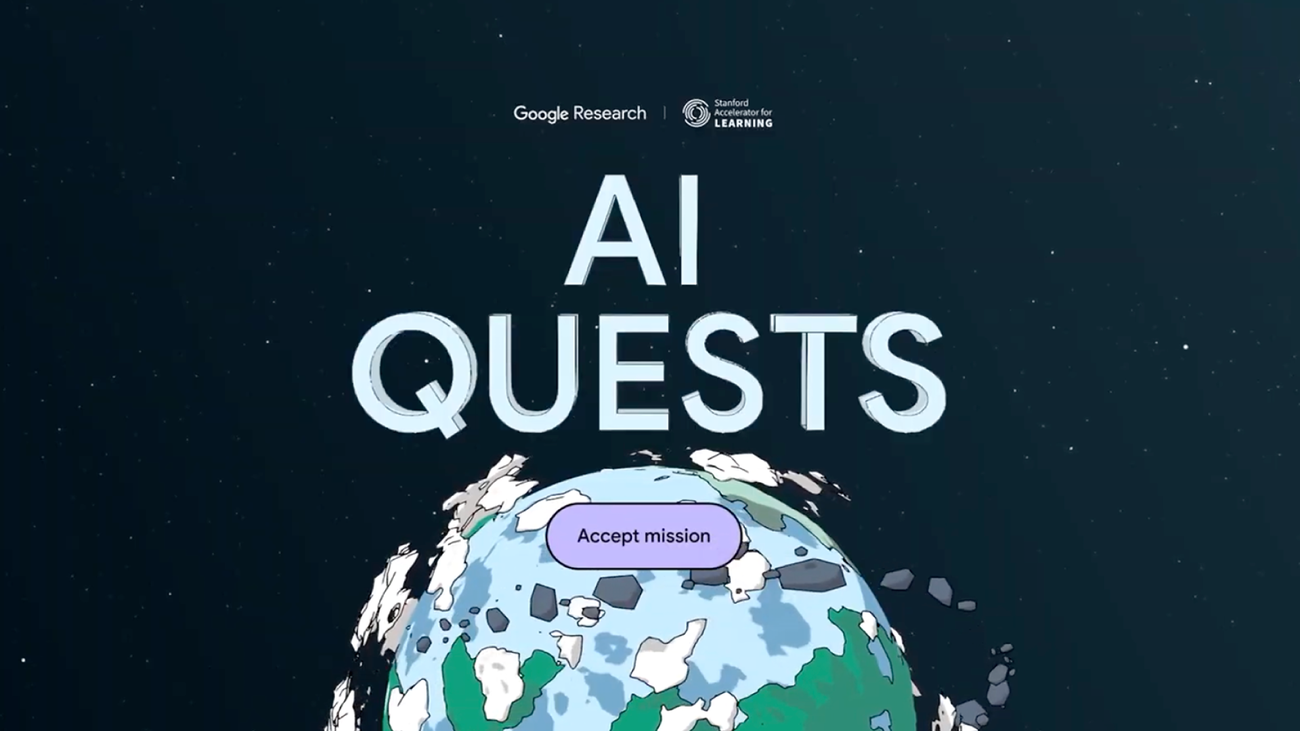
For many years, Google has been a strong advocate of Computer Science Education Week (CSEdWeek), a global initiative aimed at making coding and computational thinking more accessible and less intimidating. This year, Google is joining forces with Code.org and the Computer Science Teachers Association (CSTA) to participate in the worldwide Hour of AI event. The purpose of this collaboration is to empower educators and students to better understand, utilize, and create with artificial intelligence (AI). To support this mission, Google is introducing a new component to its educational tool, AI Quests, which is designed to enhance AI literacy through hands-on experience in classrooms. Additionally, Google.org has pledged over $5 million to support computer science education.
Introducing a New Quest
This week, hundreds of Google employees worldwide are volunteering their time to visit classrooms and lead sessions on AI Quests, a game-based learning platform developed in collaboration with the Stanford Accelerator for Learning. The latest addition to AI Quests allows students to take on the role of researchers, using an AI model to detect eye diseases and prevent blindness. This educational quest draws inspiration from Google’s real-world research on diabetic retinopathy, a condition that can lead to blindness if left untreated. The quest is offered free of charge, along with existing resources on flood forecasting and accompanying teacher materials.
Expanding AI Quests to More Classrooms by 2026
In an effort to broaden the reach of AI Quests, Google is working closely with several partners, including the Raspberry Pi Foundation and Google DeepMind. Together, they have expanded the Experience AI program, which UNESCO has recognized for its role in promoting responsible AI education. With financial support from Google.org, this initiative aims to reach millions of students by incorporating AI Quests into their curriculum.
Understanding the Technical Aspects
AI, or artificial intelligence, refers to the simulation of human intelligence in machines that are designed to think and learn like humans. AI can analyze large amounts of data much faster than humans can, which makes it particularly useful in fields such as healthcare, finance, and education. One of the focal points of Google’s AI Quests is diabetic retinopathy, a diabetes-related eye condition. By using AI models, students can learn how technology can assist in diagnosing this condition by analyzing eye scans, potentially preventing blindness.
AI Quests: A Hands-On Approach
AI Quests offer a unique, interactive way for students to learn about AI. By engaging in these quests, students gain practical experience in using AI tools to solve real-world problems. This hands-on approach not only demystifies AI but also encourages students to think critically about how AI can be applied in various sectors. The quests are structured to guide students through the process of data collection, model training, and result interpretation, all of which are essential components of AI.
Google’s Commitment to AI Literacy
The introduction of new quests and the significant financial investment from Google.org underscore Google’s commitment to advancing AI literacy. By offering these resources and funding, Google aims to prepare the next generation of innovators and problem solvers, equipping them with the skills necessary to thrive in an increasingly digital world.
Impact of AI Education
As AI continues to evolve, its impact on education is becoming more pronounced. By integrating AI into the classroom, educators can provide students with a more personalized learning experience, tailored to their individual needs and learning styles. Furthermore, AI can help educators identify areas where students may need additional support, enabling more targeted interventions.
Reactions from the Community
The educational community has responded positively to Google’s initiatives. Educators appreciate the accessibility and practicality of AI Quests, which make complex AI concepts more approachable for students. The collaboration with reputable organizations like Code.org and CSTA further enhances the credibility and reach of these educational tools.
Looking Ahead
As we look toward the future, the expansion of AI Quests and Google’s continued investment in computer science education promise to revolutionize how students learn about AI. The integration of AI literacy into the standard curriculum will not only prepare students for future careers but also foster a more inclusive and diverse tech industry.
For more information on these initiatives, you can visit the Computer Science Education Week and Hour of AI websites. Additionally, the AI Quests platform offers a wealth of resources for both students and teachers interested in exploring the world of AI.
For more Information, Refer to this article.