SpaceX Introduces Stargaze: A Revolutionary Step in Space Traffic Coordination
In a groundbreaking move, SpaceX has unveiled a new initiative aimed at revolutionizing space traffic coordination. This initiative, known as Stargaze, has garnered substantial attention and praise, largely due to the unique conditions it places on its users.
The Launch of Stargaze
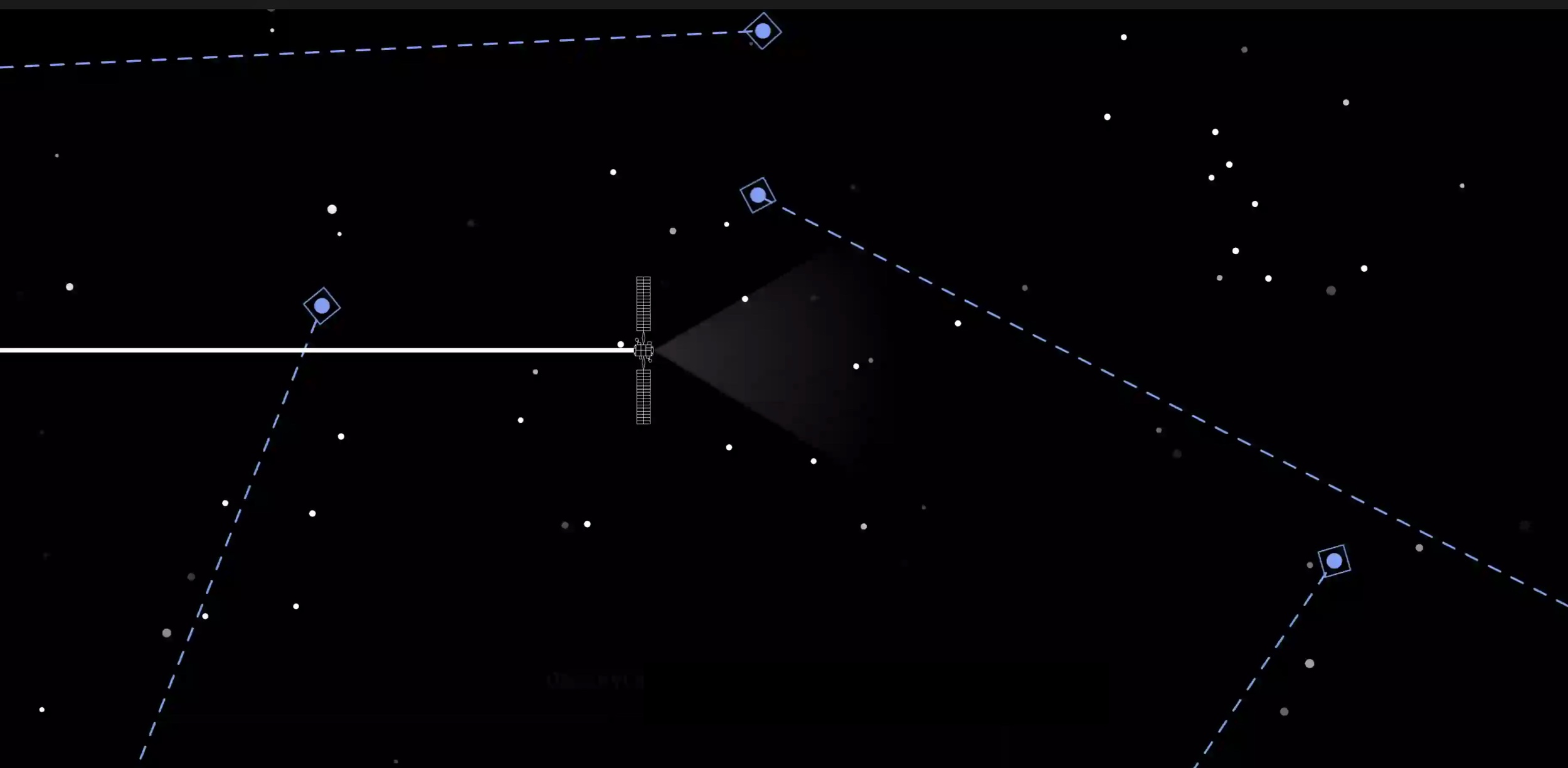
In late January, SpaceX announced the introduction of Stargaze, a space situational awareness (SSA) system designed to enhance the safety and efficiency of operations in space. Utilizing images captured by star tracker cameras mounted on its impressive fleet of nearly 10,000 Starlink satellites, Stargaze is capable of identifying other objects in orbit and accurately plotting their trajectories.
According to SpaceX, Stargaze collects about 30 million observations of objects each day. These observations are instrumental in calculating orbits in near real-time, which is a significant advancement in space situational awareness. By leveraging this data, SpaceX can predict potential close encounters and issue conjunction data messages (CDMs). These messages provide crucial information on these close approaches, allowing satellite operators to take necessary precautions.
Beta Testing and Industry Response
Currently, more than a dozen companies are participating in a beta test of SpaceX’s innovative space traffic management platform using Stargaze data. SpaceX plans to make the system available to all satellite operators in the spring, free of charge. While specific details about the quality or accuracy of Stargaze are sparse, the sheer scale of the system and the backing of a major industry player like SpaceX have elicited positive reactions from across the industry.
Ruth Stilwell, the executive director of Aerospace Policy Solutions, emphasized the significance of SpaceX’s involvement in the space traffic management sector. Speaking during a SpaceCom Expo panel on January 30, she pointed out that while there are other SSA providers offering free services, SpaceX’s dominant presence in the space industry naturally attracts a different level of attention.
Marco Concha, the flight dynamics engineering manager at Amazon Leo, another large satellite constellation, expressed his enthusiasm for Stargaze. He highlighted his company’s positive relationship with Starlink, noting that they coordinate their satellite activities effectively. Concha mentioned hearing claims that Stargaze can observe a single space object 1,000 times per day, which, if true, is an extraordinary feat in the realm of SSA.
Preventing Collisions: A Practical Example
SpaceX cited a practical example in its announcement of Stargaze, showcasing the system’s ability to prevent potential collisions. In December 2025, SpaceX identified a close approach between a Starlink satellite and an unidentified spacecraft, initially calculated to have a miss distance of 9,000 meters—a safe distance by industry standards. However, five hours before the close approach, the other spacecraft executed a maneuver that reduced the miss distance to just 60 meters.
Stargaze promptly detected this maneuver and updated the trajectory on the screening platform. Consequently, the Starlink satellite was able to execute a maneuver to eliminate any risk of collision. SpaceX emphasized that such a rapid response would not have been feasible using traditional radar systems or high-latency conjunction screening processes. The high frequency of observations and quick updates provided by Stargaze proved crucial in this scenario.
Conditions for Participation
SpaceX has made participation in its space traffic management platform contingent upon operators providing ephemeris data. This data includes information about their satellites and planned maneuvers, which is critical for ensuring the accuracy of trajectory predictions and minimizing collision avoidance maneuvers. SpaceX updates its Starlink ephemeris hourly, ensuring the most current data is available for deconfliction.
Ed Lu, co-founder and chief technology officer of LeoLabs, a company that operates ground-based radars for tracking space objects, expressed support for SpaceX’s announcement during a panel at the SmallSat Symposium on February 10. He emphasized the importance of encouraging companies to share their ephemeris data, as no measurement can accurately predict a satellite’s future maneuvering plans. Operators possess crucial information about their intended maneuvers and should share this data for the benefit of the entire industry.
Beyond Ephemeris Data
Panelists also discussed the need for operators to share more than just ephemeris data. Brad King, chief executive of Orbion Space Technology, a satellite propulsion company, pointed out the value of sharing information about a satellite’s ability to maneuver, such as the propellant reserve in its tank. This data can help determine which spacecraft should perform a maneuver in the event of a potential collision involving two maneuverable satellites.
The Role of Government and the Future of TraCSS
The emergence of Stargaze and SpaceX’s space traffic management platform coincides with efforts by the Office of Space Commerce to develop its own system, the Traffic Coordination System for Space (TraCSS). Mandated by Space Policy Directive 3 in 2018, TraCSS aims to enhance space traffic coordination.
Gabriel Swiney, director of the policy, international, and advocacy division of the office, spoke at the SpaceCom Expo about the office’s progress in rolling out the first production version of TraCSS. Although the effort was delayed by a six-week government shutdown last fall, the production release is expected in the near future.
While Swiney praised Stargaze as a "super-clever technical implementation of existing tools," he also acknowledged the challenges posed by the availability of multiple SSA data sources. Different SSA providers often offer varying predictions, which can be confusing for satellite operators. Operators may find themselves receiving contradictory information if they subscribe to multiple SSA services or may lack insight into what others are receiving if they rely on a single provider.
Diane Howard, principal at sur l’espace and former director of commercial space policy on the National Space Council, highlighted the importance of government involvement in evaluating SSA data. She emphasized the need for a neutral or governmental entity to assess the data and provide certification, which would benefit operators by ensuring the reliability of the information they receive.
Looking Ahead
The future of TraCSS has been uncertain due to budgetary considerations. The White House’s fiscal year 2026 budget proposal initially sought to cancel the program, but Congress subsequently restored some funding. A provision in a White House executive order on space policy in December removed a section of Space Policy Directive 3 that required TraCSS to provide free data, suggesting the possibility of user fees in the future.
In conclusion, SpaceX’s introduction of Stargaze represents a significant advancement in space traffic coordination. By leveraging its extensive satellite network and real-time data processing capabilities, SpaceX is setting a new standard for space situational awareness. As the industry continues to evolve, initiatives like Stargaze and TraCSS will play a crucial role in ensuring the safety and sustainability of space operations.
For more detailed information, please refer to the original announcement on SpaceX’s website.
For more Information, Refer to this article.