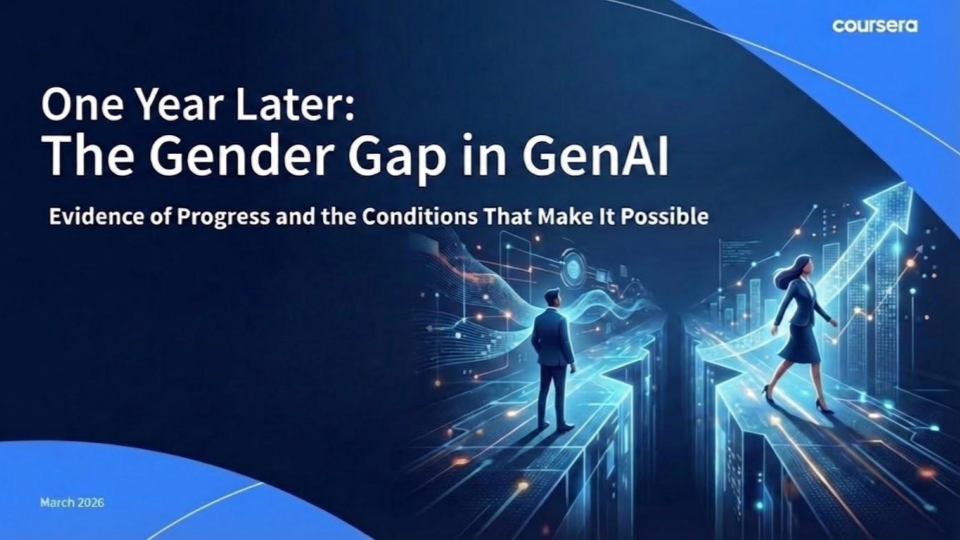
As we approach International Women’s Day, we are thrilled to present new research from Coursera that sheds light on the advancements made in narrowing the gender gap in critical skill areas such as Generative AI (GenAI) and essential human competencies like Critical Thinking.
GenAI is poised to revolutionize the global economy and reshape the workforce, with projections indicating a potential increase of USD$22.3 trillion in global wealth by 2030. To ensure a fair distribution of these economic benefits, it is imperative for institutions to equip individuals with the necessary skills to leverage emerging technologies.
The “One Year Later: The Gender Gap in GenAI” report serves as a follow-up to Coursera’s initial analysis on this topic, aiming to assess the progress made in narrowing gender disparities in key skill domains.
Key insights from the report include:
– A noticeable increase in women’s participation in GenAI learning globally, with women accounting for 36% of total GenAI enrollments in 2025, up from 32% in 2024.
– In the enterprise sector, women represented 42% of GenAI enrollments on Coursera in 2025, showcasing a positive trend in female engagement with the technology.
– While the global gender gap is shrinking, there are variations in the uptake of GenAI skills by gender across different regions.
– Latin American countries have seen significant growth in female participation in GenAI courses on Coursera, with standout performers including Peru, Mexico, and Colombia.
– Asia Pacific nations have also made strides in narrowing the GenAI gender gap, with countries like Uzbekistan, India, Vietnam, Indonesia, Thailand, and the Philippines showing increased female enrollments.
– Conversely, some English-speaking and economically developed countries have experienced a slower growth in female enrollments in GenAI courses.
Furthermore, the report highlights that once the initial enrollment hurdle is overcome, female learners often exhibit higher levels of persistence in GenAI learning. Courses that emphasize the practical applications of GenAI for productivity and problem-solving tend to attract more female participants.
In line with these findings, the report offers recommendations for institutions looking to promote equitable access to skills, including designing beginner-friendly GenAI courses with real-world applications, fostering inclusive learning environments, expanding access through partnerships and localization efforts, and showcasing diverse role models in the field.
By pairing GenAI skills with essential human capabilities like Critical Thinking, stakeholders can empower women from diverse backgrounds to thrive in the GenAI economy. Through collaborative efforts from educators, businesses, and governments, we can create a more inclusive learning landscape that supports women in upskilling and pursuing opportunities in the evolving tech industry.
In conclusion, the “One Year Later: The Gender Gap in GenAI” report provides valuable insights and strategies to enhance inclusivity and retention in GenAI learning. By prioritizing the needs and experiences of female learners, we can work towards a future where all individuals have the opportunity to succeed in the digital era.
For more detailed information, you can access the full report on the Coursera website.
For more Information, Refer to this article.