Severe Drought Fuels Destructive Wildfires in Southern Georgia
In April 2026, southern Georgia experienced devastating wildfires exacerbated by an extreme drought affecting the Southeast. The Pineland Road and Highway 82 fires collectively scorched over 50,000 acres (20,000 hectares) as of April 28, according to reports from the Georgia Forestry Commission. These fires have led to significant destruction, including the loss of more than 120 homes, marking a historic low for wildfire-related property loss in the state.
Impact of Drought on Fire Behavior
The ongoing drought has created ideal conditions for wildfires, with dry vegetation acting as fuel for flames. The Highway 82 fire ignited on April 18 due to a spark from a welding operation, while the Pineland Road fire started three days later when a mylar balloon collided with power lines. Both fires spread rapidly through parched landscapes, driven by gusty winds and aided by debris from Hurricane Helene, which had left fallen trees and limbs in its wake.
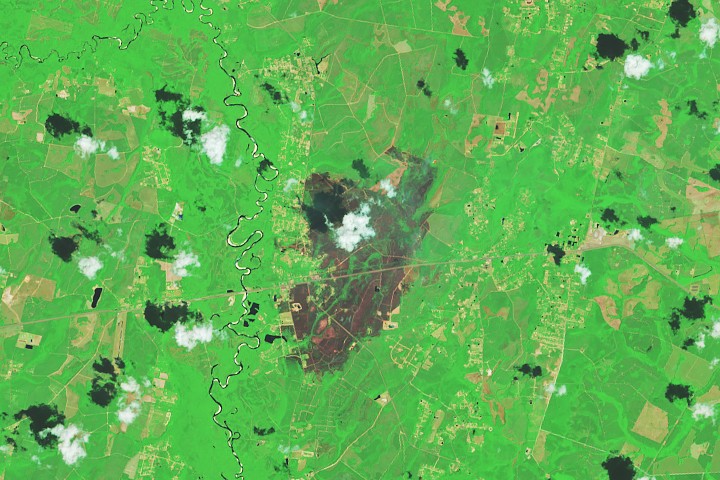
Satellite imagery captured by Landsat 8 illustrates the extent of the damage. The false-color images show charred areas appearing gray against lush green vegetation. Infrared signatures indicate active fire fronts in orange hues. The fires’ rapid expansion has raised alarm among local residents and officials alike.
Containment Efforts Amidst Challenging Conditions
As firefighters battled the blazes, heavy rains provided some relief but did not fully contain the fires. By April 28, the Pineland Road fire was reported to be only 23 percent contained, while the Highway 82 fire was at 32 percent containment. Hundreds of firefighting personnel have been deployed to combat these wildfires using both aerial and ground equipment.
The Georgia Forestry Commission continues to monitor the situation closely, providing updates on containment efforts and resource allocation. The challenges posed by ongoing drought conditions complicate firefighting strategies and increase risks for both personnel and nearby communities.
The Role of Technology in Wildfire Management
Nasa’s satellite and aircraft data play a crucial role in understanding fire behavior and managing wildfires across the United States. Tools such as FIRMS (Fire Information for Resource Management System), Worldview browser, and Fire Event Explorer provide real-time monitoring capabilities that help operational agencies respond effectively to emerging wildfire threats.
The integration of advanced technology into wildfire management allows for better analysis of trends and behaviors associated with wildfires. This data-driven approach enhances preparedness efforts and informs strategies aimed at minimizing damage during extreme weather events.
Community Response and Historical Context
The recent wildfires have prompted an urgent response from local communities as residents evacuate their homes amid uncertainty about their safety. Reports indicate that this incident has resulted in the most homes lost to wildfire in Georgia’s history, highlighting the increasing severity of wildfire risks linked to climate change and prolonged drought conditions.
As communities grapple with recovery efforts, discussions about long-term strategies for wildfire prevention are becoming increasingly important. Local officials are advocating for improved infrastructure and resources to mitigate future risks while addressing environmental factors contributing to such catastrophic events.
What This Means
The destructive wildfires in southern Georgia serve as a stark reminder of the growing threat posed by climate change and extreme weather patterns. As drought conditions become more frequent across various regions, communities must prioritize preparedness measures alongside technological advancements in wildfire management. Understanding these dynamics is essential for safeguarding both lives and property against future disasters.
For more information, read the original report here.