






















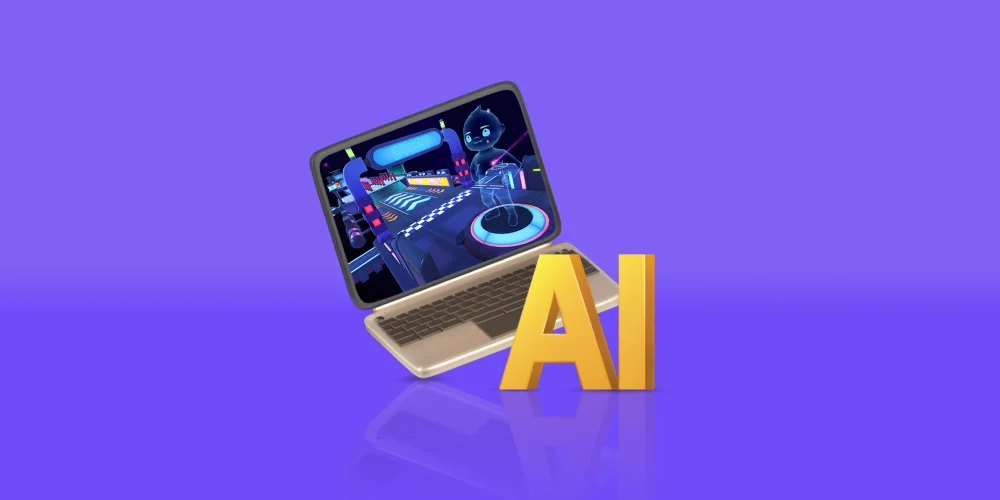
Title: The Evolution of Game Art Outsourcing: Embracing AI for Efficiency and Creativity
Introduction
In recent years, game art outsourcing has become a crucial aspect of the video game industry. By hiring external artists or studios, game developers can produce high-quality visuals that captivate players and enhance the overall gaming experience. According to industry projections, the game art outsourcing market is expected to be valued at approximately $0.55 billion by 2024, with an annual growth rate of around 9%. As the demand for visually stunning games continues to rise, publishers increasingly rely on specialized outsourcers to handle tasks such as concept art, 2D/3D model creation, animations, and more. However, the advent of artificial intelligence (AI) is reshaping the landscape of game art outsourcing, revolutionizing workflows, business models, and quality expectations for both studios and publishers.
AI Transforms Game Art
AI-Powered Innovations in Game Art Creation
The integration of AI tools in game art creation has brought about significant changes, offering faster, cheaper, and more creative assets. AI technologies can generate concept sketches, 3D models, textures, and even animations at an unprecedented speed. Surveys reveal that AI adoption in game development is accelerating rapidly, with approximately 73% of studios already utilizing AI tools and 88% planning to do so. In 2024, industry reports indicated that over 40% of developers had applied AI in their work. This article explores how AI is transforming game art outsourcing, altering workflows, business models, and quality expectations for studios and publishers alike.
Traditional Game Art Outsourcing: Workflows and Challenges
Traditionally, game art pipelines have been highly manual, involving several distinct phases:
1. Concept Phase: In this initial stage, artists manually sketch characters, environments, and user interfaces. The process involves iterative collaboration with the client until the desired style is finalized.
2. Asset Creation: Once the concept art is approved, it is transformed into 3D models or final 2D assets. This phase involves modeling, UV-unwrapping (a technique for mapping textures onto 3D models), texturing, rigging (preparing a 3D model for animation), and animation. Each step often requires specialized skills and expertise.
3. Feedback Loops: The outsourcing studio submits work in stages for client review. Clients provide feedback and request revisions, and artists manually refine the assets to align with the client’s vision and technical requirements.
4. Integration and Polishing: The final art assets are delivered to the game developers for integration into the game. Minor tweaks may be necessary to ensure compatibility with the game’s performance and consistency.
This traditional process is often slow and resource-intensive. However, outsourcing remains popular due to its scalability and cost-efficiency. Studios can tap into large talent pools without the need for lengthy hiring processes. For example, an outsourcing studio like Whimsy Games can quickly assemble a team of hundreds of artists to handle sudden spikes in workload. This approach allows studios to access specialized skills, such as stylized character design or high-end 3D modeling, while avoiding fixed overhead costs like salaries, benefits, and hardware expenses. Despite these advantages, the production time and costs associated with traditional art creation remain significant. Creating a single game environment or a set of character models can take weeks or months of work from multiple specialists.
AI-Enhanced Workflows vs. Traditional Pipelines
AI tools have introduced a new paradigm in game art creation, offering AI-enhanced workflows that can accelerate or reimagine many traditional steps:
1. Concept Art: Instead of manual sketching, artists can use text-to-image generators like Midjourney, DALL·E, and Stable Diffusion to produce rapid iterations. A simple text prompt can yield numerous concept variations in seconds, broadening creative exploration. Artists then select the best outputs and refine them by hand, saving time on preliminary drafts.
2. 3D Modeling: New AI platforms like Kaedim3D can automatically convert 2D drawings or photos into 3D meshes. Little Buffalo Studios, for instance, reported that feeding a single concept sketch into an AI model could generate a usable 3D asset with minimal effort. This can save substantial time and resources, allowing small teams to achieve what once required large art departments.
3. Texturing and Materials: Generative AI can quickly produce high-quality textures by learning from real-world examples. AI tools can extrapolate material patterns and styles from references, automatically unwrapping UVs and applying realistic surface detail. This reduces the time needed for manual texture creation.
4. Animation and Rigging: AI-powered motion capture and procedural animation can accelerate character movement and facial expression workflows. Machine-learning models can predict lifelike animations without the need for frame-by-frame keying. While full-body animations may still require human polishing, AI can seed the initial motion much faster than traditional methods.
5. Collaboration Tools: Cloud-based platforms enable distributed art teams to work together in real-time. These tools, often infused with AI features, help outsourcing studios manage feedback and asset libraries across time zones.
AI acts as a “co-pilot” for artists, automating routine tasks and multiplying creative output. Studios see AI as central to the creative pipeline, allowing teams to iterate faster, generate assets more efficiently, and explore ideas that would be too time-consuming manually.
AI-Powered 3D Models
The integration of AI in game art creation has been transformative, particularly in the realm of 3D models. AI tools can now transform sketches into fully realized 3D assets, saving both time and costs significantly. This capability has the potential to revolutionize how artists and developers approach game design, enabling them to focus on high-value tasks while AI handles routine aspects.
Case Studies: AI-Driven Efficiency Gains
Several real-world examples highlight AI’s impact on game art production:
1. Lost Lore – Bearverse (Mobile Game): The indie studio Lost Lore experimented with generative AI for its game Bearverse. By using AI tools, they were able to generate character and environment concepts quickly. The results were impressive: generating 17 character concepts took less than a week with AI assistance, compared to about 34 business days of work by a full team before AI. Lost Lore estimates that creating 100 character concepts traditionally would have cost approximately $50K and six months, whereas with AI, it took only about $10K and one month. Overall, using AI reduced costs by 10–15× while delivering comparable results.
2. Little Buffalo Studios (3D Game): To populate its game world with thousands of assets, Little Buffalo used the AI modeling platform Kaedim. Instead of scrapping a 3D version due to budget constraints, the team input 2D concept art into Kaedim and utilized its auto-texturing and Level of Detail (LOD) features. This approach resulted in a 10–40× saving per asset, allowing them to build a 20× bigger world in 3D, compressing years of work into weeks.
3. General Industry Surveys: A 2024 survey of 650 developers conducted by a16zGames confirmed the trend. It found that 73% of studios were already using AI tools, with 88% planning to do so. Nearly 40% of these studios reported over 20% productivity gains from AI, with a quarter cutting costs by 20% or more.
These case studies illustrate a common theme: AI greatly accelerates ideation and asset creation, enabling outsourcing studios or in-house teams to offer faster turnaround and lower pricing. A smaller team skilled at prompting AI can replace multiple artists for the same output.
Benefits of AI in Game Art Outsourcing
Integrating AI into art pipelines offers significant upsides:
1. Speed and Scalability: AI tools can generate rough art in seconds that would take humans hours or days. This means concepts can be turned around almost instantly, and iterative feedback cycles shrink.
2. Cost Efficiency: Automating routine tasks reduces labor hours, making art production significantly cheaper. For instance, Lost Lore calculated that using AI made art production 10–15× cheaper.
3. Creative Breadth and Innovation: AI acts as a rapid brainstorming partner, enabling the generation of diverse styles and options for creative ideas. Artists can explore imaginative concepts and discover novel designs they might not have drawn by hand.
4. Flexibility: AI outputs can be quickly altered, allowing clients to change course late in the process without derailing production.
5. Quality Consistency: Well-trained AI tools can apply a coherent style automatically, ensuring consistency across large art sets.
6. Rapid Prototyping and Lower Risk: Developers can prototype game worlds much faster, lowering the risk of building the wrong product.
7. Focus on High-Value Tasks: By automating basics, artists can concentrate on fine details and unique features.
In summary, AI can turn art outsourcing into a high-velocity, creative venture, offering faster iterations, larger art budgets, and more design exploration at lower cost.
Risks and Challenges of AI Integration
Despite the advantages, AI in game art comes with important risks:
1. Intellectual Property and Legal Uncertainty: The biggest concern is intellectual property (IP). Many generative AIs are trained on massive datasets scraped from the web, often without explicit permission. This raises legal uncertainties about the use of AI-generated art.
2. Quality and Consistency Issues: AI tools are not foolproof and can produce glitches or inconsistent styles. Skilled artists are still needed to clean up the output.
3. Ethical and Workforce Concerns: There is anxiety about job displacement, with artists fearing that AI might replace human roles.
4. Security and Confidentiality: Using third-party AI tools raises data security questions, especially when handling confidential game assets.
5. Contractual and Industry Standards: Some clients may explicitly forbid AI use, leading to potential disputes.
In short, AI introduces potential IP and legal liabilities, quality-control overhead, and ethical issues. Outsourcing studios must treat AI tools as just that – tools, not magic bullets. Human oversight remains essential to ensure art meets the game’s needs and is legally safe.
Future Trends and Strategic Considerations
Looking ahead, AI’s role in game art outsourcing will likely deepen:
1. Proprietary and Fine-Tuned Models: Studios may develop or license custom-trained models to mitigate IP risks and ensure style consistency.
2. Workflow Integration: Major art tools and engines are adding AI features, enhancing collaboration and efficiency.
3. Runtime Content Generation: Some studios are experimenting with AI-driven content inside games, blurring the line between development tools and live game features.
4. Enhanced Training and Roles: Teams will need specialists who can coax the best results from generative tools.
5. Legal Frameworks: New regulations and industry standards will emerge, requiring studios to set clear contracts regarding AI use.
6. Balancing Human Creativity: Successful studios will use AI to augment, not replace, human creativity.
Strategically, outsourcing studios and game publishers should pilot AI in non-critical areas first, evaluate cost/time savings, and develop guidelines. Emphasizing transparency with clients and investing in hybrid pipelines will be key to successful AI integration.
Conclusion
Artificial intelligence is rapidly transforming the world of game art outsourcing. By automating concept generation, speeding up 3D modeling, and enhancing texturing and animation, AI can significantly reduce development times and costs. However, it comes with challenges such as legal uncertainties, the need for robust quality control, and managing artist concerns. The future likely holds a hybrid landscape where AI-assisted art pipelines become standard, with human artists providing direction and polish. Studios that proactively integrate AI while guarding against its risks will be best positioned to deliver visually stunning games on time and within budget. Those who learn to communicate with AI early will likely rise to the top of the industry.
For more Information, Refer to this article.