





















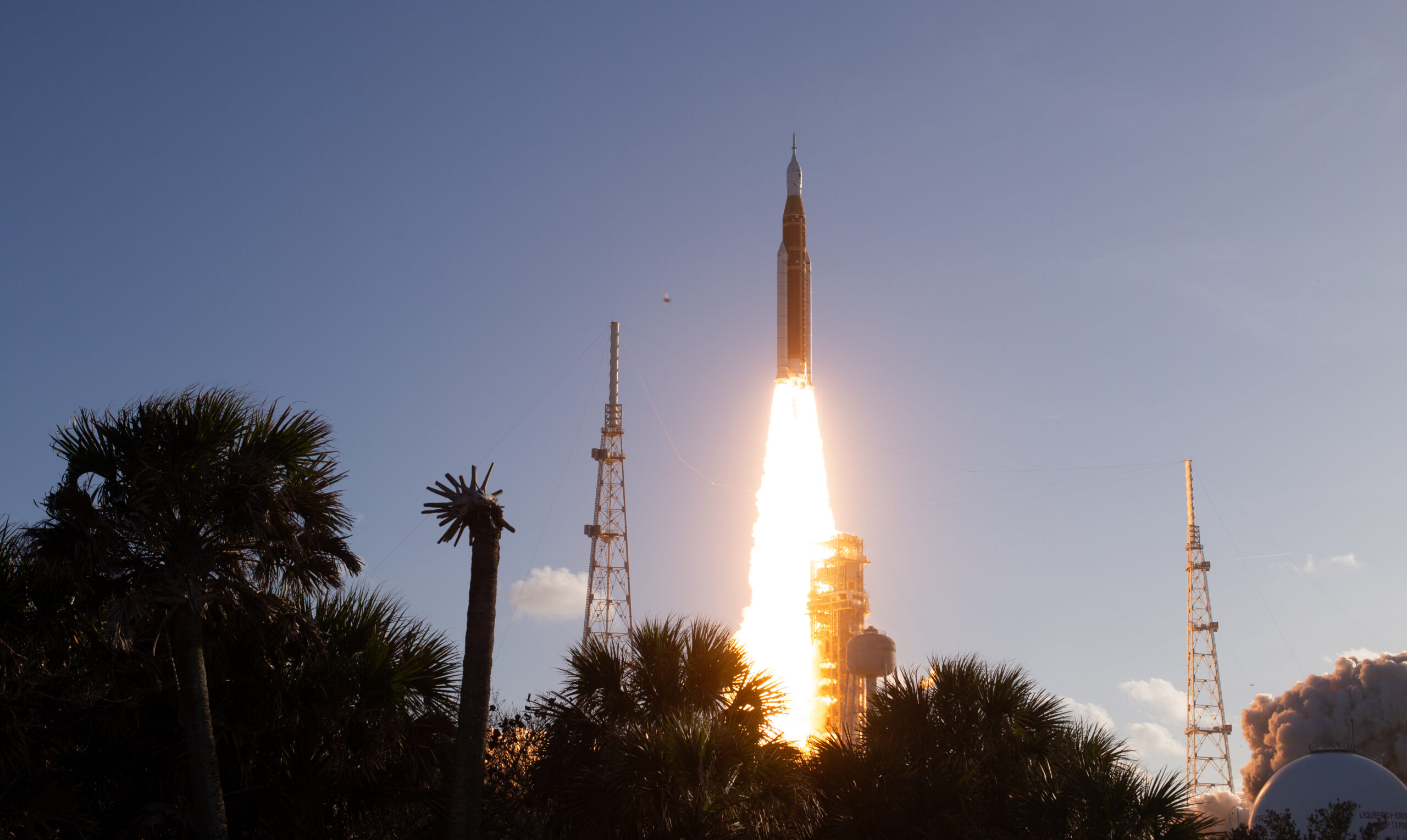
NASA’s highly anticipated Artemis II mission is set to launch with the Space Launch System rocket and Orion spacecraft on April 1, 2026. This mission will mark a significant step forward in NASA’s goal to return humans to the Moon and eventually pave the way for future manned missions to Mars.
The Artemis II mission will see NASA astronauts Reid Wiseman, Victor Glover, and Christina Koch, along with Canadian Space Agency astronaut Jeremy, embark on a thrilling 10-day journey around the Moon and back aboard their Orion spacecraft. This mission is part of NASA’s Artemis program, which aims to land the first woman and the next man on the Moon by 2024.
The Space Launch System (SLS) rocket is NASA’s most powerful rocket to date, designed to carry astronauts and cargo beyond low Earth orbit. The Orion spacecraft, on the other hand, is a state-of-the-art crew vehicle that will transport astronauts to the Moon and beyond. Together, these two components form a crucial part of NASA’s ambitious plans for deep space exploration.
The Artemis II mission will serve as a test of the SLS rocket and Orion spacecraft’s capabilities, paving the way for future missions to the Moon and beyond. The astronauts aboard the spacecraft will conduct a series of experiments and observations during their journey, providing valuable data for future manned missions.
One of the key objectives of the Artemis II mission is to test the spacecraft’s ability to withstand the harsh radiation environment of deep space. This will be crucial for ensuring the safety of astronauts on future missions to Mars, where they will be exposed to high levels of radiation for extended periods.
In addition to the scientific objectives of the mission, Artemis II will also serve as a symbolic milestone in NASA’s journey back to the Moon. The mission will demonstrate the agency’s commitment to exploring the unknown and pushing the boundaries of human spaceflight.
As we look forward to the launch of the Artemis II mission, it is important to reflect on the incredible technological advancements that have made this mission possible. From the development of the SLS rocket to the construction of the Orion spacecraft, countless engineers, scientists, and technicians have worked tirelessly to bring this mission to fruition.
In conclusion, the Artemis II mission represents a significant step forward in NASA’s ambitious plans for deep space exploration. As we prepare to witness the launch of the SLS rocket and Orion spacecraft on April 1, 2026, we can only imagine the incredible discoveries and achievements that lie ahead for humanity in space.
For more information and to view launch day photos, visit NASA’s official website. Let’s join together in celebrating this historic moment in human space exploration.
For more Information, Refer to this article.