














![[Video] Samsung Color E-Paper: A Smarter Alternative to Traditional Posters](https://www.hawkdive.com/media/samsung-tvs-and-displays-samsung-color-e-paper-samsung-vxt-digital-signage_thumb932-218x150.jpg "Samsung introduces Color E-Paper as innovative poster alternative.")







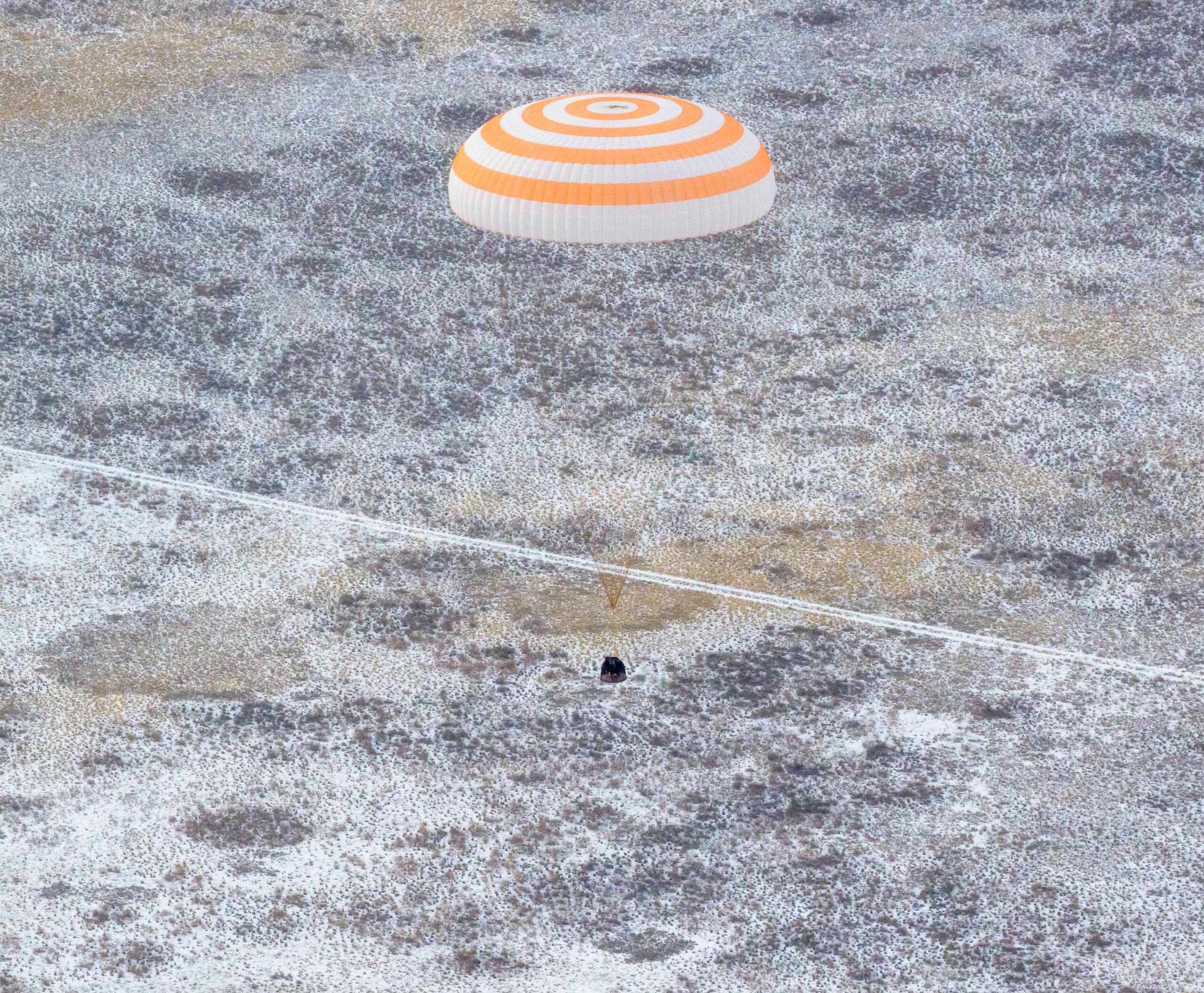
Soyuz MS-27: Successful Return to Earth from the International Space Station
On December 9, 2025, the Soyuz MS-27 spacecraft successfully landed in a remote area near Zhezkazgan, Kazakhstan, marking the return of three astronauts from their mission aboard the International Space Station (ISS). The crew consisted of NASA astronaut Jonny Kim and Roscosmos cosmonauts Sergey Ryzhikov and Alexey Zubritsky, who completed their journey back to Earth after spending 245 days in space. This mission was part of the Expeditions 72 and 73, during which the crew engaged in various scientific research and technology demonstrations essential for future space exploration.
The Journey and Its Significance
The return of the Soyuz MS-27 highlights the ongoing efforts and achievements of the International Space Station, a symbol of international cooperation and scientific advancement. For over 25 years, the ISS has been a hub for continuous human presence in space, providing a unique platform for scientific research that cannot be conducted on Earth due to gravity constraints. The station serves as a critical testbed for understanding the intricacies of long-duration spaceflight, which is vital for future missions to the Moon, Mars, and beyond.
Contributions and Achievements
During their time on the ISS, Jonny Kim and his crewmates were involved in a wide array of scientific investigations. These studies spanned multiple disciplines including biology, physics, and materials science. They also participated in technology demonstrations aimed at improving life support systems, spacecraft navigation, and communication technologies, which are crucial for deep space missions.
One of the notable aspects of their mission was the emphasis on medical and biological research. Understanding how the human body adapts to long-term spaceflight is essential for ensuring astronaut health and safety during extended missions. The crew’s participation in these studies helps scientists develop countermeasures to mitigate the adverse effects of microgravity on the human body.
The Role of the International Space Station
The ISS plays a pivotal role in preparing for future space exploration endeavors. It offers opportunities for commercial entities to conduct research and develop technologies that can benefit both space and Earth applications. The station’s microgravity environment allows scientists to conduct experiments that lead to breakthroughs in medicine, manufacturing, and environmental science.
Moreover, the ISS serves as a platform for international collaboration in space exploration. It brings together the expertise and resources of space agencies from around the world, fostering a spirit of cooperation and shared goals. This collaboration extends to educational outreach, inspiring the next generation of scientists, engineers, and explorers.
Looking Forward: The Future of Space Exploration
As the ISS continues to facilitate groundbreaking research, NASA and its international partners are looking toward the future of space exploration. The knowledge gained from missions like that of the Soyuz MS-27 crew is instrumental in planning for the Artemis program, which aims to return humans to the Moon and establish a sustainable presence there by the end of the decade. Lessons learned from the ISS will also inform the development of technologies needed for human missions to Mars.
NASA astronaut Jonny Kim’s journey exemplifies the dedication and commitment of those who venture into space to push the boundaries of human knowledge. His contributions, along with those of his international colleagues, pave the way for a new era of exploration and discovery.
Acknowledging the Support System
The success of missions like the Soyuz MS-27 return would not be possible without the extensive support network on the ground. Teams of engineers, scientists, and mission control personnel work tirelessly to ensure the safety and success of the astronauts and the spacecraft. Their expertise in spacecraft operations, communication, and emergency procedures is crucial for handling the complexities of space travel.
Public Engagement and Education
Public interest in space exploration is at an all-time high, and missions like the one completed by Jonny Kim and his team capture the imagination of people around the world. NASA and other space agencies leverage this interest to engage the public through educational programs, live broadcasts of space events, and interactive content. By sharing the experiences of astronauts and the science conducted aboard the ISS, these agencies aim to inspire future generations and promote STEM education.
Conclusion
The return of the Soyuz MS-27 spacecraft marks another successful chapter in the story of human space exploration. The dedication and achievements of astronauts like Jonny Kim and his colleagues contribute significantly to our understanding of living and working in space. As we look to the future, the lessons learned from the ISS will continue to guide our efforts to explore new frontiers, ensuring that space remains a realm of discovery and inspiration for all of humanity.
For more detailed insights into the mission and to view photographs from the landing, interested readers can visit NASA’s official website.
For more Information, Refer to this article.