



























The Impact of Space Travel on Human Physiology: Insights from NASA’s Human Research Program
Space travel is a transformative experience that affects the human body in various ways. It can enhance some muscles while weakening others, cause fluid shifts, and alter one’s sense of balance. NASA’s Human Research Program (HRP) is dedicated to understanding these changes and devising strategies to mitigate them, ensuring that astronauts can thrive during future deep space missions.
Astronauts aboard the International Space Station (ISS) engage in daily exercise routines, typically lasting around two hours, to maintain bone density, muscle strength, and cardiovascular health. However, the prolonged exposure to microgravity presents a unique challenge. The longer astronauts remain in space, the more difficult it becomes for their bodies and brains to readjust to Earth’s gravitational pull. Upon returning to Earth, astronauts often describe their home planet as feeling heavy, loud, and unusually still. While some astronauts reacclimate within days, others may require more time to fully recover.
Adapting to Earth’s Gravity
The crew of NASA’s SpaceX Crew-7 mission, which included NASA astronaut Jasmin Moghbeli, ESA astronaut Andreas Mogensen, JAXA astronaut Satoshi Furukawa, and Roscosmos cosmonaut Konstantin Borisov, returned to Earth in March 2024 after spending nearly 200 days in space. Upon their return, one of the initial tests involved walking with their eyes open and then closed. Mogensen noted that walking in a straight line with closed eyes was almost impossible due to the brain’s reliance on vision for orientation in space. Back on Earth, the brain must relearn how to interpret balance signals from the inner ear. Moghbeli humorously remarked that her first attempt at the exercise resembled a "nice tap dance."
Moghbeli experienced significant wobbliness during her initial days back on Earth and felt fatigue in her neck from supporting her head again. However, she reported a relatively swift readaptation to gravity. Each astronaut’s recovery timeline is unique, with Mogensen requiring additional time to regain coordination and Furukawa experiencing nausea when looking down. Nevertheless, Furukawa noted steady improvement each day.
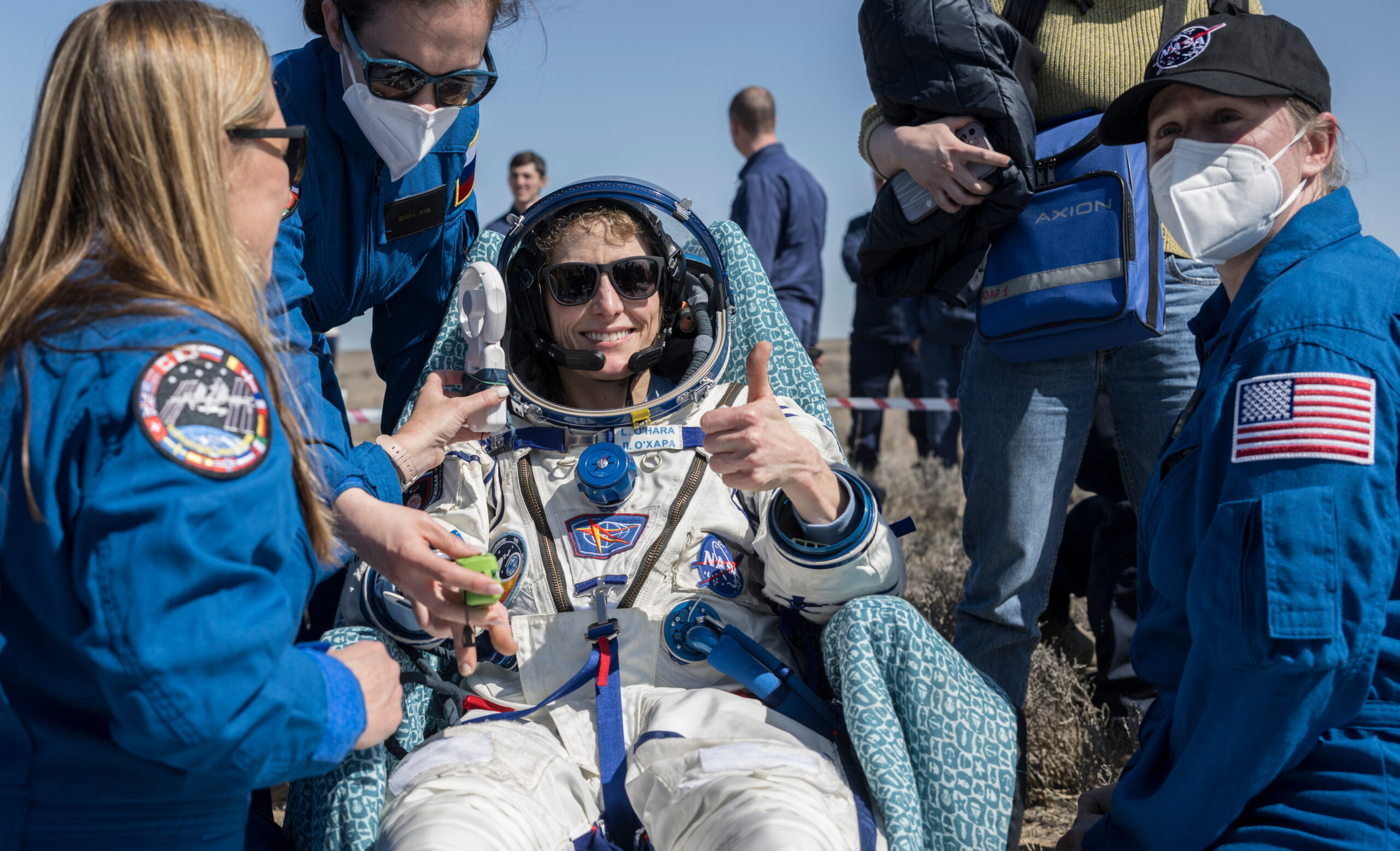
NASA astronaut Loral O’Hara returned in April 2024 after 204 days in space. She reported feeling almost fully recovered within a week of returning to Earth. Drawing from her experience as an ocean engineer, O’Hara likened the dynamic of small teams working in remote locations with support from a larger base to the operations on the space station, emphasizing its relevance for future missions.
NASA astronaut Nichole Ayers, who embarked on her first space mission with NASA’s SpaceX Crew-10, explained that the human brain quickly adapts to weightlessness by disregarding the vestibular system, which controls balance. Remarkably, within days of returning to Earth, the brain readjusts, highlighting the body’s adaptability.
When NASA astronaut Frank Rubio landed in Kazakhstan in September 2023, he had just completed a record-setting 371-day mission, marking the longest single U.S. spaceflight. Rubio’s body acclimated to gravity rapidly, although he experienced soreness in his feet and lower back after over a year without weight bearing. Thanks to consistent exercise routines, Rubio felt mostly recovered within a few weeks. Mentally, extending his mission from six months to a year was a challenge, but regular video calls with family provided crucial emotional support.
Crew-8 astronauts Matt Dominick, Jeanette Epps, Michael Barratt, and cosmonaut Alexander Grebenkin splashed down in October 2024 after spending 235 days on the ISS. Dominick initially found sitting on hard surfaces uncomfortable, while Epps immediately noticed Earth’s heaviness. Epps emphasized the importance of daily movement and exercise, regardless of fatigue.
Barratt, a veteran astronaut and board-certified expert in internal and aerospace medicine, explained that recovery varies for each crew member, with every return offering new insights to NASA.
Challenges for Experienced Space Travelers
Veteran NASA astronauts Suni Williams and Butch Wilmore returned from a nine-month mission with Crew-9 in early 2025. Despite her extensive spaceflight experience, Williams acknowledged the challenges of readapting to gravity. She was surprised by the weight and heaviness of objects on Earth and emphasized the importance of daily physical activity to regain strength and balance.
NASA astronaut Don Pettit, another seasoned space traveler, returned in April 2025 after 220 days on the ISS. At 70 years old, Pettit is NASA’s oldest active astronaut, but his experience did not make gravity more forgiving. During landing, he humorously recounted the challenge of keeping occupied by "emptying the contents of my stomach onto the steppes of Kazakhstan." While microgravity had alleviated joint and muscle aches, Earth’s gravity reintroduced them abruptly.
Pettit described his recovery as similar to previous missions, highlighting that the most challenging aspect was retraining the small, often-overlooked muscles that go unused in space. He emphasized that readapting to gravity is a gradual learning process.
Recovery occurs incrementally, aided by exercise, support systems, and a touch of humor. Regardless of the duration spent in space, each astronaut’s journey back to Earth is unique.
NASA’s Human Research Program plays a crucial role in helping scientists understand how spaceflight environments affect astronaut health and performance. The program informs strategies to keep crews healthy for future missions to destinations like the Moon, Mars, and beyond. The HRP conducts studies on astronauts before, during, and after spaceflight to understand how the human body adapts to living and working in space. Additionally, Earth-based analog missions provide valuable data that contribute to enhancing astronaut safety during future space explorations.
To gain deeper insights into how microgravity affects the human body and develop innovative strategies to keep astronauts healthy, NASA scientists conduct bedrest studies. These studies involve volunteers spending 60 days in bed with their heads tilted at a specific angle to mimic the physiological effects of space. This setup allows scientists to trial interventions aimed at countering some of the adverse effects of microgravity. These studies are conducted at the German Aerospace Center’s Cologne campus in a facility known as :envihab, a combination of "environment" and "habitat."
Further Earth-based insights come from the Crew Health and Performance Exploration Analog (CHAPEA) and the Human Exploration Research Analog (HERA) at NASA’s Johnson Space Center in Houston. Both analogs recreate the remote conditions and scenarios of deep space exploration on Earth, utilizing volunteer crews who live and work in isolation. These simulations help NASA refine future interventions, strategies, and protocols for astronauts in space.
NASA and its partners have supported continuous human presence in space since November 2000. After nearly 25 years, the space station remains a vital proving ground for training and research for deep space missions. It plays a crucial role in enabling NASA’s Artemis campaign, lunar exploration, and future missions to Mars.
The ongoing research and insights gained from these efforts are invaluable in preparing for the challenges of extended space travel, ultimately paving the way for humanity’s exploration of the cosmos. For more detailed information on NASA’s Human Research Program and its ongoing studies, you can visit the official NASA Human Research Program page.
For more Information, Refer to this article.






![[Interview] Inside Spatial Signage: How Samsung Brought Glasses-Free 3D Displays to Life](https://www.hawkdive.com/media/samsung-tvs-and-displays-spatial-signage-interview_thumb932-218x150.jpg "Samsung’s Glasses-Free 3D Displays: The Inside Story [Interview]")
