




















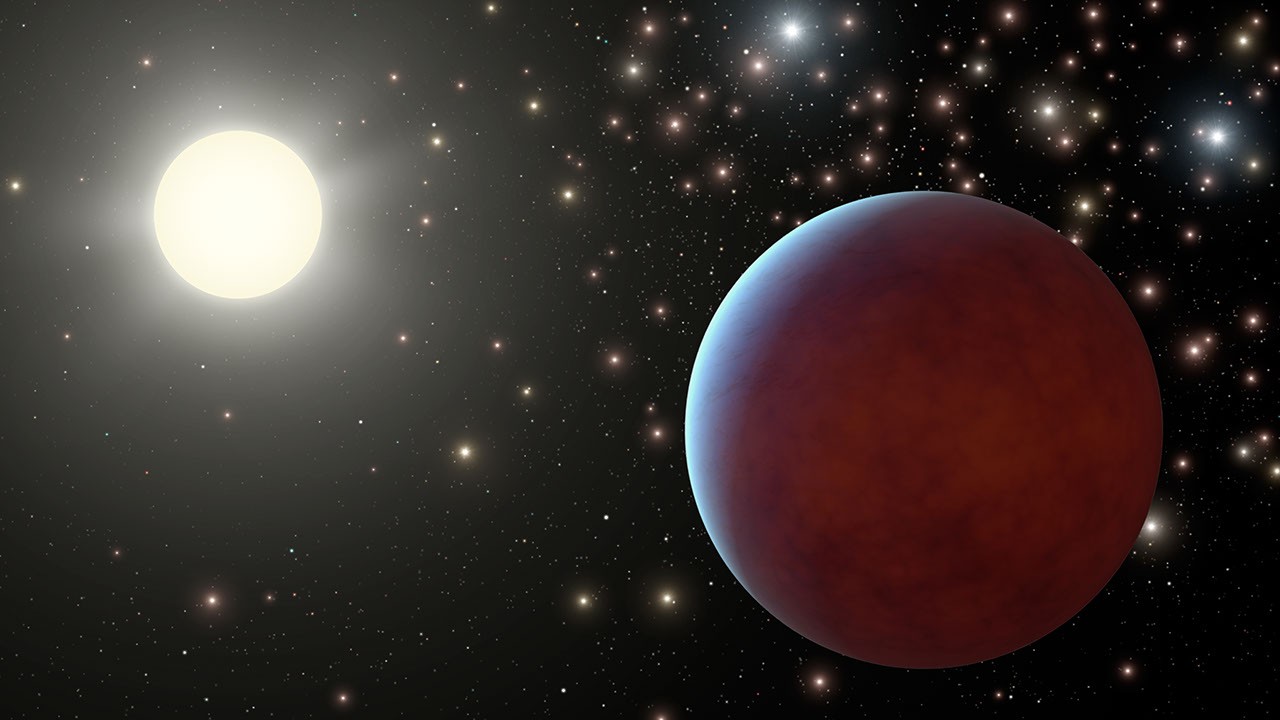
The constellation Cancer is known for its dim stars, but it also boasts the beautiful Beehive Cluster and the fascinating exoplanet 55 Cancri e. Located between the brighter Gemini and Leo constellations, Cancer may be hard to spot in moderately light-polluted areas, but once you find it, you’ll be able to see the Beehive Cluster. This open cluster of young stars is three times larger than the Moon in the sky and can be seen with the naked eye as a faint, cloudy patch under good sky conditions. However, it truly shines when viewed through binoculars or a telescope, revealing its beauty and intricacy.
The Beehive Cluster, also known as Praesepe, Nubilum, M44, the Ghost, or Jishi qi, has captured the imagination of observers for thousands of years. Its resemblance to a hive of buzzing bees is one interpretation, but others see different shapes and patterns within the cluster. This deep-sky object has a rich history and continues to intrigue astronomers and stargazers alike.
55 Cancri is a binary star system located about 41 light-years away from Earth. The larger star in this system is orbited by at least five planets, with one of them being 55 Cancri e, also known as Janssen. This super-Earth is a rocky world eight times the mass of our planet and has one of the shortest years of any known planet, orbiting its star every 18 hours. Despite its proximity to its star, 55 Cancri e has a unique atmosphere composed of helium, hydrogen, and traces of hydrogen cyanide. This inhospitable environment makes it unlikely to harbor life, as the surface is most likely scorching-hot rock.
The discovery of 55 Cancri e in 2004 was made using the wobble method, where astronomers detect the gravitational pull of a planet on its star. Subsequent observations using the transit method, which measures the dimming of a star as a planet passes in front of it, confirmed the planet’s orbital period in 2011. These methods have revolutionized the field of exoplanet discovery and have allowed scientists to study distant worlds like never before.
For those interested in learning more about exoplanets and the latest discoveries in the field, NASA’s Exoplanet Travel Bureau offers a fascinating glimpse into what it would be like to visit 55 Cancri e and other alien worlds. By exploring these virtual environments, we can expand our understanding of the universe and the diverse array of planets that exist beyond our solar system.
To delve deeper into the topic of exoplanets and how astronomers detect them, resources like the Night Sky Network’s “Wobbles and Transits: How Do We Find Planets Around Other Stars?” activity provide valuable insights into the methods used in exoplanet detection. By understanding these techniques, we can appreciate the complexity and precision involved in studying planets outside our solar system.
In conclusion, the constellation Cancer may be dim, but it holds within it wonders like the Beehive Cluster and the intriguing exoplanet 55 Cancri e. These celestial objects offer a glimpse into the vastness and diversity of our universe, inspiring awe and curiosity in those who gaze up at the night sky. Through ongoing research and exploration, we continue to uncover the mysteries of distant worlds and expand our knowledge of the cosmos.
References:
– NASA Exoplanets: https://science.nasa.gov/exoplanets/
– Exoplanet Travel Bureau: https://science.nasa.gov/exoplanets/immersive/exoplanet-travel-bureau/55-cancri-e-explore-the-surface/
– Night Sky Network: https://nightsky.jpl.nasa.gov/news/413/
Original Source: https://science.nasa.gov/exoplanet-catalog/55-cancri-e/
For more Information, Refer to this article.