























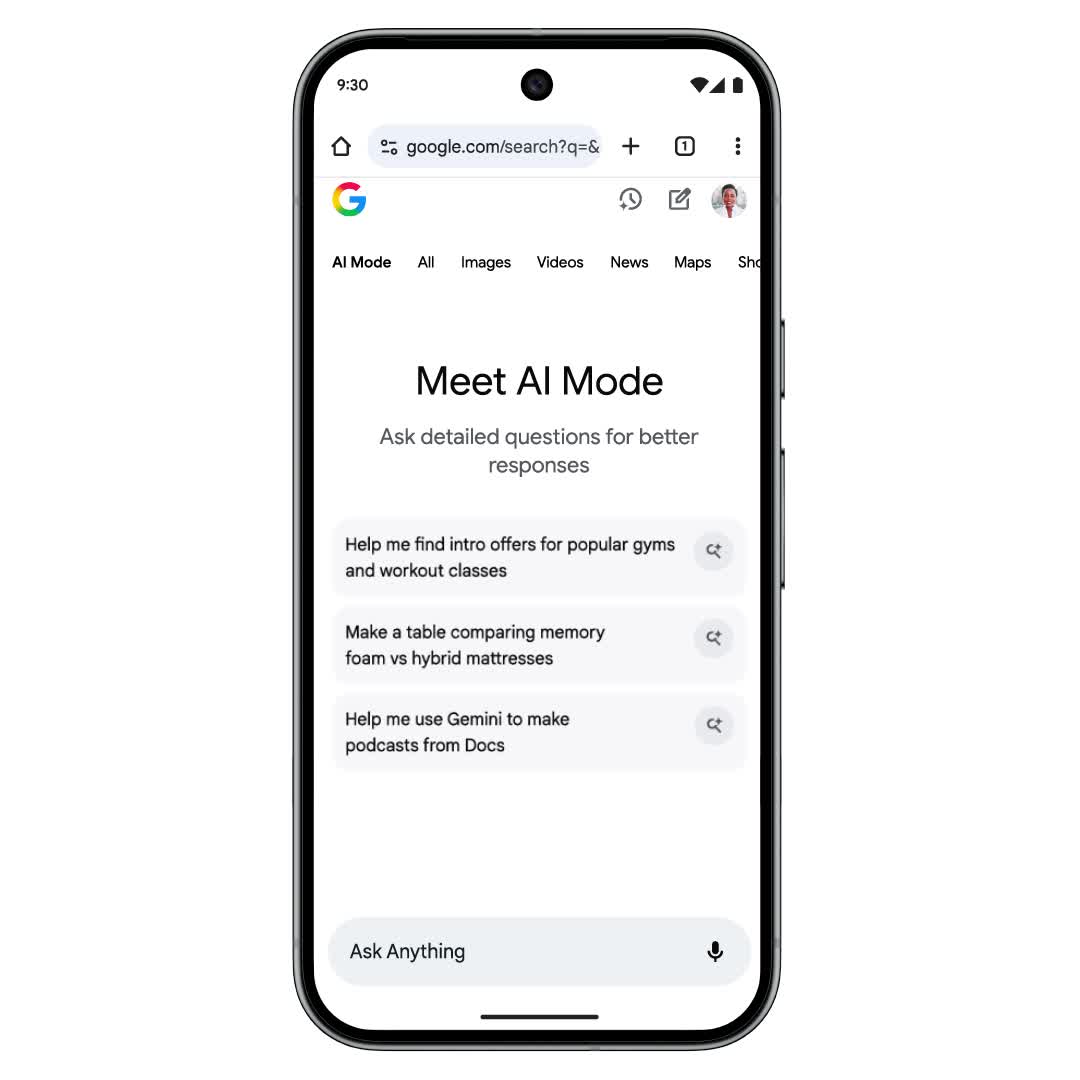
Chrome’s Evolution: Integrating AI for Enhanced User Experience
As we witness the dawn of a new era in technology, Google Chrome is embracing the power of artificial intelligence (AI) to transform the way users interact with the internet. This shift represents a significant milestone in Chrome’s journey, as it introduces AI Mode, an innovative search experience designed to make online browsing more intuitive and efficient. This new feature is particularly beneficial for users who are always on the move, as it is now accessible on both iOS and Android platforms.
Introducing AI Mode: A Revolutionary Search Tool
Available initially in the United States, AI Mode can be easily accessed on Chrome mobile versions. When users open a new tab on their iOS or Android devices, they will notice a new AI Mode button conveniently located under the search bar. This button is not merely a cosmetic addition; it is a gateway to a more sophisticated search experience. By utilizing AI Mode, users can pose complex, multi-part queries and delve deeper into topics with follow-up questions and links to relevant resources.
The introduction of AI Mode is a game-changer, especially for those who require detailed information quickly and efficiently. It allows users to explore subjects on a deeper level without the need to manually sift through countless search results. This is particularly useful for researchers, students, and professionals who often engage in in-depth studies or projects.
Global Expansion and Multilingual Support
Recognizing the global demand for such advanced technology, Google plans to expand the availability of AI Mode to 160 additional countries. This rollout will include an impressive array of languages, such as Hindi, Indonesian, Japanese, Korean, Portuguese, and many others. This expansion ensures that users worldwide can benefit from the enhanced search capabilities offered by AI Mode, regardless of their location or language preference.
The integration of multiple languages is a crucial step in making AI technology accessible and useful for a diverse user base. By breaking language barriers, Chrome’s AI Mode empowers users from different linguistic backgrounds to harness the power of AI in their daily browsing activities.
Understanding the Technical Aspects
For those unfamiliar with the technicalities of AI integration, let’s break it down in simpler terms. AI Mode leverages machine learning algorithms to analyze and understand user queries. These algorithms can process natural language, allowing the system to comprehend complex questions that may include multiple parts or require contextual understanding.
Once a query is submitted, AI Mode processes the information and provides users with the most relevant results. Users can also ask follow-up questions, and the AI will adjust its responses based on the new information provided. This dynamic interaction mimics a conversation, making the search process feel more natural and human-like.
Why This Matters: The Benefits of AI Mode
The incorporation of AI in Chrome’s search functionality offers numerous benefits. Firstly, it enhances efficiency by reducing the time spent searching for information. Users can quickly receive comprehensive answers to their inquiries without having to navigate through numerous web pages.
Secondly, it improves accuracy. AI Mode can understand context and nuance, which means the results are more tailored to the user’s specific needs. This is particularly advantageous for complex or technical queries that require precise answers.
Lastly, AI Mode’s ability to support multiple languages makes it an inclusive tool that caters to a global audience. By accommodating various languages, Google ensures that more people can access and benefit from this advanced technology.
Industry Reactions and Future Prospects
The introduction of AI Mode in Chrome has garnered significant attention within the tech industry. Experts praise the move as a forward-thinking step that aligns with the growing trend of AI integration in everyday tools. As AI continues to evolve, its role in enhancing user experiences is becoming increasingly evident.
Looking ahead, the possibilities for AI in web browsing are vast. Future developments could see even more personalized and intuitive interactions, where browsers anticipate user needs and preferences based on past behavior and real-time data analysis.
Conclusion: A Step Towards the Future
In conclusion, Google Chrome’s AI Mode marks a significant advancement in the realm of web browsing. By seamlessly integrating AI into its search functionality, Chrome not only enhances user experience but also sets a precedent for future innovations. As this technology becomes available to more users globally, it promises to redefine how we interact with information online.
For those interested in exploring this new feature, AI Mode is now live in the United States, with plans for a broader rollout in the coming months. As we embrace this new era of AI-driven browsing, the potential for innovation and improved user experience seems limitless. To learn more about this exciting development, you can visit the official announcement on Google’s blog.
For more Information, Refer to this article.