


















In an exciting development for the space industry, NASA has unveiled a new opportunity for collaboration between the agency and commercial entities. This initiative, known as the Announcement of Collaboration Opportunity (ACO), is managed by NASA’s Space Technology Mission Directorate. It aims to foster valuable partnerships by allowing companies to access NASA’s vast array of resources, including expertise, facilities, software, and hardware, without the need for financial transactions. This initiative is designed to help accelerate technological advancements and prepare them for both commercial and governmental applications.
NASA has recently issued a standing announcement for partnership proposals under the ACO, which will remain open for five years. This initiative will serve as a foundational opportunity, with topic-specific appendices being released every six to twelve months to address the evolving needs of space technology. The appendix for 2025 is currently accepting proposals until September 24.
To provide further insight into this opportunity and its related appendices, NASA will host a webinar on Wednesday, August 6, at 2 p.m. EDT. Interested parties are encouraged to submit their questions, which will be addressed during the session and made available online afterward.
NASA’s collaboration with industry partners is not a novel concept. Over the decades, such partnerships have led to ambitious missions benefiting humanity as a whole. In recent years, NASA has embraced its role as a technology enabler, offering unique tools, resources, and infrastructure to assist commercial aerospace companies in achieving their objectives.
Since its inception in 2015, NASA has embarked on approximately 80 ACO projects with various industry players. These collaborations have significantly advanced space technology in numerous ways. Here are some notable examples:
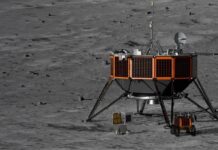
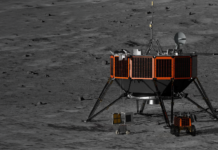
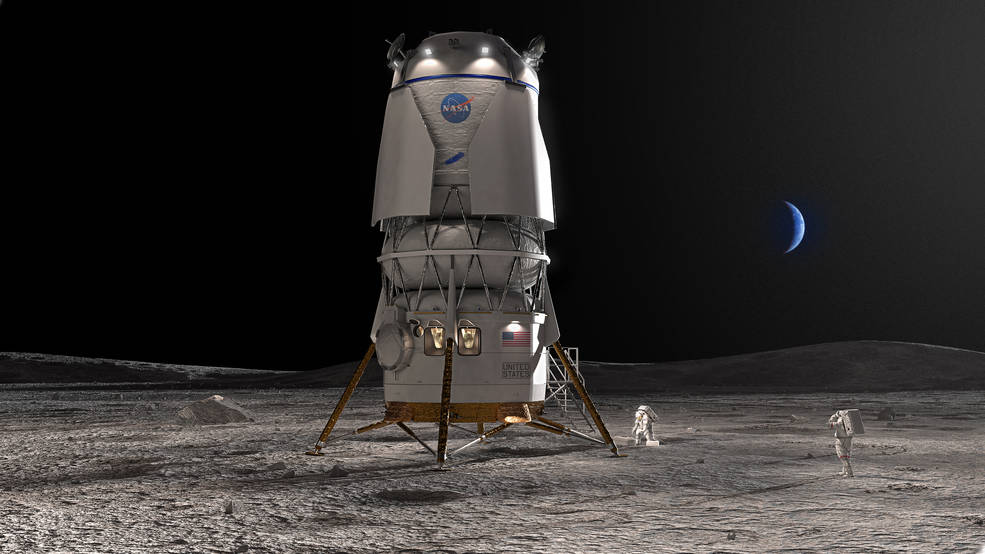
Blue Origin and NASA have worked on several ACO projects to refine the company’s lunar lander design. NASA provided technical assessments and conducted tests across multiple centers to help Blue Origin advance a stacked fuel cell system intended for the lander’s primary power source. Additional projects evaluated high-temperature engine materials and enhanced a landing navigation and guidance system.
Blue Origin’s Blue Moon Mark 1 (MK1) lander is instrumental in delivering NASA’s science and technology to the Moon as part of the agency’s Commercial Lunar Payload Services initiative. In 2023, NASA selected Blue Origin as a Human Landing System provider to develop its Blue Moon MK2 lander, aimed at future crewed lunar explorations.
In another collaborative effort, NASA and SpaceX engineers engaged in a year-long ACO project focused on performing comprehensive computational fluid analysis of proposed propellant transfer methods between two SpaceX Starship spacecraft in low-Earth orbit. This analysis utilized Starship flight data alongside previous NASA research and development data to identify potential risks and mitigate them during the early stages of commercial development. NASA also contributed to SpaceX’s development of an initial concept of operations for its orbital propellant transfer missions.
SpaceX leveraged the insights gained from these analyses to inform the design of its Starship Human Landing System, which was selected by NASA in 2021 to transport the first Artemis astronauts to the Moon.
Additionally, NASA collaborated with Advanced Space to enhance the company’s Cislunar Autonomous Positioning System, a software solution allowing lunar spacecraft to determine their location autonomously without solely relying on Earth-based tracking.
The CAPSTONE (Cislunar Autonomous Positioning System Technology Operations and Navigation Experiment) spacecraft, launched to the Moon in 2022, continues to operate and gather crucial data to refine the software. Under the ACO, Advanced Space utilized NASA’s Lunar Reconnaissance Orbiter to conduct crosslink experiments with CAPSTONE, advancing the navigation solution for future missions. The technology behind this mission initially received support through NASA’s Small Business Innovation Research program.
In another innovative endeavor, Sensuron and NASA developed a miniature, rugged fiber optic sensing system capable of taking thermal and shape measurements for diverse applications. Throughout the ACO, Sensuron benefited from NASA’s expertise in fiber optics, electrical, mechanical, and system testing engineering to design, fabricate, and rigorously test its prototype laser.
This technology holds significant promise for space missions, as it can be used to monitor cryogenic propellant levels and assess a fuel tank’s structural integrity over extended missions. Moreover, the laser technology has medical applications on Earth, which eventually led to the creation of Sensuron’s spinoff company, The Shape Sensing Company.
In 2023, Venturi Astrolab commenced work with NASA under an ACO to evaluate its flexible lunar tire design. The company utilized NASA’s unique testing capabilities, including heat transfer to cold lunar soil, traction, and life testing, to validate the performance of tire prototypes, thereby preparing the design for future NASA missions.
In 2024, NASA selected three companies, including Venturi Astrolab, to enhance capabilities for a lunar terrain vehicle. This vehicle will enable astronauts to navigate the lunar surface, conduct scientific research on the Moon, and prepare for human missions to Mars.
The Announcement of Collaboration Opportunity (ACO) is just one of the many ways NASA is empowering the commercial sector to develop, build, own, and eventually operate space systems. For more information on these technology projects and others, please visit NASA’s TechPort website at https://techport.nasa.gov/.
These collaborations underscore NASA’s pivotal role in advancing space technology and its commitment to fostering innovation through partnerships. By providing access to its unparalleled expertise and resources, NASA is helping to pave the way for the next generation of space exploration and commercialization.
For more Information, Refer to this article.