












![[Video] Samsung Color E-Paper: A Smarter Alternative to Traditional Posters](https://www.hawkdive.com/media/samsung-tvs-and-displays-samsung-color-e-paper-samsung-vxt-digital-signage_thumb932-218x150.jpg "Samsung introduces Color E-Paper as innovative poster alternative.")









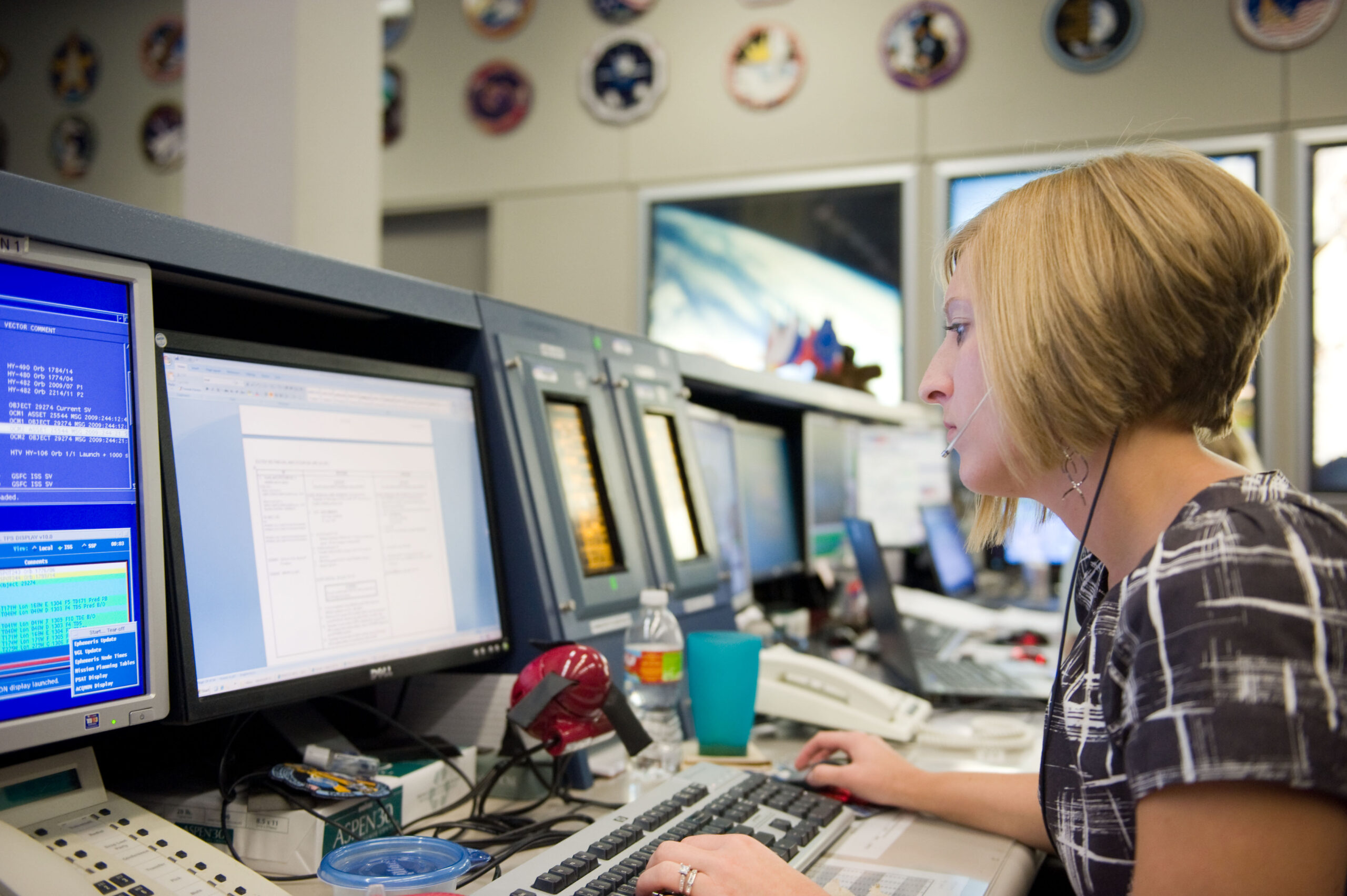
Navigating the Trajectories of a Non-linear Career: The Journey of Erin Sholl at NASA
In the realm of career development, the journey is often as important as the destination. This notion is exemplified by the career path of Erin Sholl, the deputy chief of the Space Transportation Systems Division within NASA’s Safety and Mission Assurance Directorate at the Johnson Space Center in Houston. Her professional journey, which spans from overcoming early academic challenges to playing a pivotal role in supporting the International Space Station, is marked by unexpected turns and invaluable learning experiences.
Despite facing initial hurdles in mathematics and science during her formative years, Sholl grew to appreciate and excel in these fields over time. Her passion for chemistry, inspired by a high school teacher, initially led her to pursue a degree in chemical engineering. However, upon enrolling at Pennsylvania State University, she discovered a stronger affinity for physics, prompting her to switch her major to aerospace engineering. This decision set the stage for her journey into the world of space exploration. It was at Penn State that she encountered a classmate who had interned at NASA’s Johnson Space Center, sparking her own aspirations of working there. Sholl recalls this moment as the birth of her dream.
Sholl’s first role at Johnson was as a trajectory operations officer within the Flight Operations Directorate. For six years, she supported the space station from the Mission Control Center, an experience she likened to scenes from a Hollywood movie. Seeking new challenges, Sholl transitioned to the Safety and Mission Assurance Directorate, where she found herself drawn to the Operations and Visiting Vehicles Branch. This branch offered a familiar environment with its focus on real-time operations and visiting vehicles. Over the next 12 years, Sholl took on increasing responsibilities, eventually rising to the positions of group lead and branch chief. Her exemplary performance caught the attention of the chief of the Space Transportation Systems Division, who invited her to become his deputy—a role she continues to hold.
The Space Transportation Systems Division is instrumental in ensuring the safety, reliability, and risk management of human spaceflight programs. It collaborates with various program offices to mitigate risks by providing technical assessments and safety guidance throughout the lifecycle of programs and projects. In her role as deputy chief, Sholl collaborates closely with the division chief on strategic planning, budgeting, and operations. A significant aspect of her role involves fostering effective communication and representation of the team’s needs both within and outside the division. Her ability to build relationships and think strategically has been key in leading initiatives that advance the division’s and directorate’s objectives, as well as in mentoring employees.
A fervent advocate for mentorship, Sholl attributes much of her career success to the guidance she received from both formal and informal mentors. "Listening to mentors helped me recognize strengths I hadn’t seen in myself," she notes. As a leader, she relishes the opportunity to mentor and advocate for her team members, particularly during her tenure as branch chief. "Connecting with my team and advocating for them in meaningful ways was incredibly fulfilling," she reflects.
Sholl encourages young professionals to actively seek mentorship and to explore shadowing opportunities in various roles. "Relationships are foundational," she asserts. "The more people you connect with and the more you learn about different paths in space exploration, the more equipped you will be in your career."
Beyond the confines of her professional role, Sholl has significantly contributed to enhancing workplace culture at NASA. She was instrumental in founding and expanding JSC Parenting, a virtual community comprising approximately 600 employees. This platform facilitates the sharing of information and mutual support on topics related to caregiving, education, and work-life balance. "My leadership in this community enriches my professional leadership and positively influences my colleagues," Sholl explains.
Sholl also underscores the importance of embracing new opportunities, even when they deviate from one’s anticipated career trajectory. Her willingness to volunteer for diverse tasks stems from a desire to continuously learn and explore new avenues for contributing to her team. She candidly acknowledges the complexity of career paths, noting that they often involve unexpected pivots, setbacks, and personal decisions that are not always visible from the outside. "I tried for many roles I didn’t get, and it took a lot of trial and error to find a career I truly love," she admits.
Sholl’s journey serves as a testament to the power of perseverance, adaptability, and mentorship in navigating the complexities of a non-linear career path. Her story is a reminder that success is not solely defined by reaching a specific destination, but by the growth and learning that occur along the way. For those aspiring to forge their paths in the field of space exploration or any other domain, Sholl’s experiences offer valuable insights into the importance of maintaining an open mind, building strong relationships, and continuously seeking opportunities for personal and professional development.
For more information on NASA’s initiatives and the roles played by dedicated professionals like Erin Sholl, readers are encouraged to visit the official NASA website.
For more Information, Refer to this article.