















![[Interview] Inside Spatial Signage: How Samsung Brought Glasses-Free 3D Displays to Life](https://www.hawkdive.com/media/samsung-tvs-and-displays-spatial-signage-interview_thumb932-218x150.jpg "Samsung’s Glasses-Free 3D Displays: The Inside Story [Interview]")





In a significant move towards revolutionizing mobile connectivity, Europe has embarked on a groundbreaking study aimed at enhancing direct-to-device (D2D) services using satellite spectrum. This initiative coincides with SpaceX’s recent $19 billion acquisition of space-approved frequencies, a strategic step to broaden its own 5G services.
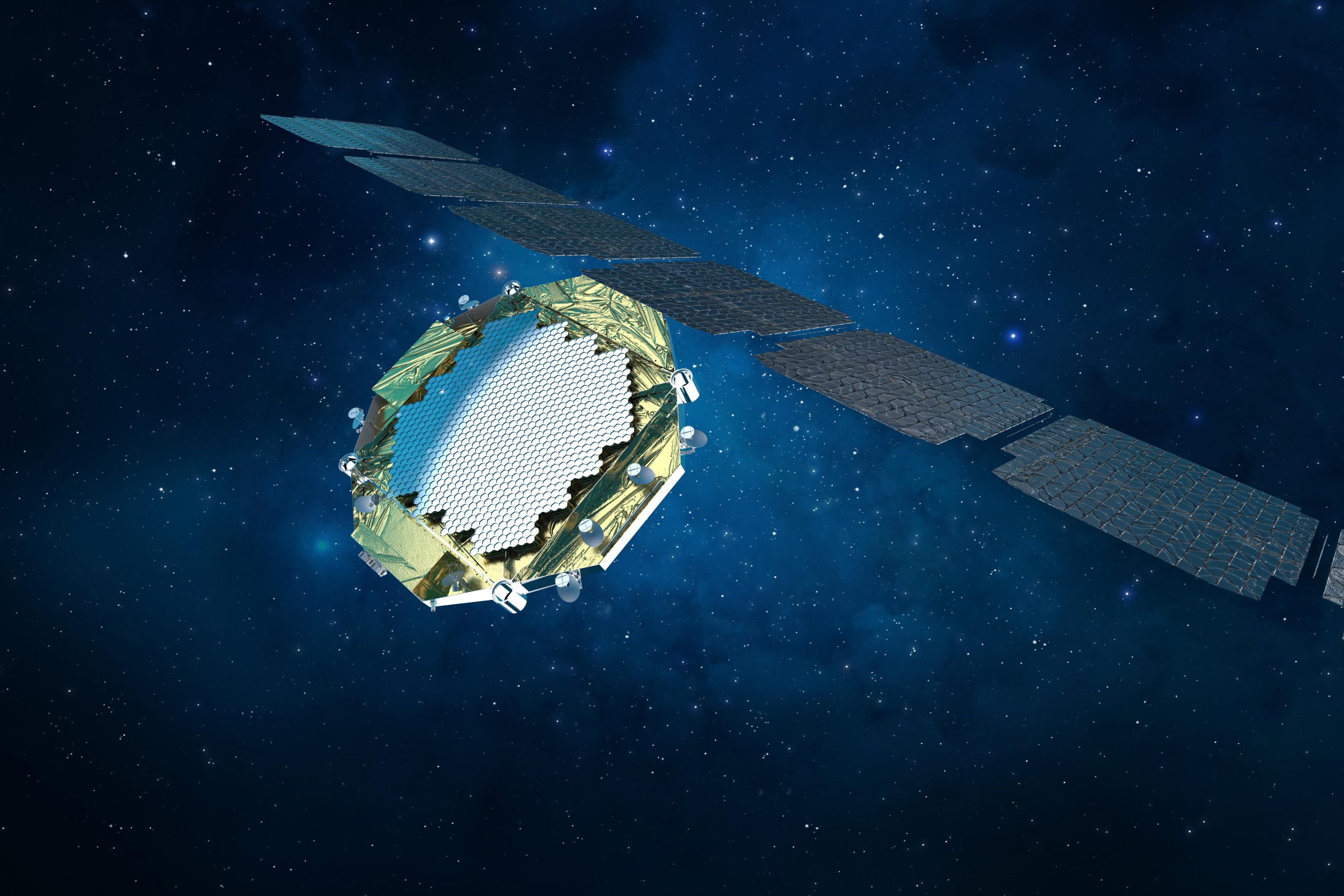
Thales Alenia Space, a prominent player in the aerospace industry, announced on September 8th the launch of an ambitious project named U DESERVE 5G. This €55 million ($65 million) endeavor is set to explore connectivity solutions that adhere to terrestrial 3GPP mobile standards from low Earth orbit (LEO), with a targeted completion date set for early 2028. The project is substantially supported by the French space agency CNES, contributing €38 million to the initiative, as stated by Stéphane Anjuere, the 5G venture leader at Thales Alenia Space.
The core of this project is the development of a payload equipped with an active antenna, designed to facilitate voice and data services directly with a standard mobile device. This innovative approach eliminates the need for routing connections via a ground station, marking a significant departure from traditional satellite communication methods.
Unlike other European D2D initiatives, which primarily focus on basic text and emergency alerts akin to Apple’s current offerings via Globalstar’s spectrum, this project aims to seamlessly integrate with terrestrial networks to deliver comprehensive 5G services. Anjuere emphasizes that many existing D2D projects are non-3GPP or offer limited performance. However, the U DESERVE 5G program in LEO orbit is expected to be highly representative of the real-world use cases that satellite operators aspire to monetize in the future.
The U DESERVE 5G consortium comprises several key players in the tech and telecom industries, including:
1. Capgemini: specializing in radio access and 4G/5G core networks
2. Thales: focusing on the feasibility of a 5G D2D terminal with a directional antenna in the C-band
3. Orange: providing operator expertise and hosting demonstration activities at its Bercenay site in France
4. SES: conducting studies on the implementation of D2D services
5. Qualcomm: supplying a 5G NTN-compatible test terminal
6. Loft Orbital: responsible for the satellite platform, integration, launch reservation, and operations
The D2D market is currently divided between operators like Globalstar, who utilize satellite spectrum, and those partnering with terrestrial carriers to leverage cellular frequencies. Interestingly, these two paths are beginning to converge. SpaceX’s recent acquisition of EchoStar’s S-band spectrum is a pivotal move in its quest to dominate the D2D landscape. Gwynne Shotwell, President and COO of SpaceX, noted that the newly acquired frequencies would support next-generation satellites, significantly enhancing coverage for users worldwide.
In addition to text-based messaging, SpaceX has announced that its D2D service now accommodates data-intensive applications such as Google Maps, X (formerly known as Twitter), and WhatsApp on certain devices. Adam Rhodes, a senior telecom analyst at Octus, observed that the EchoStar spectrum would dramatically increase the throughput capacity of the service. He highlighted that Starlink’s current U.S. service utilizes only 10 megahertz of a similar spectrum, whereas the 50 MHz EchoStar licenses offer five times the bandwidth of T-Mobile licenses, with the added advantage of being contiguous with T-Mobile spectrum.
With FCC Commissioner Brendan Carr advocating for the swift utilization of spectrum assets, it is anticipated that SpaceX will gain access to the EchoStar licenses ahead of their projected late-2027 closure. While the companies have not disclosed specific timelines, there is speculation that EchoStar may offer SpaceX the option to lease the spectrum in advance. This approach mirrors a recent arrangement to sell terrestrial frequencies to AT&T, which analysts believe will pave the way for AT&T’s own D2D constellation.
Meanwhile, AST SpaceMobile, a Texas-based competitor to SpaceX in the D2D arena, has secured a deal to bolster its upcoming service with satellite spectrum. This agreement, reached in June, aims to strengthen the use of AT&T and Verizon frequencies in the U.S., positioning AST SpaceMobile as a formidable contender in the market.
The D2D landscape continues to evolve rapidly. Just weeks prior to the spectrum sale, EchoStar had placed a $1.3 billion order with Canada’s MDA Space to utilize the frequencies for the initial 100 satellites of a planned $5 billion D2D constellation. On a call with analysts, MDA CEO Mike Greenley noted that the abrupt loss of this manufacturing contract underscores the dynamic nature of the D2D market. However, he reassured stakeholders that MDA’s pipeline of potential constellation manufacturing work, valued at 13 billion Canadian dollars ($9.4 billion), remains robust and is evenly divided between conventional broadband and D2D projects.
Greenley predicts the emergence of multiple space-based D2D networks to challenge SpaceX, citing Apple’s efforts to ensure iPhone compatibility across various providers. Additionally, MDA continues to advance the development of upgraded Globalstar satellites, further intensifying competition.
The EchoStar order had initially sparked a sense of urgency in the market, prompting potential rivals to hasten their plans. Greenley anticipates that SpaceX’s acquisition of EchoStar’s spectrum will further amplify this momentum, encouraging other players to accelerate their initiatives.
Geopolitical shifts have already prompted heightened activity among countries and companies outside the United States, driven by a desire to enhance technological sovereignty. Greenley observed that this trend is evident in space-based communications, as nations, regions, and corporations outside the U.S. seek to increase their self-reliance. The U DESERVE 5G project reflects this aspiration, aiming to ensure Europe is not overly dependent on U.S. entities as D2D becomes a fundamental component of global mobile connectivity.
In conclusion, the development of direct-to-device services using satellite spectrum represents a significant leap forward in mobile communication technology. With projects like U DESERVE 5G and strategic moves by industry giants like SpaceX, the landscape of D2D services is set to transform, offering enhanced connectivity and paving the way for a new era of global communication.
For more Information, Refer to this article.