











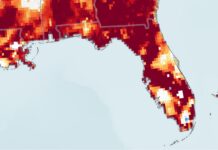







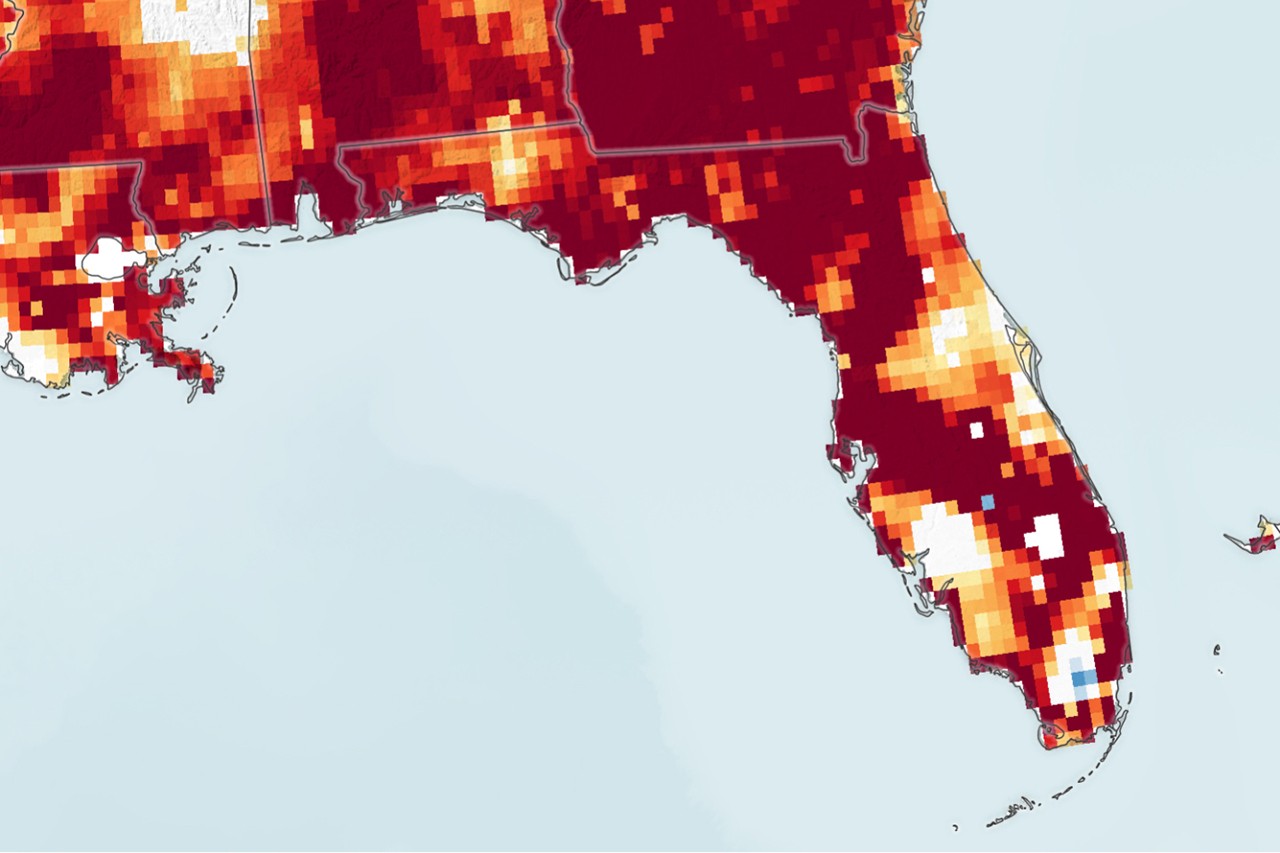
Florida, known for its abundant rainfall, is currently facing a severe drought, with nearly all of the state experiencing at least “moderate” drought conditions and almost 80 percent facing “extreme” drought conditions as of April 2026. This dry spell follows a period of unusually low precipitation that began in 2025 and intensified in early 2026.
Recent data from a joint NASA and German Research Center for Geosciences satellite mission has revealed the impact of the drought on Florida’s underground water sources, which are critical for drinking water and agriculture. The data, collected by the GRACE-FO (Gravity Recovery and Climate Experiment Follow-On) satellites, shows that many aquifers in the northern and central regions of the state are experiencing significantly reduced water levels compared to historical averages.
The ongoing drought has prompted several water districts in Florida to impose restrictions on water usage for activities like lawn watering and car washing. The dry conditions have also raised concerns about the state’s agricultural sector, with reports indicating significant damage to crops due to freezes earlier in the year. Additionally, large wildfires have broken out in some areas, posing a threat to both property and wildlife habitats, including the Everglades.
According to the U.S. Drought Monitor, the current drought in Florida is the most widespread and severe since 2012, with many areas receiving less than half of their normal rainfall since September 2025. For instance, St. Petersburg has only received 7.7 inches of rain since September 1, significantly below the average of 19.0 inches for the same period, making it the driest year on record.
While the current drought is severe, it has not yet reached the intensity of the 2000-2001 drought, which was more prolonged and affected a larger area of the state. The U.S. Drought Monitor relies on various sources of information, including GRACE-FO observations, to assess drought conditions and provide weekly updates. Weather forecasters are hopeful that a slow-moving rainstorm forecasted to hit Florida in the coming week may offer some relief to the parched state.
In conclusion, Florida’s current drought is a serious concern that is affecting various aspects of life in the state, from water availability to agriculture and the environment. It serves as a reminder of the importance of water conservation and sustainable resource management practices to mitigate the impacts of future droughts.
For more information and updates on the Florida drought, you can refer to the sources listed below:
– AccuWeather: Slow-moving rainstorm to douse Florida drought, wildfire risk this week
– Florida Climate Center: Climate Summary for Florida
– Florida Department of Environmental Protection: Aquifer Essentials
– Florida Department of Agriculture and Consumer Services: Commissioner Wilton Simpson Announces Recent Freezes Caused Over $3 Billion in Estimated Losses to Florida Agriculture
– FOX Business: Florida drought deepens strain on citrus industry as growers battle costs, disease
– FOX Weather: New Florida water restrictions issued as historic drought intensifies, with little relief expected
– Main St. Daily News: Floridan aquifer levels hit lowest since 2011 with little March rain
– National Weather Service: Drought Information Statement for West Central and Southwest Florida
– National Weather Service: Drought Information Statement for Southeast Alabama, Southwest Georgia, and the Florida Panhandle & Big Bend
– South Florida Water Management District: Groundwater Modeling
– Southwest Florida Water Management District: District Declares Modified Phase III Water Shortage
– Tampa Bay Times: ‘Dry to the bone’: Drought squeezes Everglades airboat operators
– U.S. Drought Monitor: Florida
– WUFT: North Florida drought strains farmers as dry conditions persist
– WUSF: Stricter outdoor watering restrictions are coming due to ongoing drought
These sources provide valuable insights and updates on the current drought situation in Florida, as well as related news and information for residents and stakeholders in the state.
For more Information, Refer to this article.




![[Video] Samsung Spatial Signage: How To Make Your Brand Stand Out in Crowded Spaces](https://www.hawkdive.com/media/samsung-tvs-and-displays-samsung-spatial-signage-samsung-vxt_thumb932-218x150.jpg "Samsung Spatial Signage: Elevate Your Brand in Crowded Environments")