









Gemini Enhances User Experience with Interactive Visualizations
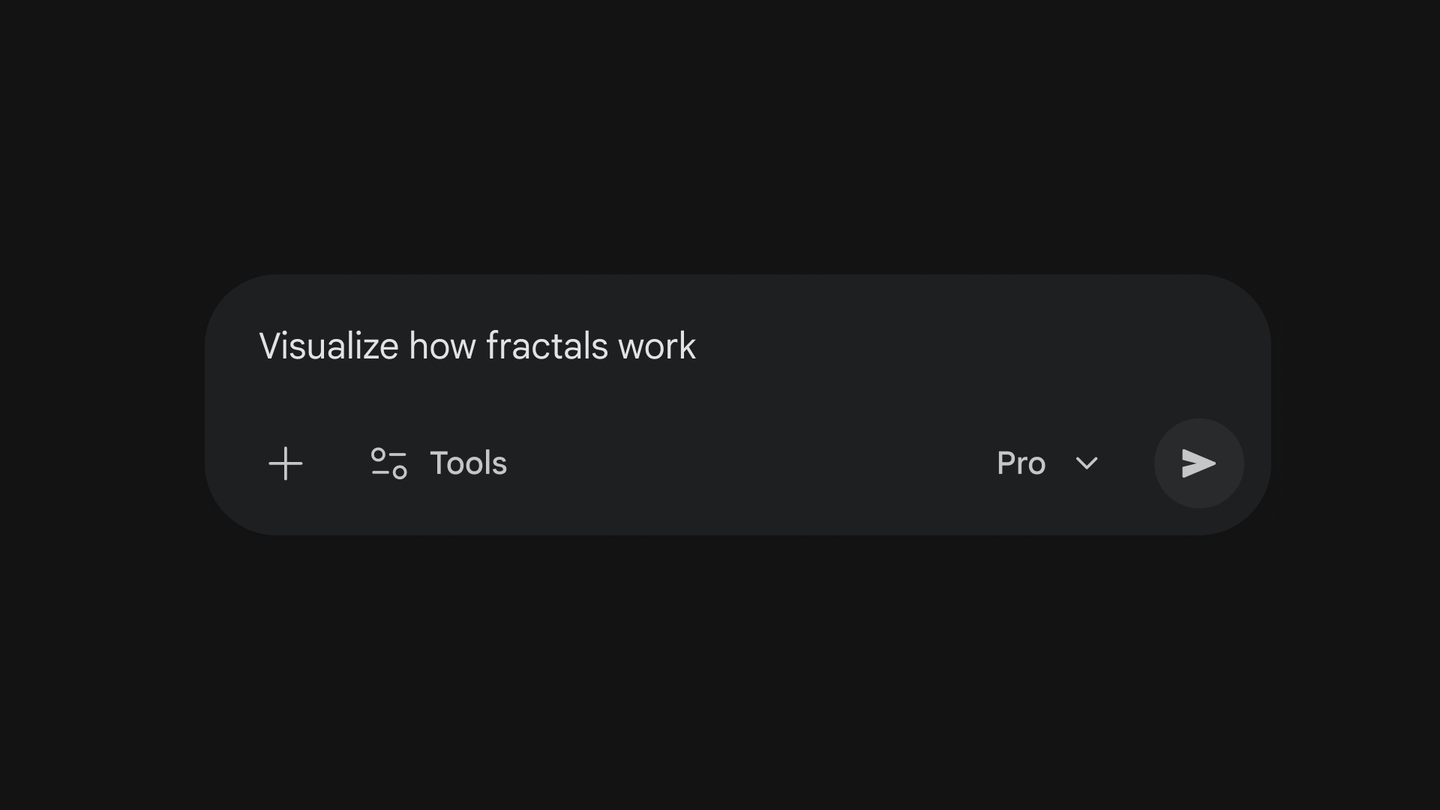
Gemini, the advanced AI tool from Google, has introduced a significant upgrade that allows users to create interactive visualizations for complex topics directly within the chat interface. This feature is rolling out globally and aims to enhance understanding by transforming static text and diagrams into dynamic, user-driven simulations.
From Static Responses to Dynamic Interactions
Previously, Gemini’s responses were primarily text-based, accompanied by static diagrams that offered limited engagement. The latest update changes this paradigm by enabling users to manipulate visual elements in real-time. For instance, when exploring scientific concepts such as the moon’s orbit around the Earth, users can now adjust sliders or input specific values for variables like initial velocity and gravitational strength. This interactivity allows for a more immersive learning experience, as users can see firsthand how different factors influence outcomes.
This shift from passive observation to active participation marks a notable advancement in how AI can facilitate learning. Users are no longer confined to fixed representations; they can experiment with various scenarios and instantly observe the effects of their adjustments. Such functionality is particularly beneficial for students and professionals alike who seek deeper insights into complex subjects.
Practical Applications of Interactive Visualizations
The introduction of interactive visualizations opens up numerous practical applications across various fields. In education, teachers can leverage this tool to illustrate intricate concepts in physics, chemistry, and mathematics. For example, students studying molecular structures can rotate 3D models of molecules to better understand their configurations and interactions.
In professional settings, engineers and scientists can use Gemini’s capabilities to simulate processes or systems relevant to their work. By manipulating parameters in real-time, they can model scenarios that would otherwise require extensive software or manual calculations. This not only saves time but also enhances accuracy in predictions and analyses.
How to Access the New Feature
Implications for Future Learning and Development
The rollout of interactive visualizations represents a significant step forward in educational technology. As AI tools like Gemini continue to evolve, they are likely to become integral components of both formal education and self-directed learning environments. The ability to interact with data visually not only aids comprehension but also fosters curiosity and experimentation among users.
This development could lead to broader implications in industries reliant on complex data analysis and modeling. As more professionals adopt tools that allow for real-time interaction with simulations, there may be an increase in innovative solutions across various sectors such as healthcare, engineering, and environmental science.
What This Means
The introduction of interactive visualizations within Gemini enhances its utility as a learning tool while promoting deeper engagement with complex subjects. By allowing users to manipulate variables directly within the chat interface, Google positions Gemini as a powerful resource for both educational purposes and professional applications. As this feature becomes widely adopted, it may reshape how individuals approach learning and problem-solving in increasingly technical fields.
For more information, read the original report here.