





















Understanding the NASA Arctic–Boreal Vulnerability Experiment (ABoVE)
The NASA Arctic–Boreal Vulnerability Experiment, commonly known as ABoVE, represents a comprehensive ecological study focused on the northern regions of North America, including Alaska and western Canada. This initiative, primarily financed by NASA’s Terrestrial Ecology Program, is a decade-long campaign that aims to scrutinize environmental changes in the Arctic and boreal regions and assess their effects on ecosystems and human society. By integrating fieldwork, airborne missions, and satellite remote sensing, ABoVE endeavors to explore the overarching question of how environmental transformations in these regions impact vulnerable ecosystems and society at large.
Phases of ABoVE
ABoVE is structured into three distinct phases. The first phase, from 2015 to 2018, focused on ecosystem dynamics. The second phase, spanning 2017 to 2022, delved into ecosystem services. The final phase, ongoing since 2023, concentrates on analysis and synthesis. In this concluding phase, over 67 NASA-funded projects are active, engaging more than a thousand individuals in collaborative research. Since the inception of ABoVE, annual meetings have facilitated discussions on progress, joint fieldwork, and synthesis activities among science teams.
The 11th ABoVE Science Team Meeting
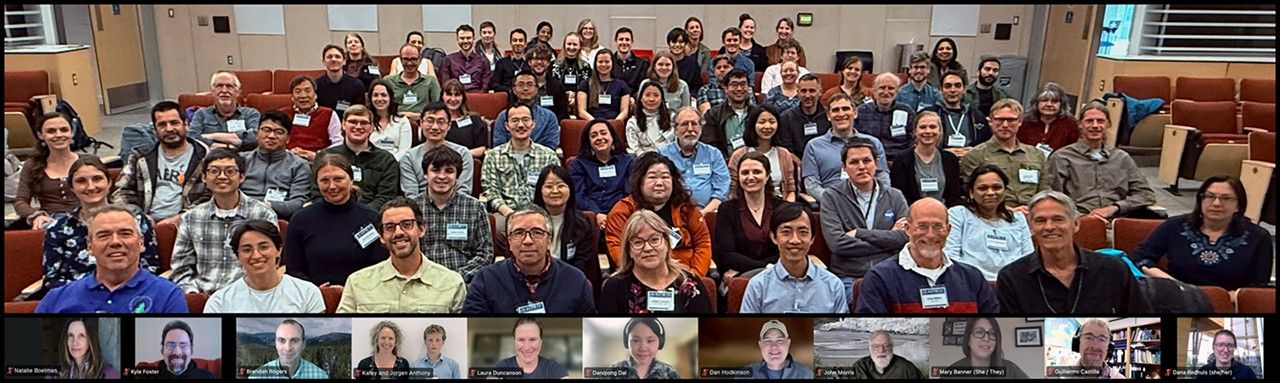
The 11th ABoVE Science Team Meeting (ASTM11), the final gathering, took place from May 12 to 15, 2025, at the University of Alaska, Fairbanks. The meeting attracted 96 in-person attendees and 67 virtual participants. The agenda included presentations from Phase 3 projects and synthesis reports from thematic working groups. Partners and collaborators like the Department of Energy’s Next Generation Ecosystem Experiment-Arctic, Polar Knowledge Canada, and other organizations shared updates and insights on their ongoing activities. Sessions emphasized cross-project collaborations, such as regional fire workshops, and partnerships with research stations like Scotty Creek in Canada.
Field Trips and Collaborative Activities
To enhance collaboration and understanding, the meeting featured various team activities, including multiple field trips. Attendees visited notable facilities such as the Alaska Satellite Facility at the Geophysical Institute and the Permafrost Tunnel operated by the Cold Regions Research and Engineering Laboratory. These excursions offered in-person participants a chance to explore research facilities and engage in hands-on learning experiences. Additionally, early career researchers received feedback on their presentations and participated in networking events, fostering scientific and social connections.
Opening Session Highlights
The meeting commenced with opening remarks from ABoVE leadership. Key figures, including Peter Griffith, Scott Goetz, and Ryan Pavlick, highlighted the significance of this final meeting and acknowledged the substantial scientific advancements achieved through the dedication of science team members and contributors. Goetz outlined the meeting’s objectives, which included receiving updates on currently funded projects, reports on thematic working group advances, and celebrating ABoVE’s success stories.
Thematic Working Group Presentations
Throughout the meeting, leads from thematic working groups presented synthetic overviews of their research efforts. These presentations highlighted the interconnected nature of carbon cycles, hydrology, permafrost dynamics, and disturbance regimes in Arctic–boreal ecosystems. Each working group identified current research gaps and discussed future directions for their fields of study.
- Vegetation Dynamics Working Group: Led by Matthew Macander and Paul Montesano, this group explored advances in understanding Arctic–boreal vegetation structure and function. They identified critical knowledge gaps in predicting post-fire vegetation recovery and detecting declines in vegetation resilience across southern boreal forests.
- Spectral Imaging Working Group: Under the leadership of Fred Huemmrich and Peter Nelson, this group focused on the scale problem in Arctic ecology, where observation scales often mismatch ecological process scales. They worked on a scaling synthesis paper and prepared for a new era of data-rich spectral imaging.
- Modeling Working Group: Led by Josh Fisher, this group aimed to reduce uncertainties in Earth system models by using field, airborne, and satellite datasets to better constrain simulations and projections in the Arctic–boreal region.
- Carbon Dynamics Working Group: Jonathan Wang and Jennifer Watts led efforts to synthesize carbon dioxide flux data, upscale methane emissions, and model carbon flux across the Arctic–boreal zone, focusing on wildfire impacts and permafrost regions.
- Hydrology-Permafrost-Wetlands Working Group: Led by Laura Bourgeau-Chavez and other experts, this group discussed processes controlling changes in permafrost and hydrologic changes, highlighting the integration of ABoVE datasets with NASA satellite missions.
- Disturbance Working Group: Dong Chen and Jinhyuk Kim presented a decade-long perspective on disturbance-related research, focusing on boreal and tundra wildfires and permafrost degradation processes.
ABoVE’s Success Stories
During ASTM11, several success stories were highlighted:
- Regional Fire Workshops: A significant portion of ABoVE research focused on wildfire, with participation in domestic and international efforts to connect researchers with land managers. Workshops facilitated knowledge exchange and collaboration on wildfire management priorities.
- Collaborations with Scotty Creek Research Station: ABoVE’s partnership with Canada’s first Indigenous-led research station involved collecting airborne imagery while SCRS researchers provided field data for validation.
- Science Communication Efforts: ABoVE engaged the public through various communication strategies, including open houses, blog posts, and professional multimedia production, making complex research accessible to diverse audiences.
- Community Engagement Activities: ABoVE researchers collaborated with local organizations and Indigenous communities, integrating traditional knowledge with scientific research to address climate change impacts.
Phase 3 Project Presentations
Throughout the meeting, project leads from 20 NASA-funded ABoVE Phase 3 projects presented updates organized by scientific themes. These presentations spanned multiple days and covered a wide range of topics, including carbon dynamics, fire disturbance, wildlife, hydrology, permafrost, and vegetation structure.
Poster Sessions and Field Trips
ASTM11 featured 41 research posters across thematic areas such as carbon dynamics, fire disturbance, and permafrost hydrology. Field trips offered participants opportunities to visit notable research facilities, including the Alaska Satellite Facility and the Permafrost Tunnel, providing insights into ongoing research and hands-on learning experiences.
Research Connections and Collaborations
The success of ABoVE as a large-scale research study depended on collaboration with multiple organizations, both within and outside the United States. Collaborators presented updates at ASTM11, including representatives from Polar Knowledge Canada, the Government of the Northwest Territories, and the Canadian Forest Service. These collaborations facilitated knowledge sharing, data exchange, and joint research efforts.
Future Directions and Legacy
ASTM11 concluded with discussions on the future of Arctic and boreal research and possibilities for future NASA terrestrial ecology campaigns. The meeting highlighted the need for further study of cold season and subsurface processes and emphasized the importance of collaboration and engagement with local and regional stakeholders.
In summary, ABoVE has made significant strides in understanding the complex dynamics of Arctic and boreal ecosystems over the past decade. While this was the final meeting of the ABoVE Science Team, research will continue, and more publications and data products are expected in the future. The legacy of ABoVE serves as a foundation for future large-scale coordinated research campaigns. For more detailed information on ABoVE and its findings, please visit the official NASA ABoVE website.
For more Information, Refer to this article.