























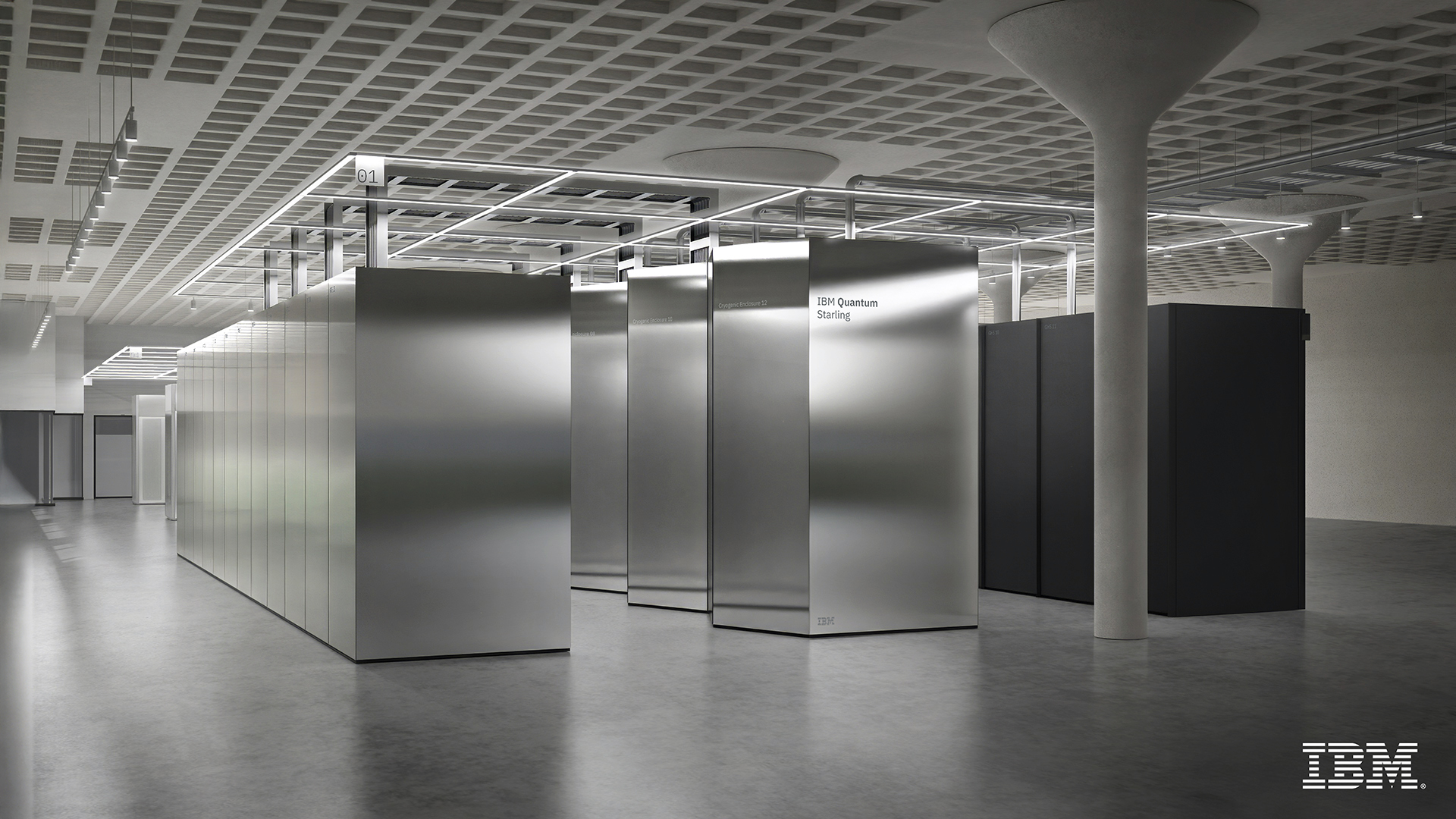
In a groundbreaking announcement made on November 20, 2025, in Yorktown Heights, NY, and San Jose, CA, IBM and Cisco have revealed their plans to embark on a joint venture aimed at pioneering the future of quantum computing. The collaboration seeks to merge IBM’s proficiency in developing practical quantum computers with Cisco’s innovative quantum networking technology to construct a sophisticated, interconnected network of large-scale, fault-tolerant quantum machines by the early 2030s. This ambitious initiative targets the creation of a distributed quantum network that could set the stage for a quantum computing internet, potentially revolutionizing the technological landscape by the late 2030s.
At the heart of this collaboration is the goal of demonstrating a network of interconnected quantum computers within the next five years. This network will enable individual quantum machines to collaborate and perform computations involving tens to hundreds of thousands of qubits. Qubits are the quantum computing equivalent of classical computing bits, and they form the core of quantum computations. Unlike classical bits, which can be either 0 or 1, qubits can exist in multiple states simultaneously due to the principle of superposition, providing quantum computers with unparalleled processing power for complex problems.
According to Jay Gambetta, Director of IBM Research and an IBM Fellow, IBM’s roadmap includes plans to introduce large-scale, fault-tolerant quantum computers before the decade concludes. By collaborating with Cisco to connect these powerful quantum machines into a cohesive network, both companies aim to explore new frontiers in computational power within a high-performance computing architecture.
Vijoy Pandey, GM/SVP at Outshift by Cisco, emphasized that scaling quantum computing is not merely about creating larger individual machines but also about interconnecting them. While IBM focuses on scaling up quantum computers, Cisco’s expertise in quantum networking will facilitate the scaling out of these machines. Together, the companies are addressing the system-wide challenges of integrating hardware, software, and networking intelligence to create a unified quantum computing network.
The development of this network will involve the creation of both hardware and software to physically connect multiple large-scale, fault-tolerant quantum computers. This ambitious plan includes the demonstration of a proof-of-concept by the end of 2030, which will involve entangling qubits from separate quantum computers located in distinct cryogenic environments. Entanglement is a quantum phenomenon where qubits become interconnected in such a way that the state of one qubit can instantaneously affect the state of another, regardless of the distance separating them. Achieving this will require the invention of new connection technologies, like microwave-optical transducers, and the establishment of a comprehensive software stack.
Cisco’s vision for a quantum data center outlines an architecture for quantum networking infrastructure that could soon make distributed quantum computing a reality. This vision incorporates a full hardware and software stack capable of preserving delicate quantum states, distributing entanglement resources, enabling teleportation between quantum computers, and synchronizing operations with sub-nanosecond precision. Teleportation, in the context of quantum computing, refers to the ability to transfer quantum information between locations without moving the physical qubits themselves.
To expand beyond linking two closely located quantum computers, IBM and Cisco plan to explore ways to transmit qubits over longer distances, such as between buildings or across data centers. This will involve investigating optical-photon and microwave-optical transducer technologies and determining how they can be integrated into a quantum network to facilitate the transfer of quantum information as needed.
The successful implementation of this network will necessitate a suitable interface. IBM intends to develop a quantum networking unit (QNU) that will serve as the interface to a quantum processing unit (QPU). The QNU’s primary function will be to convert stationary quantum information in the QPU into “flying” quantum information, allowing it to be linked across multiple quantum computers via a network. Cisco’s quantum network will aim to distribute entanglements to pairs of these QNUs on demand, enabling the necessary quantum information transfer for specific quantum algorithms or applications. To achieve this, Cisco is creating a high-speed software protocol framework that can dynamically reconfigure network paths to distribute entanglements to QNUs after completing partial computations.
The collaboration also envisions using novel hardware and open-source software to create a network bridge that could connect numerous IBM QPUs within a data center through its QNU interface. In the future, this approach might extend to link QPUs across multiple data centers, scaling a larger quantum network across greater distances and forming the groundwork for a future quantum computing internet. This interconnected system could support highly computationally demanding workloads, including those requiring high-performance computing resources as part of a quantum-centric supercomputing framework.
In pursuit of this vision, IBM is also collaborating with the Superconducting Quantum Materials and Systems Center (SQMS) at Fermilab, as part of its involvement with four U.S. Department of Energy National Quantum Information Science and Research Centers. Together, IBM and SQMS are exploring how many QNUs could be utilized within quantum data centers, with plans for an initial demonstration of multiple connected QPUs within the next three years.
The development of a distributed and scalable quantum computing network will pave the way for an exponentially large computational space, enabling the expansion of diverse technologies that could begin forming a future quantum computing internet by the late 2030s. Such an internet would connect various distributed quantum-based technologies, including quantum computers, sensors, and communications, across significant distances, potentially even on a planetary scale. This visionary network could unlock new possibilities, such as ultra-secure communications or precise monitoring of climate, weather, and seismic activity.
As part of their collaboration, IBM and Cisco plan to co-fund academic research and collaborative projects to advance the broader quantum ecosystem, continuing a long-standing tradition of supporting research in academic and national laboratories.
IBM is a global leader in hybrid cloud, AI, and business services, aiding clients in over 175 countries in leveraging data insights, streamlining business processes, reducing costs, and gaining a competitive edge. Thousands of governments and corporations in critical sectors like financial services, telecommunications, and healthcare rely on IBM’s hybrid cloud platform and Red Hat OpenShift for rapid, efficient, and secure digital transformations. IBM’s groundbreaking innovations in AI, quantum computing, industry-specific cloud solutions, and business services offer open and flexible options to clients, all backed by IBM’s unwavering commitment to trust, transparency, responsibility, inclusivity, and service.
Cisco, a worldwide technology leader, has been revolutionizing the way organizations connect and protect in the AI era for over 40 years. With industry-leading AI-powered solutions and services, Cisco empowers its customers, partners, and communities to unlock innovation, enhance productivity, and strengthen digital resilience. Cisco remains dedicated to creating a more connected and inclusive future for all, guided by purpose at its core.
This collaboration between IBM and Cisco marks a significant step toward realizing the potential of quantum computing, offering a glimpse into a future where quantum technologies could transform industries and redefine the technological landscape. For more information, you can follow the original announcement on IBM’s website: https://newsroom.ibm.com.
For more Information, Refer to this article.