
















![[Video] Samsung Hotel TV: Personalized In-Room Experiences Made Simple](https://www.hawkdive.com/media/samsung-tvs-and-displays-samsung-hotel-tv-lynk-cloud-google-cast-and-airplay-in-room-experiences_thu-218x150.jpeg "Samsung Hotel TV: Streamlined Personalized Room Experiences Simplified")





A team of researchers from the U.S. Department of Energy-funded Quantum Science Center has made a groundbreaking discovery that demonstrates the capabilities of quantum computers in performing material simulations that were previously thought to be beyond their reach. The study, which was conducted by scientists from various institutions including Oak Ridge National Laboratory, Purdue University, University of Illinois Urbana-Champaign, Los Alamos National Laboratory, the University of Tennessee, and IBM, showcases the potential of quantum-centric supercomputing workflows and advancements in reducing hardware error rates.
The findings of the research indicate that quantum computers can accurately simulate real magnetic materials and produce results that align with neutron scattering experiments. This achievement signifies a significant milestone in utilizing quantum computers as reliable tools for scientific discovery. By leveraging new algorithms and quantum-centric supercomputing workflows, the team was able to demonstrate that current quantum hardware is capable of simulating properties of materials that are traditionally challenging to predict using classical methods alone.
One of the key motivations behind this study was the need to better understand quantum behaviors in materials to facilitate the design of new materials with enhanced properties such as improved superconductors, more efficient batteries, and novel drugs. While classical methods have limitations in modeling quantum phenomena, quantum computers offer a promising solution. This research sheds light on the potential of quantum processors to capture essential dynamical properties of real materials, which was previously difficult to achieve with classical simulations alone.
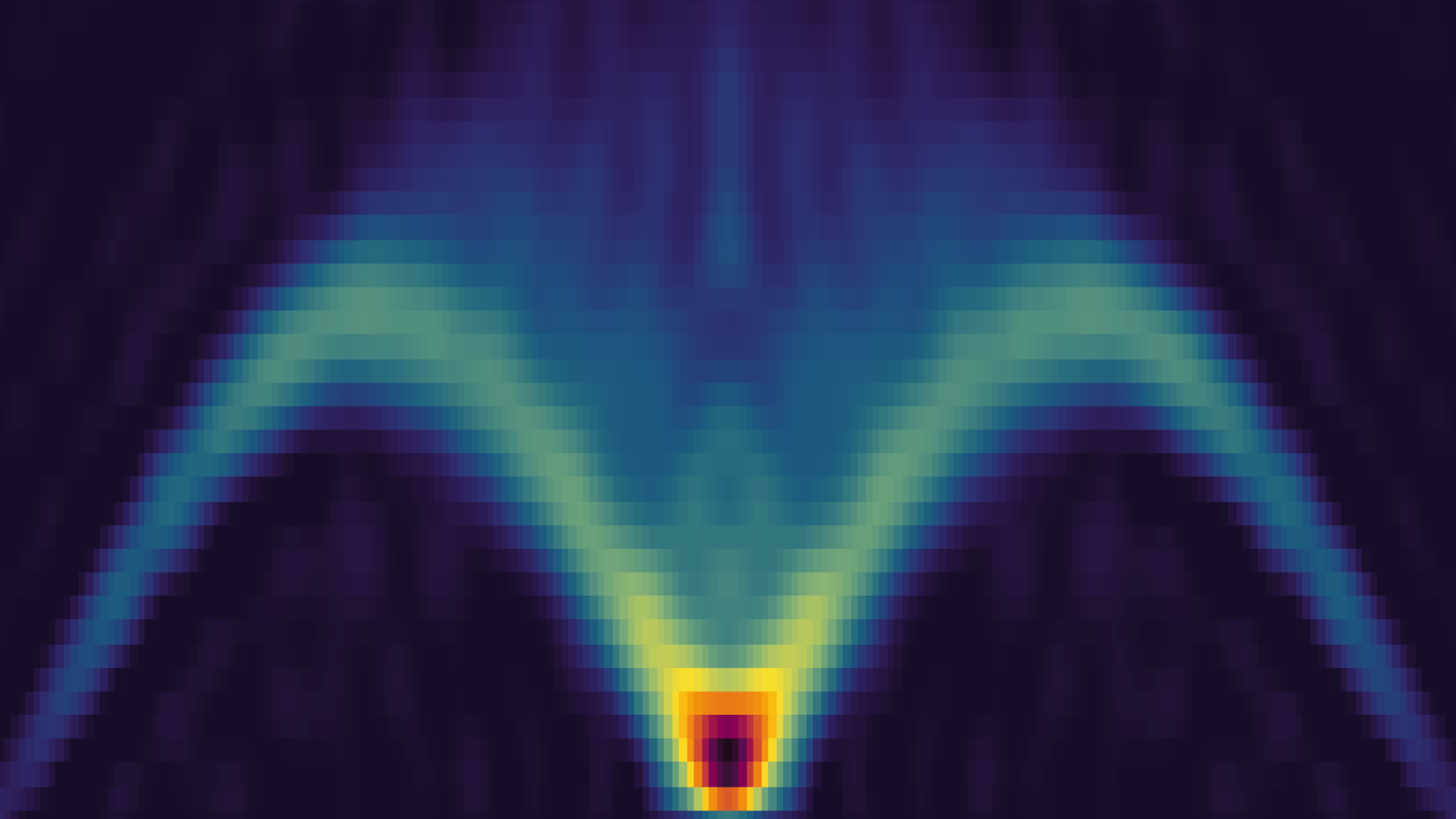
The experiment focused on the magnetic crystal KCuF3 and involved a direct comparison between neutron scattering measurements and simulations on a quantum computer. The impressive agreement between experimental data and qubit simulations showcases the potential of quantum computers to accurately model the properties of real materials. This breakthrough has significant implications for the field of material simulation and opens up new possibilities for scientific discovery.
According to Arnab Banerjee, an assistant professor of Physics and Astronomy at Purdue University, this achievement marks a long-awaited milestone in utilizing quantum computers to enhance simulations and compare them with experimental data. The successful demonstration of matching experimental results with quantum simulations sets a new standard for the capabilities of quantum computers in scientific research.
The study also highlights the importance of advancements in quantum processor technology in achieving the level of simulation accuracy demonstrated in the research. Abhinav Kandala, a principal research scientist at IBM, emphasized that the results were made possible by the low error rates in two-qubit operations on quantum processors. Further improvements in error rates and the scalability of quantum processors are expected to enable more accurate predictions of material properties that are challenging for classical methods.
This research not only establishes quantum computers as reliable tools for material simulation but also paves the way for future advancements in the field. By leveraging the programmability of universal quantum processors, the team has already expanded the approach to simulate material classes with more complex interactions, indicating the vast potential of quantum-centric supercomputing in scientific discovery.
In addition to the significant contributions of this study, it is part of a broader trend in leveraging quantum computers for scientific research. Recent achievements include the first quantum simulation of a never-before-seen half-Möbius molecule and large-scale protein simulations in collaboration with Cleveland Clinic. These examples demonstrate the growing impact of quantum simulation in chemistry, materials science, and molecular biology, highlighting the diverse applications of quantum computing in various scientific domains.
Overall, this research showcases the potential of quantum computers as powerful tools for material simulation and scientific discovery. By combining quantum hardware with classical computing in quantum-centric supercomputing workflows, researchers are unlocking new possibilities for advancing our understanding of complex materials and accelerating innovation in fields such as superconductors, medical imaging, energy, and drug development. The results of this study mark a significant step towards realizing the full potential of quantum-centric supercomputing as a transformative scientific instrument with long-term implications for various industries.
Reference:
– IBM. (2026, March 26). IBM Announces Breakthrough in Quantum Computing for Material Simulation. Retrieved from [insert original website link]
For more Information, Refer to this article.