






















Breakthrough in Molecular Science: Discovery of a Half-Möbius Molecule
An international collaboration among scientists from IBM and several prestigious universities, including the University of Manchester, Oxford University, ETH Zurich, EPFL, and the University of Regensburg, has resulted in an extraordinary scientific milestone. The team has successfully synthesized and characterized a molecule with an unprecedented electronic behavior, where electrons navigate through its structure in a spiral-like motion. This novel discovery, documented in the journal Science, marks the first experimental observation of a half-Möbius electronic topology in a solitary molecule.
To date, such a molecular topology had neither been synthesized nor observed, nor even predicted. The comprehension of this molecule’s behavior at the electronic structure level necessitated a high-precision quantum computing simulation, highlighting the potential of quantum technology in scientific research.
Dual Advancement in Chemistry and Quantum Computing
The implications of this discovery are twofold. From a chemistry perspective, it demonstrates that electronic topology, which determines electron movement within a molecule, is not solely a natural occurrence but can be deliberately engineered. In the realm of quantum computing, this achievement exemplifies the capability of quantum simulations to directly represent quantum mechanical behaviors at the molecular level, offering insights that were previously unattainable.
Alessandro Curioni, an IBM Fellow and Director of IBM Research Zurich, emphasized the significance of this achievement by referencing the vision of the renowned physicist Richard Feynman. Feynman had advocated for the development of a computer capable of simulating quantum physics, famously stating, “There’s plenty of room at the bottom.” This research marks a significant step toward realizing that vision, potentially revolutionizing the way we explore matter and our world.
The Unprecedented Half-Möbius Molecule
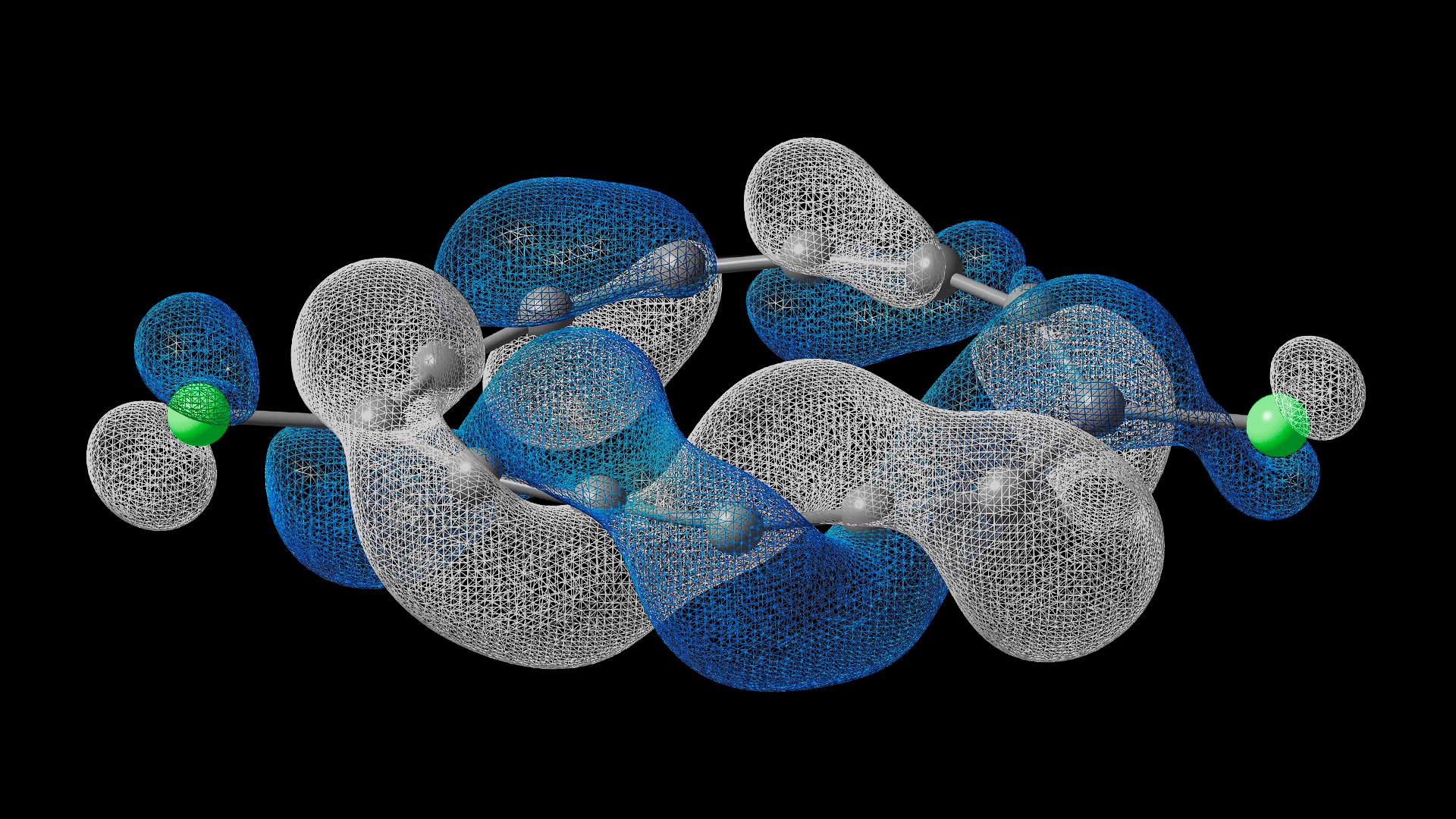
The newly discovered molecule, designated as C₁₃Cl₂, was meticulously constructed at IBM using a custom precursor synthesized at Oxford University. This involved the precise removal of individual atoms through calibrated voltage pulses in an ultra-high vacuum environment at temperatures nearing absolute zero.
State-of-the-art techniques such as scanning tunneling microscopy (STM) and atomic force microscopy, both pioneered by IBM, were instrumental in revealing the molecule’s unique electronic configuration. Unlike any recorded in current chemistry, this structure undergoes a 90-degree twist with each circuit, requiring four complete loops to return to the initial phase.
This half-Möbius topology can be reversibly altered between clockwise-twisted, counterclockwise-twisted, and untwisted states. This demonstrates that electronic topology is not merely a property to be discovered; it can now be intentionally engineered under specific conditions.
Quantum-Centric Supercomputing: A Revolutionary Tool
The creation of this novel molecule was just the beginning. Understanding its function posed a challenge for conventional computers due to the complex entanglement of electrons within C₁₃Cl₂. These electrons interact in a way that influences each other simultaneously, demanding the tracking of every possible configuration of these interactions. This requires computational resources that grow exponentially and can quickly overwhelm classical computing systems.
Quantum computers, however, operate under the same quantum mechanical principles that govern electron behavior in molecules. They can directly represent these systems rather than relying on approximations, offering a distinct advantage. This inherent capability of quantum computers, once largely theoretical, is now proving to yield tangible scientific results.
This advancement opens up immense potential for quantum computers to aid real-world scientific experimentation through quantum-centric supercomputing workflows. By integrating different processing units such as QPUs, CPUs, and GPUs, these workflows allow for complex problems to be divided into manageable parts, each solved according to the strengths of the respective systems. This synergy achieves results unattainable by any single computing paradigm alone.
Using an IBM quantum computer, the research team identified helical molecular orbitals for electron attachment, a distinctive feature of the half-Möbius topology. Furthermore, quantum computing simulations unveiled the mechanism behind this unusual topology: a helical pseudo-Jahn-Teller effect.
A Legacy of Innovation and Discovery
This accomplishment is a continuation of IBM’s rich history in nanoscale science. The invention of the scanning tunneling microscope (STM) by IBM in 1981, which earned the Nobel Prize for IBM scientists Gerd Binnig and Heinrich Rohrer in 1986, was a landmark in imaging surfaces at the atomic level. Since then, IBM has continuously pushed the boundaries of molecular structure manipulation and control.
Insights from the Researchers
Dr. Igor Rončević, a co-author of the study and a Lecturer in Computational and Theoretical Chemistry at Manchester University, highlighted the evolving nature of scientific exploration. He noted that chemistry and solid-state physics progress through new methods of controlling matter. The discovery of this molecule introduces topology as a switchable degree of freedom, paving the way for innovative control of material properties.
Dr. Harry Anderson, a Professor of Chemistry at Oxford University and co-author, remarked on the remarkable properties of C₁₃Cl₂. He pointed out the chiral nature of its Lewis structure, confirmed by experimental and quantum chemical calculations, and the ability to interconvert enantiomers using voltage pulses.
Dr. Jascha Repp, a Professor of Physics at the University of Regensburg and co-author, expressed excitement about the project. He emphasized the significance of quantum hardware in conducting real scientific research, not just demonstrations. The complex electronic structure of this small molecule, challenging to simulate classically, showcases the twisted and intricate nature of the field.
For further insights into this groundbreaking research, readers can explore the detailed blog post on IBM’s research website.
About IBM
IBM stands as a global leader in hybrid cloud and AI solutions, serving clients in over 175 countries. The company aids organizations in capitalizing on data insights, optimizing business processes, reducing costs, and gaining competitive advantages. IBM’s hybrid cloud platform, alongside Red Hat OpenShift, supports rapid and secure digital transformations for numerous industries, including financial services, telecommunications, and healthcare. With pioneering innovations in AI, quantum computing, industry-specific cloud solutions, and business services, IBM offers clients open and flexible options, underpinned by a commitment to trust, transparency, responsibility, inclusivity, and service.
For more Information, Refer to this article.