






















On March 4, 2026, a groundbreaking partnership was announced between SWM, a prominent South Korean company specializing in autonomous mobility solutions, and Lenovo, a global technology leader. The collaboration aims to revolutionize the world of intelligent transportation by co-developing a new generation of Robotaxis. This joint endeavor seeks to establish new standards in safety and efficiency, paving the way for the future of autonomous mobility.
The Core of the Collaboration
The central focus of this collaboration is the integration of SWM’s newly introduced AP-700 autonomous driving platform with Lenovo’s state-of-the-art Vehicle Computing Level 4 autonomous driving domain controller, AD1. This pairing is poised to enhance the capabilities of autonomous vehicles significantly.
The AD1 is constructed on the NVIDIA DRIVE AGX Thor platform, recognized for meeting the highest automotive industry standards. It features the NVIDIA Blackwell architecture, which provides an impressive AI computing power of over 2,000 trillion floating-point operations per second (TFLOPS) at FP8/INT8 precision levels. This powerful architecture is specifically designed to handle the complex demands of transformer and generative AI workloads.
Understanding the Technology
The NVIDIA DRIVE AGX Thor platform is a key player in this collaboration. It is engineered to facilitate more precise perception, quicker decision-making processes, and smoother vehicle control. This level of sophistication is crucial for enabling autonomous vehicles to interact safely and effectively with the diverse and often unpredictable elements found on the road. The technology is designed to support Level 4 Robotaxi operations, which means that the vehicle can handle all driving tasks without human intervention, albeit within a limited area.
For consumers, this translates into a safer, smoother, and more dependable autonomous driving experience, even in challenging real-world conditions. This collaboration is not just about advancing technology but about ensuring that these advancements are implemented in a way that enhances safety and reliability.
Insights from Industry Leaders
Peter Xu, Vice President and Head of Vehicle Computing at Lenovo, emphasized the importance of this partnership. He stated, “This collaboration marks another significant step from autonomous driving validation toward safe, reliable, and scalable deployment. AD1, powered by NVIDIA DRIVE AGX Thor, provides not just immense computing power but a vehicle-grade platform built for real-world safety and performance. Together with SWM and NVIDIA, we are laying a trustworthy foundation for the next era of urban mobility.”
Ki Hyuk Kim, Representative Director of SWM, shared his enthusiasm for the project, noting, “Working with Lenovo and NVIDIA represents a decisive leap forward in globalizing our autonomous taxi technology. Combining cutting-edge AI compute with our advanced driving software will elevate the Robotaxi to world-class standards in safety and reliability. We plan to launch services initially in Japan, Southeast Asia, and the Middle East, with a vision to expand globally.”
Rishi Dhall, Vice President of Automotive at NVIDIA, highlighted the role of the NVIDIA DRIVE Hyperion platform in enabling the next generation of scalable, safety-certified Robotaxi systems. He explained, “By combining advanced AI compute, functionally safe sensor architecture, and a full autonomous driving software stack, this work demonstrates how developers can bring complex, real-world autonomous applications from development to deployment with confidence.”
SWM’s Journey and Achievements
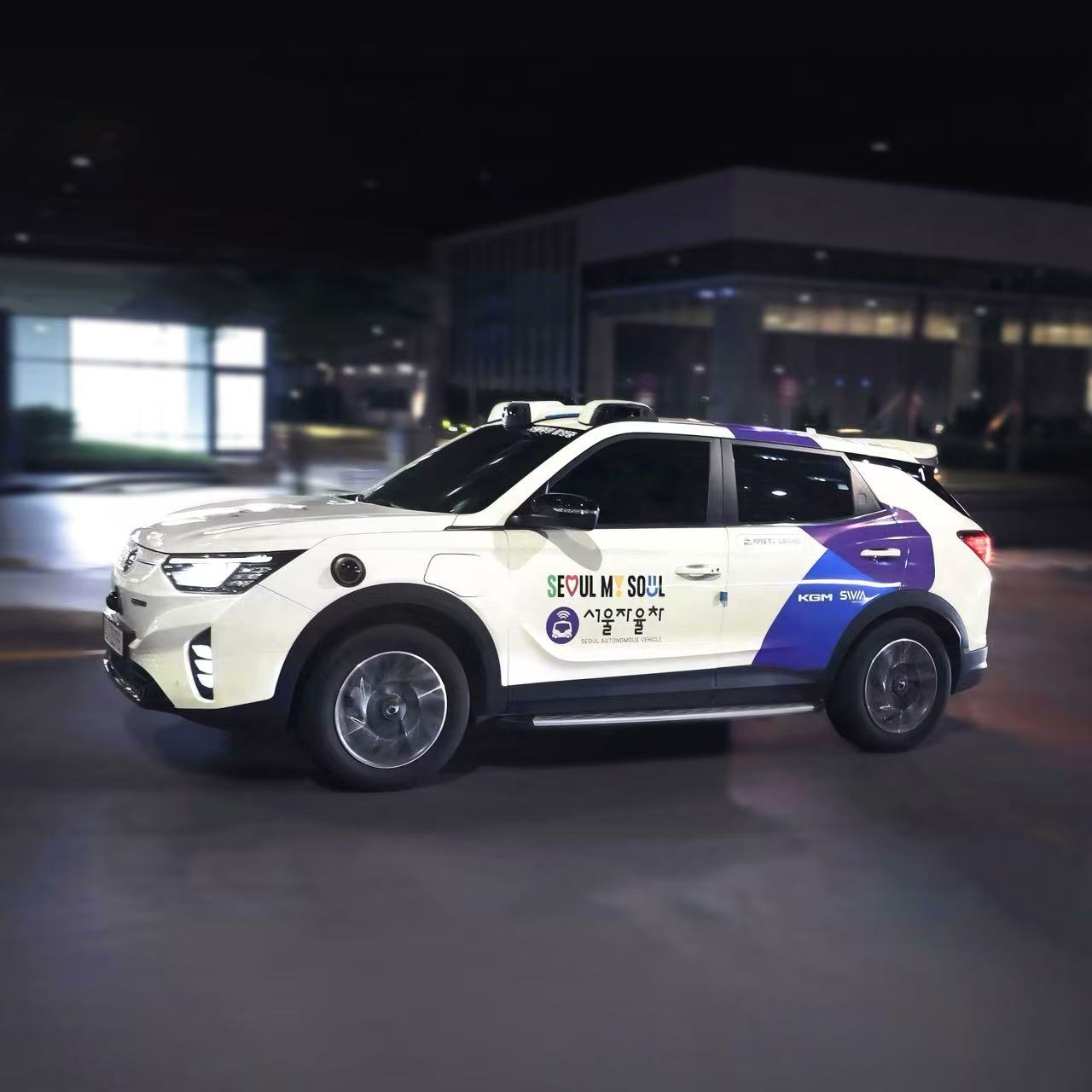
Since its inception in 2017, SWM has been at the forefront of developing and commercializing autonomous technology. A notable achievement was the launch of South Korea’s first fully driverless taxi service in Seoul’s Gangnam district in September 2024, which has maintained an impeccable safety record. This milestone has set the stage for further advancements and collaborations with public-sector organizations like the Seoul Metropolitan Government and the Ministry of Trade Industry and Resources to shape future mobility ecosystems.
The collaboration with Lenovo is expected to build on the solid foundation that SWM has established, leveraging the Thor-based platform to extend Lenovo’s Hybrid AI vision into practical applications. This approach aims to deliver scalable, production-ready solutions that facilitate safe, efficient, and intelligent urban transportation.
About SWM
SWM Co., Ltd., a leading autonomous driving technology company in Korea, focuses on software and AI-driven mobility solutions. Established in 2005, SWM has consistently pursued innovation, supported by a robust research and development team. The company has developed successful Robotaxi solutions, Autonomous Driving System (ADS) products, and cockpit software. It has achieved several industry milestones, including Korea’s first demand-responsive autonomous public transportation service and the first commercial operation under a conditional autonomous driving transport license. SWM’s mission is to realize safe and convenient mobility, advancing its technologies in complex urban environments such as Seoul while preparing for global expansion.
About Lenovo
Lenovo, a global technology powerhouse with a revenue of US$69 billion, is ranked #196 in the Fortune Global 500. Serving millions of customers across 180 markets, Lenovo is dedicated to delivering Smarter Technology for All. The company has expanded its offerings beyond being the world’s largest PC company to include a comprehensive portfolio of AI-enabled and optimized devices, infrastructure, software, solutions, and services. Lenovo’s ongoing investment in innovative technologies aims to build a more equitable, trustworthy, and smarter future for everyone.
For more information about Lenovo and its initiatives, visit their official website and explore the latest developments on their StoryHub.
The Future of Autonomous Mobility
The collaboration between SWM and Lenovo, with the support of NVIDIA’s advanced platform, signals a promising future for autonomous mobility. By combining their expertise and resources, these industry leaders are poised to transform the landscape of urban transportation, making it safer, more efficient, and more intelligent. As the technology continues to evolve, the potential for widespread adoption of autonomous vehicles becomes increasingly attainable, offering a glimpse into a future where intelligent mobility solutions enhance our daily lives.
For more Information, Refer to this article.