





















NASA’s Perseverance Rover: An Intriguing Discovery in the Martian Landscape
NASA’s Perseverance rover, a marvel of engineering and scientific ambition, has been exploring Mars with a mission to uncover the secrets of the Red Planet. Recently, this robotic explorer has brought to light a potentially groundbreaking discovery that could shed light on the possibility of ancient microbial life on Mars.
A Journey to the Past
The Perseverance rover landed in Jezero Crater in February 2021, a site that scientists believe once hosted a lake and a river delta billions of years ago. This location was chosen because it holds a rich geological history, with sedimentary rocks that might contain the clues to past life. One of the rover’s key objectives is to study these rocks and collect samples that may contain biosignatures, indicators of past life.
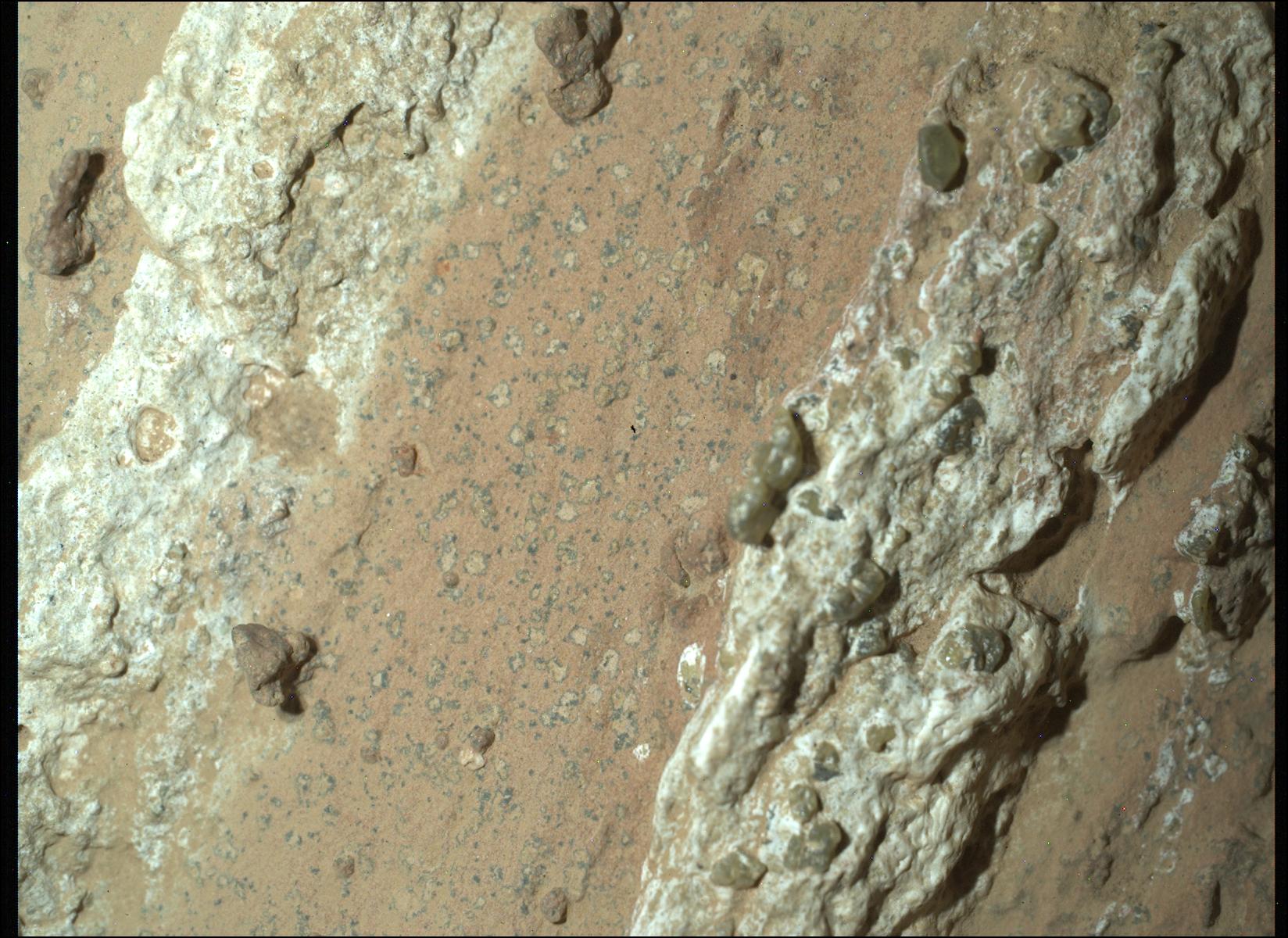
In its latest mission, Perseverance collected a sample from an ancient dry riverbed in the Neretva Vallis region, an area believed to have been carved by flowing water long ago. The sample, named "Sapphire Canyon," was extracted from a rock called "Cheyava Falls," which is part of the "Bright Angel" formation. This formation consists of rocky outcrops located on the northern and southern edges of the river valley.
The Significance of a Potential Biosignature
The term "potential biosignature" refers to a substance or structure that might have a biological origin. However, further study is required before scientists can confirm whether it indeed indicates the presence of life. The sample from Sapphire Canyon contains such potential biosignatures, which have been detailed in a paper published in the journal Nature.
NASA’s acting Administrator, Sean Duffy, highlighted the importance of this discovery, stating that it represents the closest humanity has come to finding life on Mars. This potential biosignature could significantly advance our understanding of the Red Planet and its history.
Nicky Fox, the associate administrator of NASA’s Science Mission Directorate, emphasized that this finding is the result of strategic planning and execution of a mission designed to deliver groundbreaking science. The data from this discovery is now available to the wider scientific community for further analysis and interpretation.
Unveiling the Martian Secrets
The Bright Angel formation’s sedimentary rocks are composed of clay and silt, which are known to be excellent preservers of past microbial life on Earth. These rocks are rich in organic carbon, sulfur, oxidized iron (commonly known as rust), and phosphorus. These elements are essential for life as we know it and could have served as a source of energy for microbial metabolisms.
Joel Hurowitz, a Perseverance scientist and lead author of the study, pointed out that the chemical compounds found in the Bright Angel formation could have been a rich source of energy for ancient microbial life. However, the presence of these compounds alone does not confirm the existence of life; further analysis is needed to understand their significance.
Advanced Instruments in Action
The data collection on the Cheyava Falls rock was led by Perseverance’s advanced instruments, PIXL (Planetary Instrument for X-ray Lithochemistry) and SHERLOC (Scanning Habitable Environments with Raman & Luminescence for Organics & Chemicals). These instruments detected colorful spots on the rock, which could have been left by microbial life using the organic compounds as an energy source.
The team discovered a distinct pattern in the minerals, known as reaction fronts, which were labeled as "leopard spots." These spots contain two iron-rich minerals: vivianite and greigite. Vivianite is often found on Earth in environments with decaying organic matter, while certain forms of microbial life can produce greigite.
The Search for Life’s Fingerprint
The combination of vivianite and greigite in these rocks could serve as a potential fingerprint of microbial life. These minerals may have formed through electron-transfer reactions between the sediment and organic matter, which would be a sign of biological activity. However, it’s also possible for these minerals to form without the presence of life, through processes like high temperatures or acidic conditions.
The Bright Angel rocks do not show evidence of having experienced such conditions, raising new questions about their formation. This discovery is particularly intriguing because it involves some of the youngest sedimentary rocks examined by the mission, suggesting that Mars may have been habitable for a longer period than previously thought.
The Road Ahead
Katie Stack Morgan, Perseverance’s project scientist, noted that extraordinary claims, such as the potential discovery of past extraterrestrial life, require extraordinary evidence. The publication of this finding in a peer-reviewed journal is a crucial step in the scientific process, ensuring the rigor and validity of the results. While abiotic explanations for the observations cannot be ruled out, they seem less likely given the current findings.
The scientific community employs tools and frameworks, such as the CoLD scale and Standards of Evidence, to evaluate data related to the search for life beyond Earth. These tools help scientists assess the confidence level in data suggesting potential signs of life.
Perseverance’s Ongoing Mission
The Sapphire Canyon sample is one of 27 rock cores collected by Perseverance since its landing. These samples are crucial for understanding Mars’ geological history and its potential to have supported life. The rover is equipped with a suite of scientific instruments, including a weather station that provides environmental data for future human missions. It also carries swatches of spacesuit material to study how they fare in the Martian environment.
NASA’s Perseverance rover, managed by the Jet Propulsion Laboratory in Pasadena, California, continues to push the boundaries of exploration. Its mission is part of NASA’s broader Mars Exploration Program, which aims to uncover the mysteries of the Red Planet.
To learn more about the Perseverance rover and its mission, you can visit: NASA’s Perseverance Mission.
This discovery marks a significant step in our quest to understand whether life ever existed on Mars. As researchers delve deeper into the data collected by Perseverance, the possibility of finding ancient life on Mars becomes an ever more tantalizing prospect. Whether these potential biosignatures indeed point to past life or not, they undoubtedly enhance our knowledge of Mars and its history, paving the way for future exploration and discovery.
For more Information, Refer to this article.



![[Video] Samsung Spatial Signage: How To Make Your Brand Stand Out in Crowded Spaces](https://www.hawkdive.com/media/samsung-tvs-and-displays-samsung-spatial-signage-samsung-vxt_thumb932-218x150.jpg "Samsung Spatial Signage: Elevate Your Brand in Crowded Environments")