





















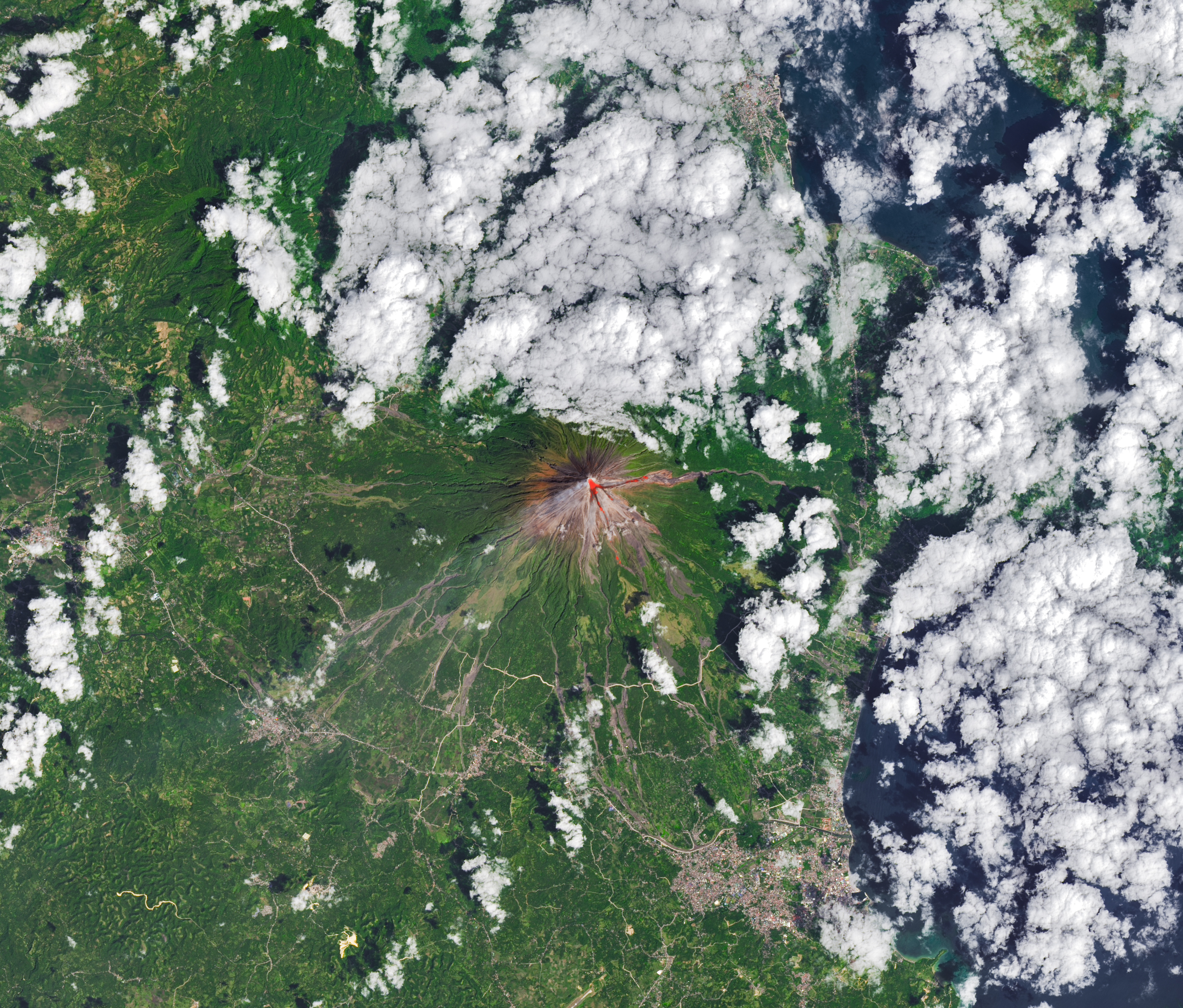
The Operational Land Imager (OLI) aboard Landsat 8 captured a unique and clear image of Mayon, the most active volcano in the Philippines, on February 26, 2026. This image, enhanced with infrared observations to highlight the heat signature of the lava, provides valuable insights into the volcano’s activity.
On the day of the image capture, the Philippine Institute of Volcanology and Seismology (PHIVOLCS) reported a series of volcanic events, including volcanic earthquakes, rockfalls, and pyroclastic flows – hot clouds of ash and debris that can travel at high speeds and pose significant risks to the surrounding area. These hazardous phenomena are closely monitored by PHIVOLCS to ensure the safety of nearby communities.
In addition to ground-based monitoring, multiple NASA satellites have been keeping a watchful eye on Mayon’s activity. By tracking sulfur dioxide emissions from the volcano, these satellites have detected substantial plumes of the gas drifting southwest on February 4 and March 6. Sulfur dioxide is a key indicator of volcanic activity and can help scientists assess the level of unrest within a volcano.
The data collected by these satellites, including Landsat 8 with its OLI instrument, play a crucial role in monitoring volcanic activity and providing early warnings to at-risk populations. By combining ground observations with satellite data, scientists can better understand the behavior of volcanoes like Mayon and make informed decisions to protect lives and property.
The image of Mayon captured by Landsat 8’s OLI not only showcases the beauty of this natural wonder but also serves as a reminder of the power and unpredictability of volcanic activity. As one of the most active volcanoes in the Philippines, Mayon continues to draw attention from scientists and residents alike, highlighting the need for ongoing monitoring and preparedness in volcanic regions.
In conclusion, the recent image of Mayon taken by Landsat 8’s OLI provides a glimpse into the dynamic nature of this volcanic system and underscores the importance of continuous monitoring to mitigate risks and ensure the safety of communities living in its vicinity. The collaboration between PHIVOLCS and NASA, along with other monitoring agencies, demonstrates the value of combining ground-based observations with satellite data to enhance our understanding of volcanic activity and improve hazard assessments. Mayon volcano serves as a powerful reminder of the need for vigilance and preparedness in the face of natural disasters.
For more Information, Refer to this article.