




















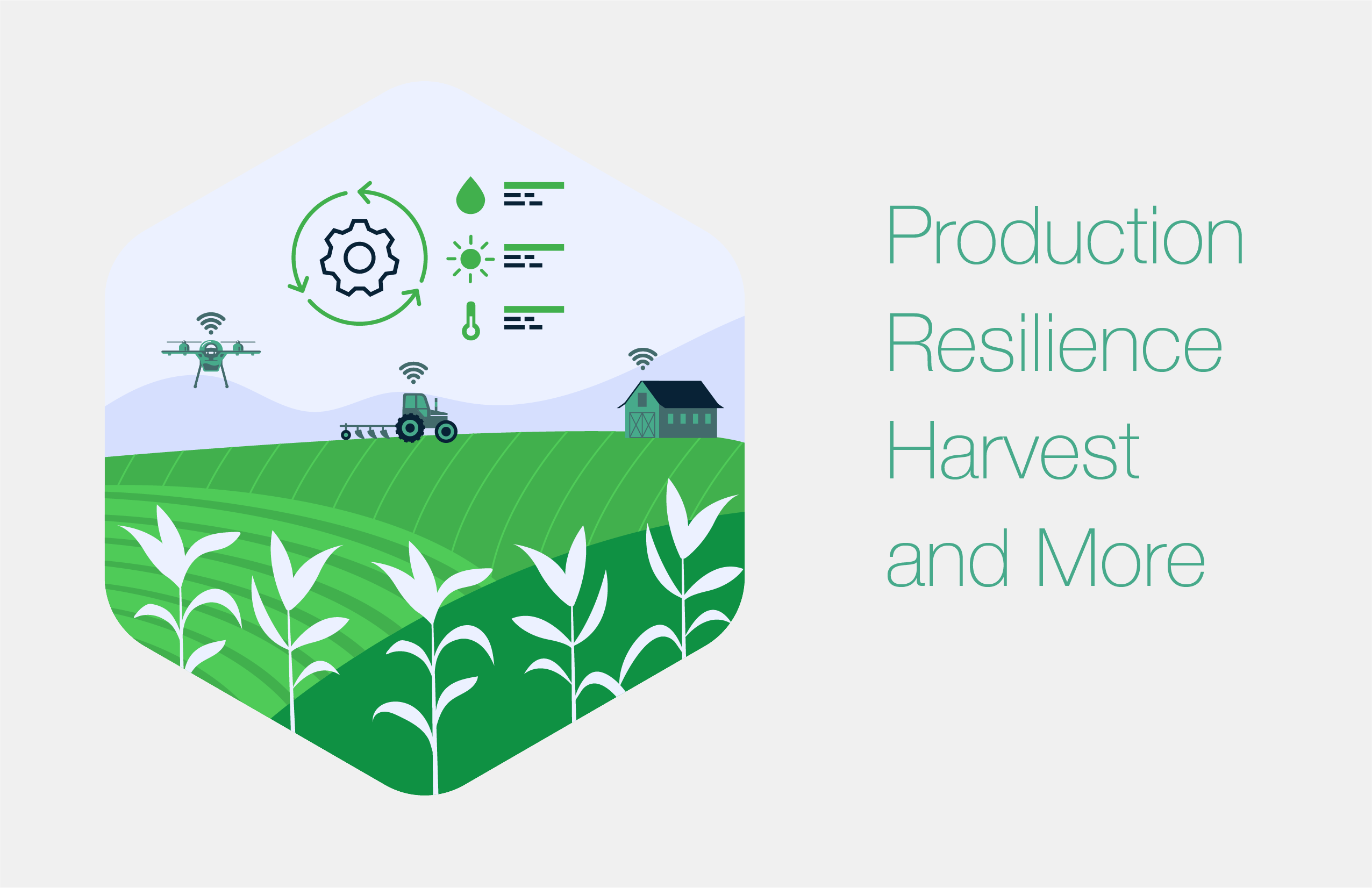
The agricultural industry is a cornerstone of both the U.S. and global economies, providing not only food but also fuel, economic development, and more. As the demand for agricultural products continues to rise, it becomes increasingly essential to develop strategic improvements within the industry to ensure its sustainability and efficiency. Agriculture faces a myriad of challenges, including production delays, pest and disease outbreaks, unpredictable weather patterns, and financial sustainability. To tackle these issues, the agricultural sector must embrace innovation and new technologies to enhance resilience and productivity.
In an exciting development, NASA’s Advanced Air Mobility (AAM) initiative is exploring the integration of drones into the U.S. national airspace system. This project aims to establish a network that is accessible, safe, and cost-effective. The application of smaller aircraft, such as cargo-carrying drones and passenger air taxis, holds the potential to connect remote urban and rural areas that are often difficult to reach. One of NASA’s key missions, the ACERO project, is investigating how this technology can assist emergency personnel in responding to wildland fire disasters. As the number of aircraft, including Unmanned Aerial Vehicles (UAVs), in the air increases, NASA’s Aircraft Operations and Safety Program (AOSP) plays a crucial role in ensuring that airspace remains safe for both airborne and ground-based entities, including people, livestock, and agricultural activities.
To further explore the potential of drones in agriculture, the 2025/2026 Dream with Us Design Challenge is seeking innovative ideas for integrating Uncrewed Aerial Systems (UAS) into the industry. This initiative invites student teams to brainstorm ways to apply drone technology to enhance various agricultural aspects such as crop monitoring, production, pest and disease resilience, weather adaptation, and harvesting.
The challenge is open to middle school student teams consisting of 2-4 members. These teams are tasked with designing new or improved UAV capabilities to address agricultural needs. While the designs are primarily conceptual, participants are allowed to use technical software if they choose. The potential uses for these drones include:
- Monitoring crop health and collecting samples
- Enhancing crop production efficiency
- Improving harvesting methods
- Strengthening agricultural resilience against climate and weather changes
- Addressing other agriculture-related areas of interest
Teams will have the opportunity to present their designs to a panel of NASA experts. Presentations should highlight the drone design, the specific agricultural need it addresses, and how it contributes to the industry’s improvement in one or more of the aforementioned areas.
Additionally, each team is required to produce a separate educational product aimed at inspiring younger students. This project can be anything the team decides, such as a video, a graphic novel, or a poster, limited only by the team’s creativity and the judges’ ability to access and review it.
Participants will have access to STEM resources and activities to assist in developing their projects. Winning teams will earn the chance to meet a NASA expert and share their contributions to current aeronautics challenges. Additionally, their designs may be featured on NASA’s social media platforms and more.
For middle school students in grades 6-8, the challenge module is tailored to their level, while high school students in grades 9-12 will use a corresponding high school module. Detailed information about the challenge can be found on the Dream with Us main webpage. Optional STEM activities aligning with the challenge theme are available for grades K-12, regardless of participation in the design challenge.
Submissions for the Dream with Us: Middle School Aviation Challenge will be accepted from September 26 to December 31, 2025. The submission link is provided on the NASA Gateway. Winners will be first announced during a virtual awards reception, with the date to be determined, and subsequently shared on social media and the Dream with Us design challenge webpage.
The 2025/2026 Dream with Us Design Challenge, open to both middle and high school students, kicks off on September 26, 2025. Schools, organizations, and community groups are encouraged to inform parents and guardians that each team is limited to one submission. Team registration requires an account created by someone over the age of 13, and adult sponsors may register on behalf of the team if preferred. Entries must be submitted via the Dream with Us Design Challenge webpage, and signed permission forms from parents or legal guardians are mandatory.
The middle school challenge is open to students in grades 6-8 attending public, private, parochial, and home schools in the U.S., as well as children of U.S. military members stationed overseas. There are two judging categories: one for middle school participants (grades 6-8) and one for high school participants (grades 9-12). More information about the high school module is available on the Dream with Us design challenge webpage.
All submissions must be original student work, with teams consisting of 2-4 members. Presentations can include a variety of formats, such as PowerPoint-style slides, written plans, videos, brochures, flyers, infographics, commercials, websites, or other creative approaches. It is crucial to provide accessible links for any digital content included in the submission for accurate judging.
Each presentation must include two categories: technical and creative. The technical section should address:
- The chosen area of the agricultural industry
- The importance of this area and the necessity of the drone
- Details on how the drone aids this agricultural area
- An illustration or description of the drone, including specifications
- A comparison to current technologies and potential applications in other agricultural areas
The creative category requires teams to develop a project that educates elementary-aged children about the agricultural industry and the benefits of drones. The activity must cover:
- The drone’s function
- Its positive impact on agriculture
- Its significance
Participants are encouraged to submit high-resolution images or artwork in .jpg or .png format. Additionally, teams have the option to include information about synergistic technologies and team dynamics in their presentation.
Middle school entries must be submitted through the NASA Gateway link. Each submission must contain:
- A signed permission form for each student
- A brief project description with team member details and an explanation of the UAS’s agricultural benefits
- Written work and presentations in PDF format, limited to 10 MB
- Artwork in high-resolution .jpg or .png format
- Videos uploaded to YouTube with a shareable link
Entries will be evaluated on impact, practicality, originality, and communication effectiveness. A panel of judges will select top submissions, with winners announced no later than March 1, 2026. Participants will receive an endorsement stamp code for the NASA Aeronautics Flight Log, and select projects will be showcased on NASA’s platforms.
The agricultural industry involves farming practices that include soil cultivation for crops and livestock support. For more information, visit NASA’s agriculture site. Key aspects of agriculture include production, efficiency, resilience, and sustainability, which is the long-term production of goods with minimal environmental impact. Monitoring technology helps track agricultural health and growth, as detailed on the Landsat website.
Different types of aircraft, such as multicopters, rotorcraft, and vertical take-off and landing (VTOL) vehicles, are part of this technological advancement. A virtual educator professional development webinar in October 2025 will provide more details about the challenge and application process. Stay updated on the Dream with Us design challenge webpage.
For further inquiries, contact the NASA Aeronautics STEM team at aeroSTEM@nasa.onmicrosoft.com. More details about the challenge can be found on the Dream with Us: Middle School Aviation Challenge page.
For more Information, Refer to this article.