





















Advancements in Autonomous Systems: Combining AI with Urban Air Mobility
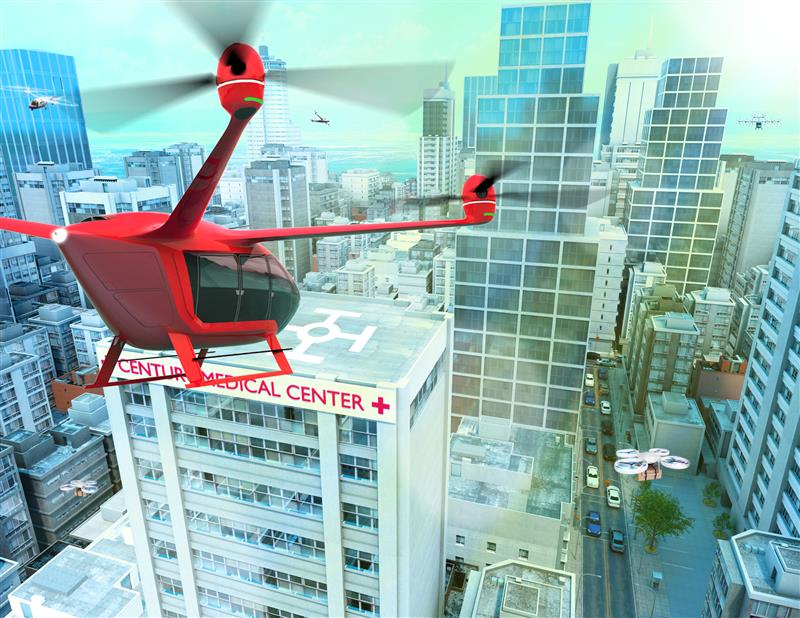
In the rapidly evolving domain of artificial intelligence (AI), one of the most ambitious objectives is the creation of "agentic" or autonomous systems. These systems are envisioned to execute tasks independently, without human intervention. This goal aligns closely with the aspirations of the urban air mobility sector, which aims to integrate autonomous flying vehicles into urban environments globally. A notable synergy between these fields is being led by Autonomy Association International Inc. (AAI), which is collaborating with NASA to pioneer advancements in this area.
Autonomy Association International Inc. and NASA Collaboration
Autonomy Association International Inc. (AAI), a public benefit corporation based in Mountain View, California, is strategically located near NASA’s Ames Research Center in Silicon Valley. In 2022, AAI initiated a partnership with NASA by signing a Space Act Agreement with Ames. This collaboration supports NASA’s Data and Reasoning Fabric project—a venture focused on enhancing the transportation of people and goods to regions previously underserved by aviation. The project aims to deliver reliable and precise data for decision-making in aeronautics.
Greg Deeds, cofounder of AAI and the project’s industry principal investigator, emphasized the significance of this collaboration, stating, "Our partnership with NASA inspired us to leverage data fabric in solving complex challenges. Working alongside NASA’s engineers and leaders provided us with invaluable experience that will influence all our future products."
Understanding Data Fabric Technology
To comprehend the innovation behind this collaboration, it’s essential to understand what a data fabric is. Much like how a piece of fabric is woven from interconnected threads, a data fabric consists of intertwined data sources. While a typical data fabric from a technology company might integrate data from various cloud service providers, NASA’s Data and Reasoning Fabric also incorporates information from local governments and other service providers. This comprehensive integration allows an autonomous vehicle to process data and requests from the cities it traverses, enabling it to prioritize and respond efficiently.
Testing in the Skies Over Arizona
The collaboration between AAI and NASA, with Ken Freeman as the principal investigator at Ames, led to four experimental adaptations of the data fabric technology. These tests were conducted in the skies over Arizona, utilizing hardware and software developed by AAI. The tests focused on advanced air mobility passenger flights and employed a drone for the swift delivery of medical supplies between urban and rural areas. During these flights, new tasks were communicated to the aircraft in real-time. A helicopter served as a stand-in for the drone and air taxi, flying over various regions, including towns, universities, tribal lands, and the airspace surrounding Phoenix Sky Harbor airport. It gathered data and executed programs received from multiple sources.
Building the Future of Smart Cities
Jennifer Deeds, chief operating officer and cofounder of AAI, remarked, "We are concentrating on building the digital infrastructure that will underpin the smart cities and regions of the future." This statement reflects AAI’s commitment to shaping the foundational elements of urban development through advanced digital solutions.
Since the original NASA project, AAI has expanded its reach internationally, forging partnerships and engaging clients in sectors such as agriculture, real estate development, and industrial food production. These industries are utilizing AAI’s system to aggregate and manage data efficiently. In 2024, AAI launched its Digital Infrastructure Platform, which employs the same technology initially crafted for NASA’s flight test. Shortly thereafter, an upgraded "agentic" version was introduced, designed to autonomously retrieve necessary AI programs with minimal human interaction.
NASA’s Role in Driving Innovation
NASA’s involvement in these technological advancements underscores its commitment to driving innovation within American industries. By equipping its commercial partners with proven technology, NASA facilitates the development of groundbreaking solutions that unlock new possibilities across various sectors.
For more insights into NASA’s spinoffs and technological innovations, you can visit their official website at https://spinoff.nasa.gov/.
This collaborative effort between AAI and NASA not only marks significant progress in the integration of autonomous systems and urban air mobility but also highlights the potential for these technologies to revolutionize the way goods and people are transported. As the world moves towards more autonomous solutions, such partnerships are paving the way for a future where smart cities and efficient urban transport systems become a reality.
For more Information, Refer to this article.