














![[Video] Samsung Color E-Paper: A Smarter Alternative to Traditional Posters](https://www.hawkdive.com/media/samsung-tvs-and-displays-samsung-color-e-paper-samsung-vxt-digital-signage_thumb932-218x150.jpg "Samsung introduces Color E-Paper as innovative poster alternative.")






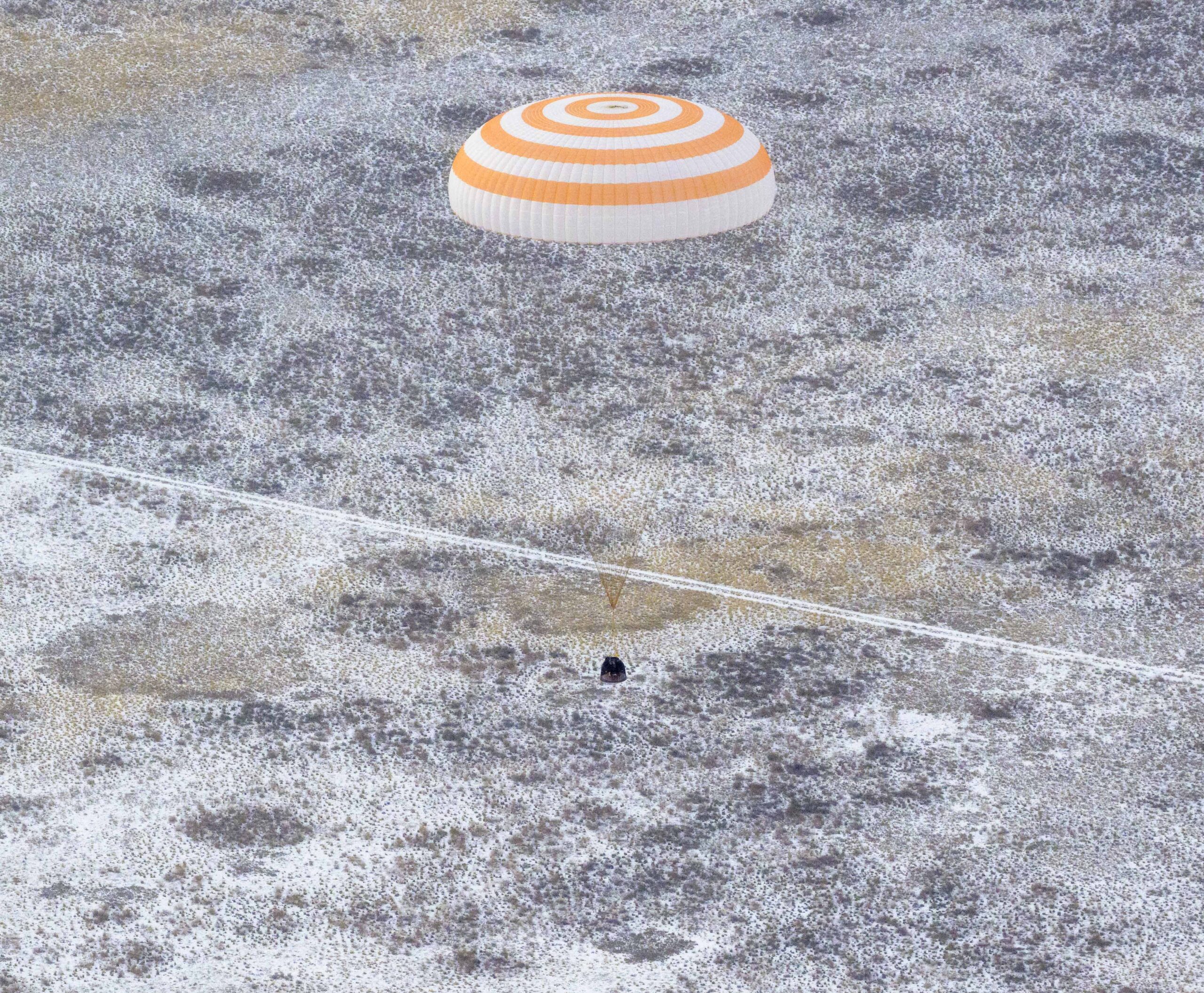
On Tuesday, NASA astronaut Jonny Kim, along with Roscosmos cosmonauts Sergey Ryzhikov and Alexey Zubritsky, successfully returned to Earth after completing a significant eight-month mission aboard the International Space Station (ISS). This mission was instrumental in advancing scientific understanding and supporting future space endeavors. Their return marked the end of an extensive period of research and exploration, which holds the promise of benefiting both life on Earth and forthcoming space explorations.
Safe Landing in Kazakhstan
The trio made a secure landing at 12:03 am Eastern Standard Time (EST), which corresponded to 10:03 am local time, in the vicinity southeast of Dzhezkazgan, Kazakhstan. This was facilitated by a parachute-assisted descent, following their departure from the ISS at 8:41 pm on December 8, using the Soyuz MS-27 spacecraft. The precision of the landing and the seamlessness of the entire operation underscore the meticulous planning and execution by the space agencies involved.
Mission Overview: A Journey Through Space
Spanning 245 days, this mission allowed the crew to orbit Earth an impressive 3,920 times, covering nearly 104 million miles in the process. The mission launched on April 8, marking the first spaceflight experience for both Jonny Kim and Alexey Zubritsky, while it was the third for Sergey Ryzhikov, who now boasts a commendable total of 603 days spent in space over his career.
Scientific Contributions and Technological Demonstrations
During their time aboard the ISS, Jonny Kim played a pivotal role in a variety of scientific investigations and technology demonstrations. One of his notable contributions involved studying bioprinted tissues containing blood vessels in the microgravity environment of space. This research is part of a broader effort to advance space-based tissue production, with the potential to significantly impact medical treatments on Earth.
In addition to his work with bioprinted tissues, Kim participated in the Surface Avatar study. This research focused on evaluating the remote command of multiple robots in space, which holds promise for the development of robotic assistants in future exploratory missions. The ability to operate robots remotely in space could revolutionize the way we conduct missions, allowing for more complex and efficient exploration efforts.
Moreover, Kim was also involved in developing in-space manufacturing techniques for DNA-mimicking nanomaterials. These materials have the potential to enhance drug delivery technologies and support emerging therapies and regenerative medicine. The implications of this research are vast, holding the potential to transform medical treatment options both in space and on Earth.
Post-Mission Procedures and Crew Recovery
Upon their return to Earth, the crew underwent thorough medical checks to ensure their well-being after the extended mission in space. Following these evaluations, they traveled to the recovery staging area in Karaganda, Kazakhstan. From there, Jonny Kim will make his way back to the United States, where he will head to NASA’s Johnson Space Center in Houston aboard a NASA aircraft.
The Importance of the International Space Station
For more than a quarter-century, the International Space Station has served as a vital platform for continuous human habitation and scientific experimentation. It has been instrumental in advancing scientific knowledge and facilitating breakthroughs that would be impossible to achieve solely on Earth. The ISS serves as a critical testbed for understanding and addressing the challenges associated with long-duration spaceflight.
The research conducted on the ISS not only furthers scientific understanding but also helps pave the way for expanding commercial opportunities in low Earth orbit. As commercial entities focus on providing human space transportation services and developing destinations within this orbit, NASA is directing its efforts towards deep space missions. This shift is part of the Artemis campaign, which aims to return humans to the Moon and prepare for future missions to Mars.
The Role of Commercial Partnerships
The evolution of the low Earth orbit economy is a testament to the successful collaboration between NASA and commercial companies. These partnerships are crucial for enabling a sustainable human presence in space and fostering innovation in space exploration technologies. By leveraging the strengths of both public and private sectors, space agencies can focus on more ambitious missions, such as those targeting the Moon and Mars.
Looking Ahead: The Future of Space Exploration
The achievements of this mission underscore the significant strides being made in space exploration and research. The advancements and knowledge gained from these endeavors have the potential to transform life on Earth and open new frontiers in space. As we look to the future, the continued collaboration between international space agencies, commercial partners, and scientists will be essential in overcoming the challenges of deep space exploration and realizing the dream of interplanetary travel.
Additional Resources and Further Reading
For readers interested in delving deeper into the research and operations of the International Space Station, additional information can be found on NASA’s official website at NASA’s ISS page. This resource offers comprehensive insights into the ongoing missions, scientific experiments, and technological innovations being conducted aboard the ISS.
In conclusion, the successful return of Jonny Kim, Sergey Ryzhikov, and Alexey Zubritsky marks another milestone in our journey towards expanding the horizons of space exploration. Their contributions during this mission have laid the groundwork for future advancements, inspiring the next generation of explorers and scientists to continue pushing the boundaries of what is possible.
For more Information, Refer to this article.