



















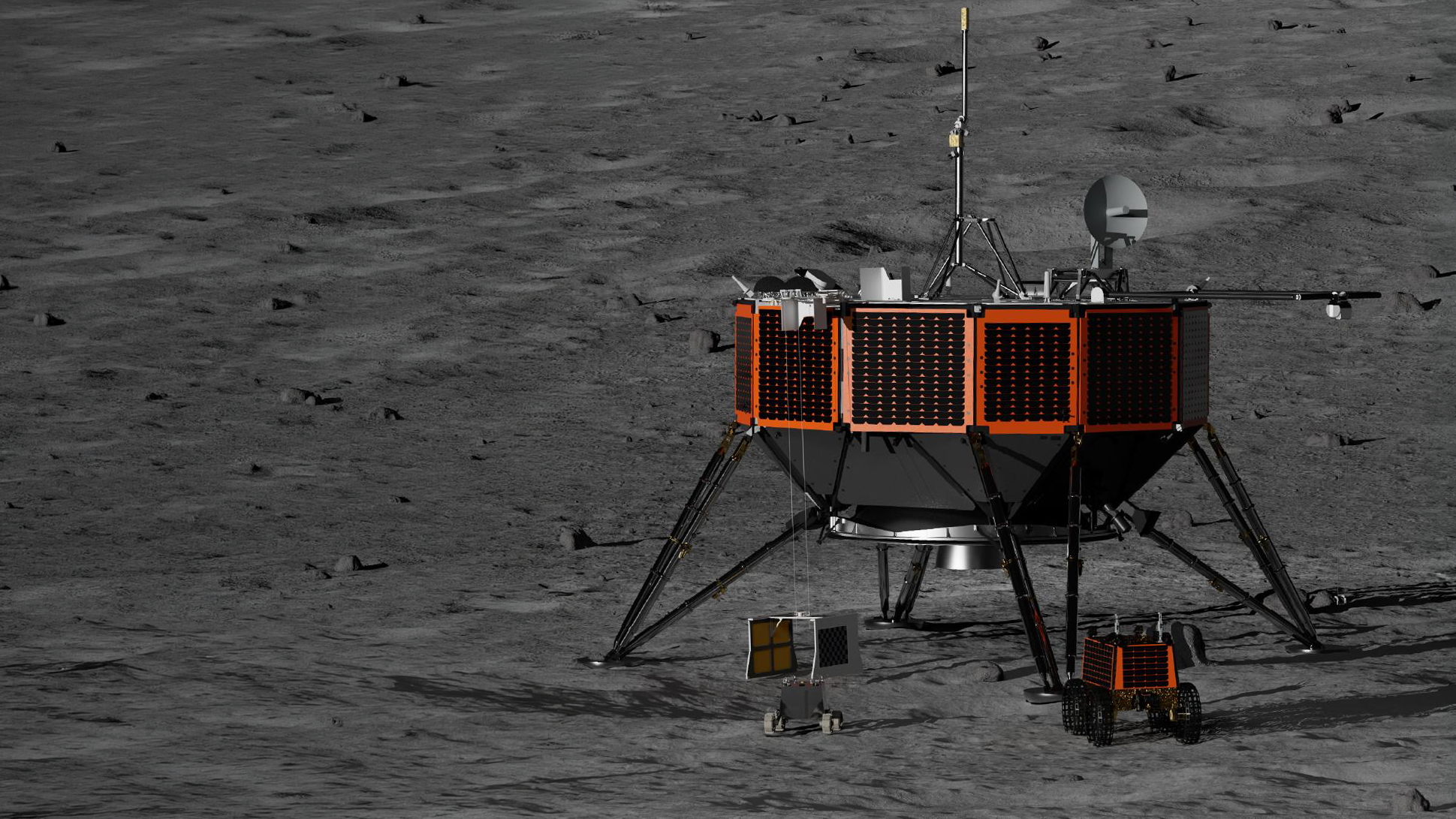
NASA has recently awarded Intuitive Machines of Houston a contract worth $180.4 million to deliver science and technology payloads to the lunar surface as part of the CLPS (Commercial Lunar Payload Services) initiative and the Artemis program. This initiative aims to enhance our understanding of the lunar environment and pave the way for future human missions to the Moon and eventually Mars.
The lunar delivery will consist of seven payloads, with five of them being provided by NASA. These payloads will focus on studying the chemical composition and structure of the lunar regolith, as well as the radiation environment in and around the South Pole region. By conducting these scientific investigations, NASA hopes to contribute to the long-term sustainability of human presence on the Moon.
Joel Kearns, the deputy associate administrator for exploration at NASA Headquarters, emphasized the importance of commercial lunar landings in advancing lunar science and exploration. He highlighted that these missions will play a crucial role in supporting future Artemis missions and building a sustainable human presence on the Moon.
Intuitive Machines, the company responsible for delivering the payloads, will target the Moon’s South Pole region for landing in 2030. This contract marks the fifth CLPS mission for the company, which has previously successfully delivered payloads to the Moon with their IM-1 and IM-2 missions.
Adam Schlesinger, the manager of the CLPS initiative at NASA’s Johnson Space Center, reiterated the significance of regular lunar deliveries in providing valuable insights into the lunar environment. These missions will help accelerate progress towards establishing a long-term human presence on the Moon and will be crucial in preparing for future human missions to Mars.
The payloads that will be delivered to the lunar surface include a variety of rovers and instruments, totaling 165 pounds in collective mass. Some of the key payloads include:
– Stereo Cameras for Lunar Plume Surface Studies (SCALPSS): This payload will use advanced imaging techniques to capture the impact of the engine exhaust plume on lunar regolith as the lander descends on the Moon’s surface. The high-resolution stereo images captured by this payload will aid in predicting lunar regolith erosion and ejecta characteristics.
– Near-Infrared Volatiles Spectrometer System (NIRVSS): This instrument will observe light emitted or reflected by the lunar soil to help identify its composition. It will also take high-resolution images of the lunar soil and composition variability, providing valuable insights into the presence of minerals and ices.
– Mass Spectrometer for Observing Lunar Operations (MSolo): This payload will characterize the makeup of volatiles in the environment around the lander following touchdown. It will help in identifying resources that can be utilized on the lunar surface.
– Lunar Vehicle Radiation Dosimeter system (LVRaD): This suite of radiation detectors is designed to quantify the radiation environment on the lunar surface and assess its potential impacts on biology and human activities.
– Multifunctional Nanosensor Platform (MNP): This compact instrument will analyze volatile compounds on the lunar surface and investigate the interactions between the lander’s engines and the lunar regolith. The MNP instrument will be integrated into a rover developed by the Australian Space Agency, showcasing Australia’s robotics capabilities.
In addition to these payloads, NASA’s Laser Retroreflector Array (LRA) will be deployed to help orbiters and landing spacecraft determine their position and navigate on the lunar surface. The “Sanctuary on the Moon” payload, developed in France, will serve as a time capsule containing a curated archive of human civilization.
Through the CLPS initiative, NASA is partnering with American companies to purchase lunar landing and surface operations services. By sending science and technology payloads to the Moon, NASA aims to gather valuable data that will inform future human exploration missions to Mars.
For more information about NASA’s CLPS initiative and the Artemis program, visit the official NASA website at https://www.nasa.gov/clps.
In conclusion, the collaboration between NASA and Intuitive Machines represents a significant step forward in advancing lunar exploration and paving the way for sustainable human presence on the Moon. By leveraging commercial partnerships and innovative technologies, NASA is making steady progress towards achieving its ambitious goals of exploring the Moon and beyond.
For more Information, Refer to this article.