


















Exploring Mars: Curiosity Rover’s Journey Through the Boxwork Region
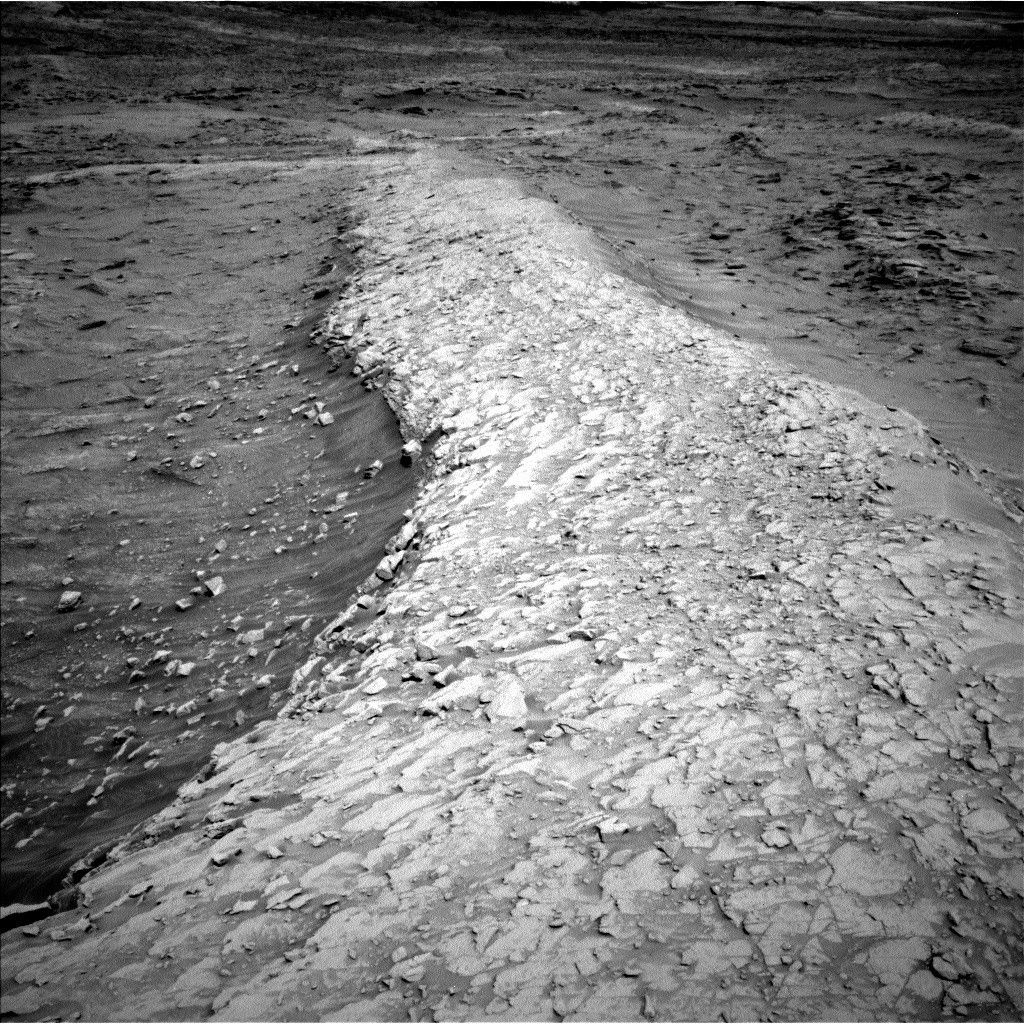
As we delve deeper into the cosmos, Mars continues to be a focal point of our space exploration efforts. The Curiosity Rover, an enduring symbol of our quest for knowledge, is currently navigating the intricate and rugged terrain of the Red Planet’s boxwork region. This area, characterized by its maze-like ridges, provides a unique opportunity for scientific investigation. The ridges are of particular interest because they are conveniently sized to match Curiosity’s capabilities, allowing the rover to traverse them with relative ease.
One of the primary objectives during this phase of exploration is to identify a suitable location for the next drilling operation. Recently, Curiosity’s journey led it to a position between two promising sites, which have been aptly named "Laguna Escondida" and "Laguna Socompa." As the team keeps a close watch for the ideal drilling spot, the rover’s suite of scientific instruments is continuously employed to study the structural intricacies of the boxwork formations.
In the past week, Curiosity has focused on six contact science targets situated atop these ridges. The Mars Hand Lens Imager (MAHLI) and the Alpha Particle X-ray Spectrometer (APXS) have been instrumental in gathering detailed data from these targets. Meanwhile, the Chemistry and Camera (ChemCam) and Mast Camera (Mastcam) have been actively engaged in capturing spectroscopic readings and assembling mosaics of both nearby and distant targets. The aim is not just to visualize the hollows for drilling purposes but also to deepen our understanding of the ridge structures and to explore the more distant buttes and boxwork formations surrounding the rover.
On a recent Monday, the science team, led by the Environmental Science Theme Group (ENV), took charge of the operations. As the cloudy season on Mars approaches its conclusion, the team has been maximizing the opportunity to study these atmospheric phenomena. The cloudy season is an annual event on Mars when water-ice clouds are more prevalent over the Gale Crater, where Curiosity is located.
During this period, the ENV team conducts a series of cloud observations. These include the shorter suprahorizon and zenith cloud movies, which are used to analyze cloud properties both directly overhead and just above the horizon. A comprehensive survey is also conducted to assess how the sky’s brightness and cloud cover vary with direction. This survey comprises nine cloud movies taken from various angles around the rover. Additionally, cloud altitude observations are made by examining the shadows cast by clouds, providing insights into their height above the Martian surface.
As the cloudy season wraps up, it marks the onset of the dusty season. This transition is characterized by an increase in atmospheric dust, which gradually obscures the previously clear view of the crater rim. The dustier conditions are meticulously monitored through regular line-of-sight measurements and tau observations, which help gauge the amount of dust in the atmosphere. The arrival of the dusty season also coincides with heightened dust-lifting activity, such as the formation of dust devils. These are swirling columns of dust and air that can be observed with 360-degree surveys and dedicated motion-capture movies.
This dynamic shift from cloudy to dusty conditions underscores the ever-changing Martian atmosphere, ensuring that the ENV team remains constantly engaged. The data collected during these seasonal transitions are invaluable for understanding the planet’s climate patterns and atmospheric behavior.
Mars exploration, led by missions like Curiosity, is a testament to human ingenuity and our unyielding desire to explore the unknown. The insights gained from these missions not only enhance our understanding of Mars but also provide crucial information that can inform future missions, including those that aim to send humans to the Red Planet.
For those interested in the technical aspects of the Curiosity Rover’s journey, it’s worth noting that the rover is equipped with a sophisticated array of instruments. MAHLI, for example, is a camera that captures high-resolution images of rocks and soil up close, allowing scientists to examine the microstructures of Martian geology. APXS, on the other hand, determines the elemental composition of surface materials, providing insights into the planet’s chemical makeup.
The ChemCam, a laser-induced breakdown spectroscopy instrument, fires a laser at target materials to vaporize a small amount of it, creating plasma. By analyzing the light emitted by the plasma, scientists can determine the composition of the target. This technique is invaluable for identifying the chemical elements present in Martian rocks and soils.
The Mastcam, comprised of two cameras, captures high-resolution images and videos in both visible and near-infrared wavelengths. This capability allows for the detailed study of the planet’s surface features and the monitoring of atmospheric conditions.
These instruments work in concert to paint a comprehensive picture of Mars’ environmental and geological landscape. Each discovery brings us one step closer to answering fundamental questions about the planet’s history and its potential to support life.
Moreover, the Curiosity Rover’s mission is part of a broader effort by NASA and its international partners to explore Mars. Future missions, such as the Mars 2020 Perseverance Rover and the planned Mars Sample Return mission, aim to build on Curiosity’s findings by searching for signs of ancient life and collecting samples for return to Earth.
As we continue to push the boundaries of space exploration, the data and knowledge gained from these missions will pave the way for human exploration of Mars. The challenges of operating a rover on another planet are immense, but the rewards in terms of scientific discovery and inspiration are equally profound.
In conclusion, Curiosity’s journey through the boxwork region of Mars is a vital chapter in our ongoing exploration of the Red Planet. The rover’s ability to navigate this challenging terrain and conduct detailed scientific investigations showcases the remarkable achievements of modern space exploration. As we eagerly anticipate the next phases of this mission, the Curiosity Rover continues to be a beacon of curiosity and discovery, inspiring us to reach for the stars and explore the mysteries of our solar system.
For further reading and updates on the Curiosity Rover’s mission, you can visit NASA’s dedicated Mars exploration website.
For more Information, Refer to this article.