





















Unveiling the Secrets of Enceladus: New Organic Compounds Discovered
In a remarkable development in space exploration, researchers have uncovered new evidence of organic compounds in the icy plumes of Saturn’s moon, Enceladus. This finding, published in October 2025, is based on data from NASA’s renowned Cassini mission. This mission has been instrumental in advancing our understanding of Saturn and its intriguing moons. The discovery sheds light on the chemical complexity of Enceladus and hints at the potential for biochemical processes beneath its icy surface.
Spotlight on Enceladus: A Moon of Interest
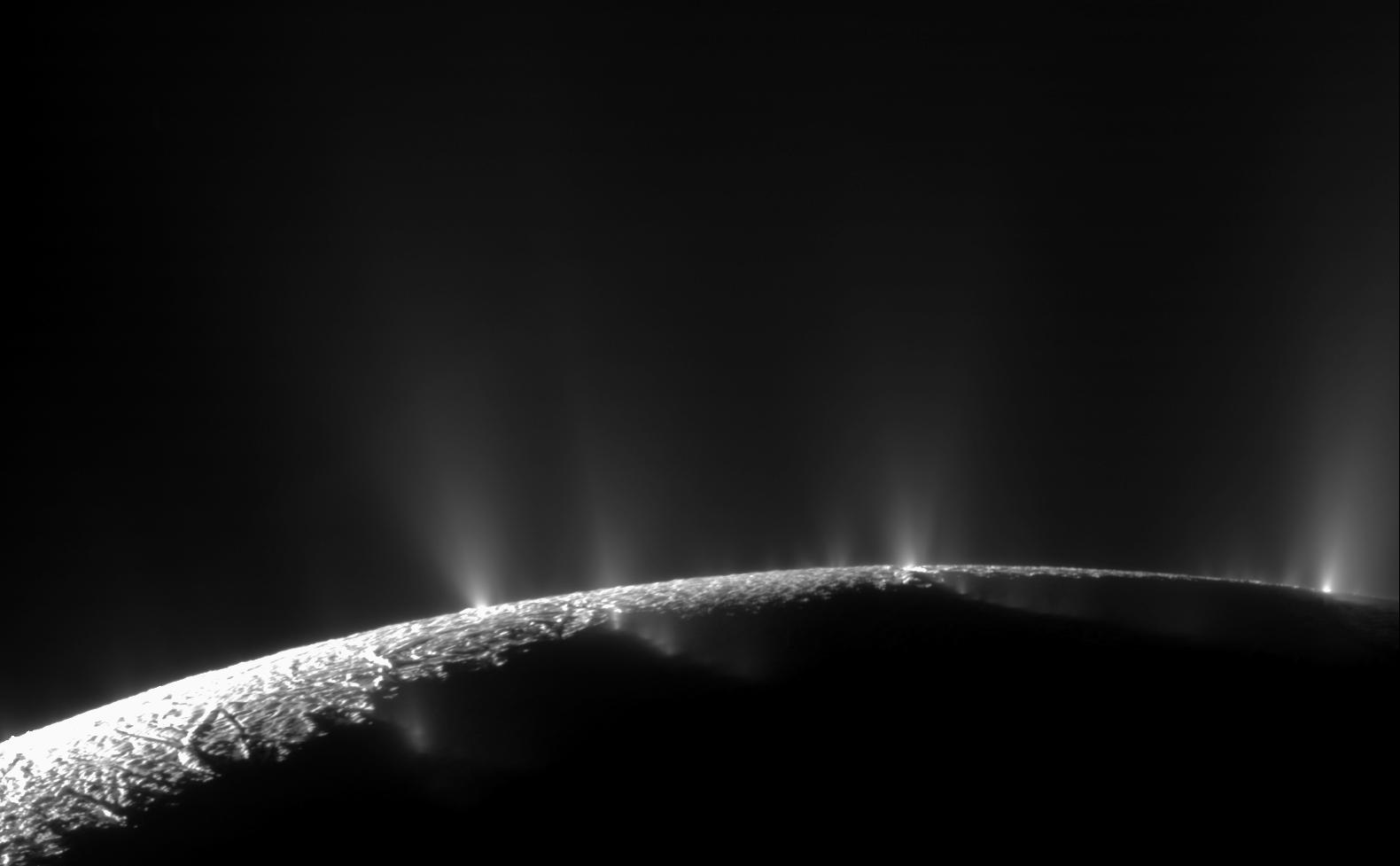
Enceladus, a small but fascinating moon of Saturn, has been a focal point for scientists for many years. Its surface is covered in a thick layer of ice, beneath which lies a hidden ocean. The moon’s most striking feature, the so-called “tiger stripes,” are fissures near its south pole. These stripes are the source of the dramatic plumes that shoot water ice and other materials into space. The Cassini spacecraft captured stunning images of these plumes during its mission, providing invaluable data for scientists back on Earth.
The Cassini Mission: A Gateway to Discovery
NASA’s Cassini mission, which launched in 1997 and concluded in 2017, has been pivotal in enhancing our comprehension of Saturn and its moons. Cassini was equipped with a suite of scientific instruments designed to study the Saturnian system in unprecedented detail. Among its many accomplishments, Cassini provided the first direct evidence of the plumes erupting from Enceladus, leading to significant interest in the moon’s potential to harbor life.
New Organic Compounds: A Window into Enceladus’ Ocean
The recent study analyzed data from Cassini’s observations of Enceladus’ plumes. Researchers identified not only previously known molecules but also new organic compounds that had not been detected before. These compounds were ejected from the subsurface ocean through the moon’s icy crust, offering a glimpse into the complex chemistry occurring beneath the surface.
Organic compounds are molecules that contain carbon and are considered the building blocks of life. Their presence on Enceladus is particularly intriguing, as it suggests the potential for chemical processes similar to those that occur on Earth. While the discovery of organic molecules does not confirm the existence of life, it does indicate that Enceladus has the necessary ingredients for life to potentially develop.
Understanding the Implications: Chemical and Biochemical Activity
The identification of new organic compounds on Enceladus has significant implications for our understanding of the moon’s environment. These compounds could be involved in chemical reactions that are precursors to life. On Earth, certain organic molecules are known to participate in biochemical processes that are essential for life. If similar processes are occurring on Enceladus, it could mean that the moon has the potential to support life, albeit in a form different from what we know.
The study also highlights the dynamic nature of Enceladus’ ocean. The presence of a variety of organic compounds suggests that the ocean is not a static environment but one where chemical reactions are actively taking place. This dynamism could create a diverse range of conditions that might be conducive to life.
The Broader Context: Enceladus in the Search for Extraterrestrial Life
Enceladus is part of a broader effort to search for signs of life beyond Earth. Moons like Europa, which orbits Jupiter, and Titan, another of Saturn’s moons, are also considered potential candidates for extraterrestrial life due to their subsurface oceans and unique chemical environments. The discovery of organic compounds on Enceladus reinforces the idea that moons with hidden oceans could be prime targets in the quest to find life elsewhere in the solar system.
Exciting Possibilities for Future Exploration
The findings from the Cassini mission have sparked interest in future missions to explore Enceladus and similar celestial bodies. Scientists are eager to return to Enceladus with more advanced technology to further study its plumes and ocean. Future missions could involve landers or even submarines designed to penetrate the icy crust and directly sample the subsurface ocean.
These missions would aim to answer fundamental questions about the moon’s habitability and the potential for life. By analyzing the organic compounds and other materials in more detail, scientists hope to gain a deeper understanding of the processes occurring on Enceladus and their implications for life beyond Earth.
Conclusion: A Milestone in Space Exploration
The discovery of new organic compounds in the plumes of Enceladus marks a significant milestone in space exploration. It underscores the importance of missions like Cassini in expanding our knowledge of the universe and the potential for life beyond our planet. As scientists continue to study the data from Enceladus and plan future missions, we are reminded of the vastness of the cosmos and the endless possibilities it holds for discovery.
For more information on the findings from the Cassini mission, you can visit [NASA’s official page on the mission](https://science.nasa.gov/mission/cassini/).
Image credit: NASA/JPL-Caltech/Space Science Institute
For more Information, Refer to this article.