


















On May 31, 2025, the vibrant city of Newport News, Virginia, and its surrounding Hampton Roads region witnessed an influx of over 2,000 eager visitors. These individuals had gathered at Christopher Newport University (CNU) for the annual STEM (Science, Technology, Engineering, and Mathematics) Community Day. This event, renowned for its engaging activities and educational exhibits, was further enriched by the presence of the NASA eClips team from the National Institute of Aerospace’s Center for Integrative STEM Education (NIA-CISE). The team’s efforts ensured that attendees left with their curiosity piqued and their imaginations captivated, particularly by the wonders of the Sun.
Engaging Young Minds: The Role of STEM Student Ambassadors
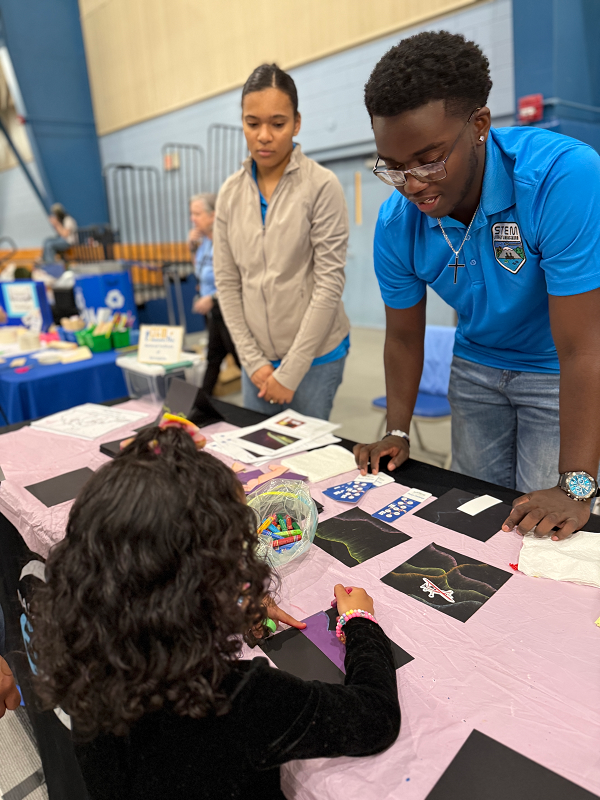
Central to the NASA eClips exhibit were the STEM Student Ambassadors. This group comprised high school students from Virginia’s Tidewater region, who had been rigorously trained by NASA eClips educators during the summer of 2024. These young leaders, brimming with enthusiasm and a passion for STEM advocacy, played a pivotal role in the event. Their participation was made possible by a grant from the Coastal Virginia STEM Hub, supported by the Virginia General Assembly, showcasing the initiative’s growing influence and impact.
Interactive Learning: Bridging STEM and the Arts
Throughout the day, the Ambassadors engaged visitors of all ages through two imaginative and hands-on activities that seamlessly combined elements of STEM and the arts:
Chalk Corona
In this activity, participants used black construction paper and vibrant chalk to recreate the Sun’s corona. The corona is the extremely hot and gaseous "crown" visible during a total solar eclipse. As participants shaded and smudged their creations, the Ambassadors explained the corona’s significance in solar research. Moreover, they distributed certified solar viewers, enabling attendees to safely observe the Sun once they returned home.
Pastel Auroras
This activity allowed visitors to explore how solar phenomena such as solar winds, storms, and coronal mass ejections, colloquially known as the Sun’s "sneezes," give rise to Earth’s mesmerizing auroras. Guided by the Ambassadors, participants used pastels to create layered depictions of the swirling curtains of light. This exercise also tied recent mid-Atlantic aurora sightings to real-time space weather, making the experience both educational and visually captivating.
The Impact of NASA eClips’ Presence
The energy and enthusiasm of the Ambassadors were infectious, transforming complex heliophysics into engaging, hands-on activities. This approach not only made learning fun but also highlighted the myriad opportunities and potential careers available within the STEM fields. The smiles on participants’ faces, along with the traces of chalk and pastels, were testament to the event’s success. The presence of NASA eClips undoubtedly added a "crowning" touch to this memorable community celebration of STEM.
NASA eClips: Enhancing STEM Literacy
The NASA eClips project is dedicated to enhancing STEM literacy by providing educators with standards-based videos, activities, and lessons through the lens of NASA’s scientific endeavors. Supported by NASA under cooperative agreement award number NNX16AB91A, the project is a vital component of NASA’s Science Activation Portfolio. This initiative connects NASA’s scientific experts, authentic content, and immersive experiences with community leaders, facilitating a deeper understanding of our world and beyond. For those interested in further explorations, more information can be found at NASA’s Science Learning page.
Additional Insights and Reactions
The event at CNU is a shining example of how educational initiatives can inspire and engage communities. By integrating art with science, the activities not only captured the imagination of participants but also emphasized the interdisciplinary nature of STEM education. Events like these play a crucial role in shaping the next generation of scientists, engineers, and thinkers.
The integration of young ambassadors in such programs is particularly noteworthy. It empowers students, providing them with the opportunity to lead and educate others, thereby fostering a culture of inquiry and learning. This approach helps demystify science for younger audiences, making it accessible and exciting.
The broader community’s response to the event has been overwhelmingly positive, with many participants expressing newfound interest in STEM subjects. Such events serve as a reminder of the importance of continued investment in educational initiatives and the potential they have to transform lives.
For more information on the NASA eClips initiative and to explore a wealth of resources, visit the NASA Science Learning website.
For more Information, Refer to this article.