



















NASA Uses Advanced Simulations to Optimize Launch Conditions for Artemis II Mission
The airflow around rockets during their journey from Earth to space plays a crucial role in the success of a mission. To ensure the best possible launch conditions for the upcoming Artemis II test flight around the Moon, NASA has employed advanced simulations.
Engineers at NASA turned to a specialized tool called the Launch, Ascent, and Vehicle Aerodynamics (LAVA) framework to gain a better understanding of the flight environment of the Artemis Space Launch System (SLS) rocket. This NASA-developed software focuses on computational fluid dynamics, which deals with the behavior of gases and liquids in motion.
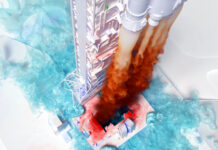
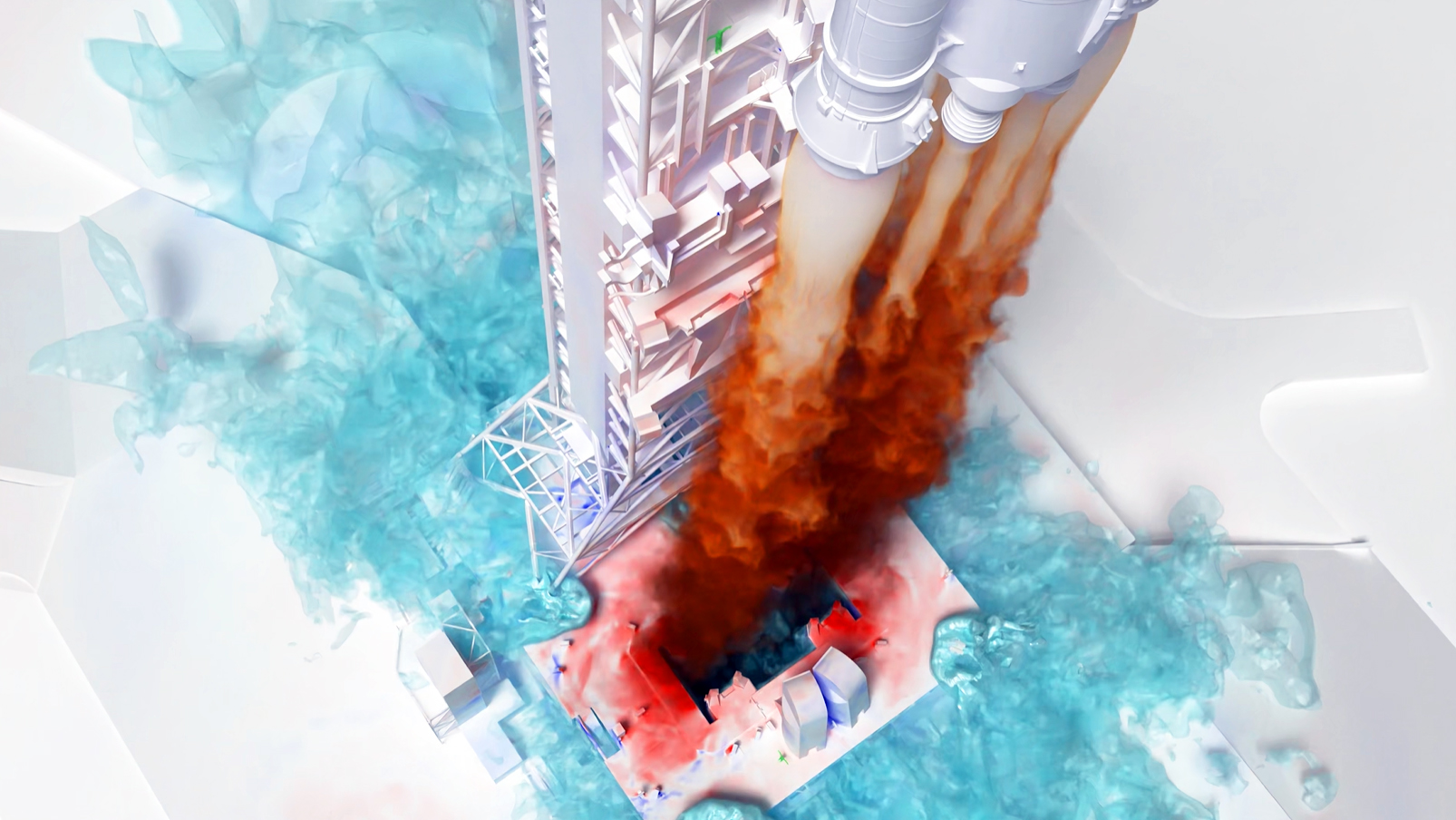
By utilizing data from the Artemis I launch in 2022, researchers at NASA’s Ames Research Center in California’s Silicon Valley conducted simulations using LAVA to analyze the complex interactions between the rocket plume and a water suppression system that helps mitigate sound during launch. This system is vital in protecting the rocket and other equipment from potentially damaging sound waves.
The simulations revealed that activating the sound suppression system effectively reduces pressure waves from sound. However, they also highlighted that exhaust gases from the rocket could redirect water, leading to significant pressure increases in specific areas of the launchpad.
The insights gained from the LAVA simulations have enhanced NASA’s understanding of how the rocket plume interacts with the mobile launcher platform for the Artemis II mission. Aerospace engineers at NASA’s Kennedy Space Center in Florida have used this knowledge to refine the design of plume pressures and modify the launch platform to withstand these pressures for the Artemis II mission, which will be NASA’s first mission with crew aboard the SLS and Orion spacecraft.
In the coming weeks, NASA plans to release the LAVA tool to the aerospace community. This move aims to accelerate innovation by enabling U.S. companies and researchers to conduct complex simulations and optimize designs for aircraft and rockets. Interested parties can learn more about the capabilities of LAVA by attending a seminar hosted by NASA.
The development of LAVA is part of NASA’s Transformational Tools and Technologies project, which focuses on creating new computational capabilities to predict aerospace vehicle performance. This project falls under NASA’s Transformative Aeronautics Concepts Program within the Aeronautics Research Mission Directorate.
NASA’s extensive expertise in aeronautics research plays a vital role in strengthening its space missions. The agency leverages tools like wind tunnel testing, advanced software development, and other innovations to enhance safety and reliability.
By utilizing advanced simulations and cutting-edge tools like LAVA, NASA continues to push the boundaries of space exploration and pave the way for future missions to the Moon, Mars, and beyond. The optimization of launch conditions for the Artemis II mission is just one example of how NASA’s innovative approach to technology and research is shaping the future of space exploration.
For more Information, Refer to this article.