























NASA Explores New Fuel Sources for Radioisotope Power Systems in Deep Space Missions
In the quest to explore the uncharted corners of our universe, spacecraft require a reliable and sustainable source of power. This is especially true for missions that venture millions of miles away from the Earth. For over six decades, NASA has relied on radioisotope power systems (RPS) to provide the necessary energy for these missions. These systems have been successfully deployed in various missions, including the Voyager spacecraft and the Perseverance Mars rover. Essentially, RPS are nuclear batteries that supply long-term electrical power by harnessing the heat generated from the natural radioactive decay of certain materials. Recently, NASA has been testing a new type of fuel for RPS, which could potentially become an alternative option for future long-duration missions to the harshest environments in space.
A Shift from Plutonium-238 to Americium-241
Traditionally, NASA has opted for plutonium-238 (in the form of plutonium oxide) as the fuel of choice for RPS. However, over the past two decades, americium-241 has garnered significant interest, particularly in Europe. In an effort to explore this new option, NASA’s Glenn Research Center in Cleveland has partnered with the University of Leicester in the United Kingdom. This collaboration was formalized through an agreement in January, marking a significant step towards testing americium-241 as a viable RPS heat source fuel.
Understanding the Stirling Convertor
One of the methods used to generate electricity from radioisotope heat sources is through a device known as a free-piston Stirling convertor. Simply put, this is a heat engine that transforms thermal energy into electrical energy. Unlike traditional engines that utilize a crankshaft to extract power, the pistons in a Stirling convertor float freely within the engine. This design innovation allows for continuous operation over several decades without experiencing wear and tear, as it eliminates the need for piston rings or rotating bearings that are prone to wear out over time. By generating more energy, a Stirling convertor could significantly extend the duration of deep-space exploration missions.
For over 15 years, researchers at the University of Leicester have been at the forefront of developing americium-based RPS and heater units. Together with NASA, they have tested the capabilities of a Stirling generator testbed powered by two electrically heated americium-241 heat source simulators.
The Development and Testing Process
Salvatore Oriti, a mechanical engineer at NASA’s Glenn Research Center, shared insights into the development process. "The concept started as just a design, and we took it all the way to the prototype level: something close to a flight version of the generator," he explained. Oriti emphasized the remarkable synergy between NASA and the University of Leicester teams, which played a crucial role in achieving the project goals quickly and cost-effectively. "We were on the same wavelength and shared the same mindset," he added.
The University of Leicester contributed the heat source simulators and generator housing for the project. These simulators are designed to mimic the size and shape of real americium-241 heat sources. However, instead of using actual radioactive material, they incorporate embedded electric heaters to replicate the heat produced by the decay of americium fuel. This setup enables the generator to operate as it would with genuine americium-241.
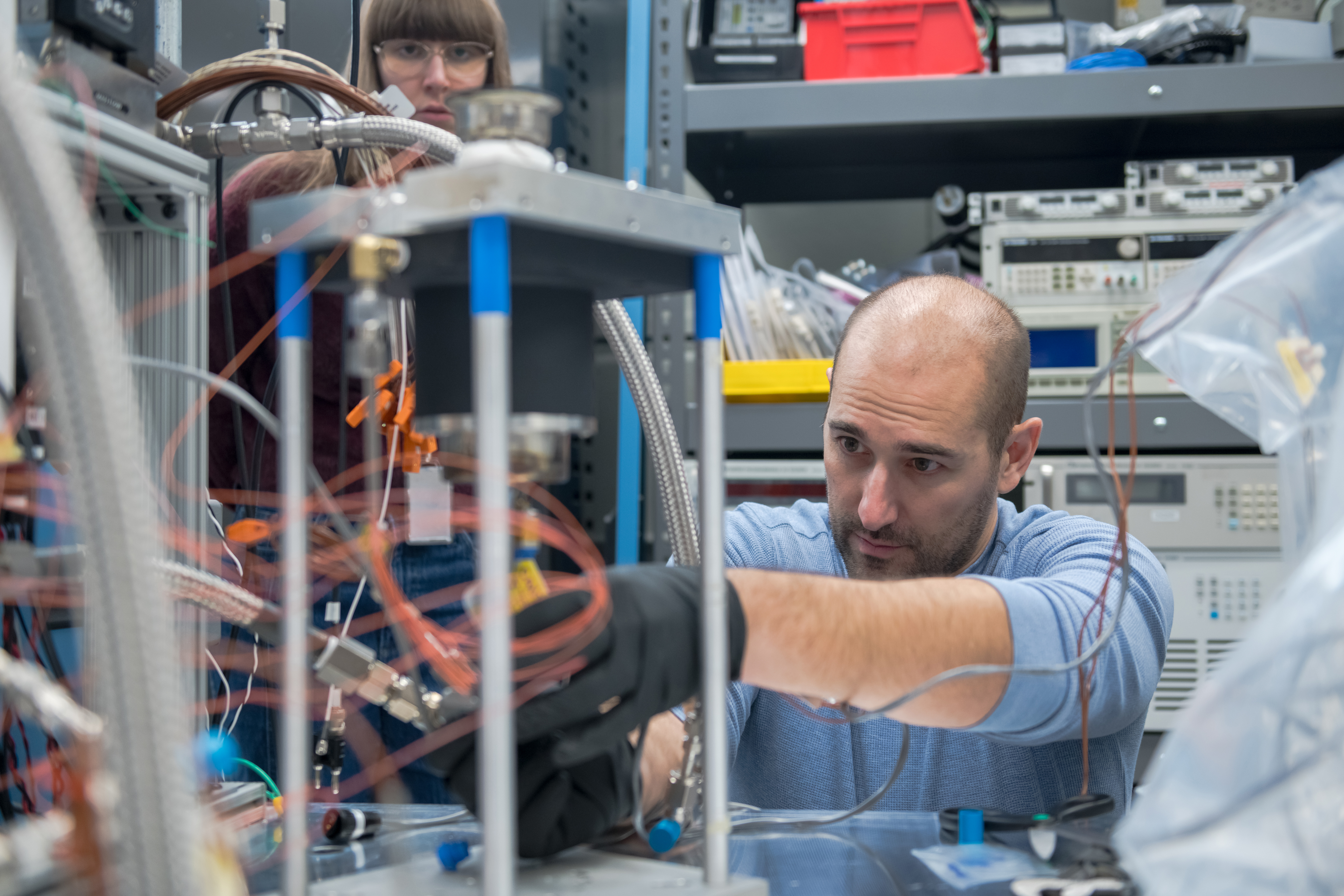
The Stirling Research Lab at Glenn facilitated the testing by providing the test station, Stirling convertor hardware, and necessary support equipment. Hannah Sargeant, a research fellow at the University of Leicester, highlighted a noteworthy feature of the testbed design. "A particular highlight of this design is that it is capable of withstanding a failed Stirling convertor without a loss of electrical power," she noted. This capability was successfully demonstrated during the test campaign, underscoring the robustness and reliability of an Americium-Radioisotope Stirling Generator for potential future spaceflight missions. Such a feature is particularly advantageous for long-duration missions that could last several decades.
Promising Test Results and Future Prospects
The tests conducted have proven the viability of an americium-fueled Stirling RPS, with performance and efficiency targets being successfully met. Looking ahead, the team at NASA’s Glenn Research Center is focused on developing the next iteration of the testbed. This new version aims to be lower in mass, higher in fidelity, and subjected to more extensive environmental testing.
Reflecting on the test outcomes, Oriti expressed his satisfaction, "I was very pleased with how smoothly everything went. Usually in my experience, you don’t accomplish everything you set out to, but we did that and more." The team is committed to maintaining this level of success in future endeavors.
The Broader Implications of Americium-241 RPS
The successful testing of americium-241 as a fuel source for RPS has significant implications for the future of space exploration. As missions venture further into deep space, the demand for reliable and efficient power sources becomes increasingly critical. The potential to use americium-241, in addition to plutonium-238, offers NASA and other space agencies greater flexibility in designing and executing these missions.
Moreover, the development of innovative technologies like the Stirling convertor opens up new possibilities for extending mission durations and exploring more distant and challenging environments. As we continue to push the boundaries of our understanding of the universe, advancements in power generation technologies will play a pivotal role in enabling these ambitious endeavors.
In conclusion, the collaborative efforts between NASA and the University of Leicester mark a significant milestone in the exploration of alternative power sources for space missions. The successful testing of americium-241 as a potential fuel source for RPS not only enhances the prospects for future deep-space exploration but also underscores the importance of international collaboration in advancing the frontiers of space science and technology. As we look to the future, the continued development and refinement of such technologies will be essential in unlocking the mysteries of the cosmos and expanding our reach beyond the confines of our planet.
For more Information, Refer to this article.