



















NASA’s Quest to Enhance Supersonic Parachutes for Mars Missions
The mysteries of space exploration often require innovative solutions and thorough research to ensure success. NASA is actively engaged in such an endeavor, focusing on developing advanced technologies to improve supersonic parachutes. These parachutes play a crucial role in delivering scientific instruments and payloads safely to the Martian surface. In a series of meticulously planned research flights, NASA’s dedicated team is gathering vital data to enhance the reliability and safety of these parachutes, paving the way for future Mars missions.
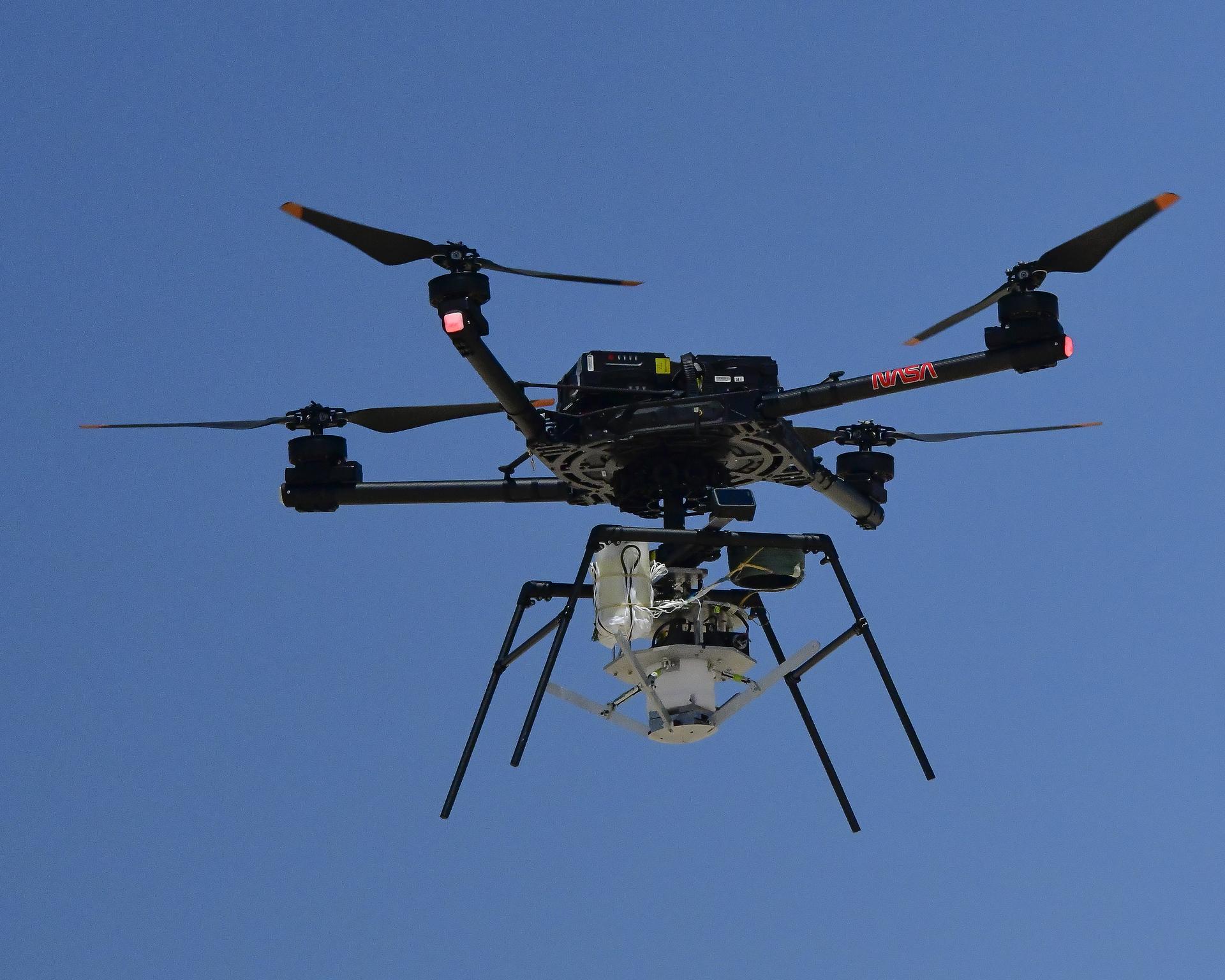
At the forefront of this research is the EPIC (Enhancing Parachutes by Instrumenting the Canopy) team, operating out of NASA’s Armstrong Flight Research Center in Edwards, California. This team is diligently working to refine parachute technology through innovative experimentation. During a significant flight test conducted in June, a quadrotor aircraft, commonly known as a drone, played a pivotal role. It successfully launched a capsule equipped with a parachute, which in turn carried a sensor designed to collect crucial data. Notably, this strain-measuring sensor was ingeniously designed to be flexible, ensuring it did not interfere with the parachute’s canopy material, a key prediction made by the EPIC team. The data collected from these sensors is invaluable, serving as a foundation for refining future test plans.
Matt Kearns, the EPIC project manager at NASA Armstrong, emphasized the importance of these research flights in shaping the project’s future direction. “Reviewing the research flights will help inform our next steps,” Kearns stated. The team is actively engaging with potential collaborators to establish a comprehensive framework for data acquisition. This collaborative approach aims to harness the expertise of various stakeholders interested in advancing parachute technology. Additionally, team members are diligently working on developing methods for temperature testing of the flexible sensors, conducting data analysis, and exploring innovative instrumentation techniques for upcoming tests.
The flight tests conducted by the EPIC team mark a significant milestone in addressing the existing gaps in computer models for supersonic parachutes. By refining these models, NASA aims to enhance the performance and reliability of parachutes used in space missions. This research holds the potential to foster partnerships beyond the aerospace sector, with possibilities extending to industries such as auto racing, where high-speed dynamics and safety are of paramount importance.
The EPIC initiative is part of NASA’s broader efforts under the Space Technology Mission Directorate (STMD), which funds this critical research through its Entry Systems Modeling project. The project is managed at NASA’s Ames Research Center, located in California’s Silicon Valley. In collaboration with NASA’s Langley Research Center in Hampton, Virginia, the capsule and parachute system were meticulously developed. The synergy between NASA Armstrong interns and Langley engineers led to the successful construction and integration of a similar system for testing purposes.
It’s worth noting that an earlier phase of this project focused on identifying commercially available flexible strain sensors and developing a bonding method. This effort was part of an STMD Early Career Initiative project, highlighting NASA’s commitment to fostering innovation and nurturing young talent within the organization.
The Importance of Supersonic Parachutes in Space Missions
Supersonic parachutes are a critical component of space missions, especially when it comes to landing on planets with thin atmospheres like Mars. The thin Martian atmosphere presents unique challenges for landing spacecraft safely. Unlike Earth, where the atmosphere provides significant resistance to slow down descending objects, Mars’ atmosphere is much less dense, requiring advanced technologies to ensure successful landings.
In this context, supersonic parachutes are designed to deploy at high speeds, providing the necessary drag to slow down the spacecraft as it enters the Martian atmosphere. The ability to deploy these parachutes reliably and safely is essential for the success of Mars missions, as it directly impacts the safe delivery of scientific instruments and payloads to the planet’s surface.
Technological Advancements and Future Prospects
The EPIC project’s focus on developing flexible, strain-measuring sensors represents a significant technological advancement in parachute design. These sensors are designed to withstand the harsh conditions of space travel while providing accurate data on parachute performance. By continuously refining these sensors and integrating them into parachute systems, NASA aims to enhance the overall safety and reliability of Mars missions.
Looking ahead, the success of the EPIC project could have far-reaching implications beyond space exploration. The advancements in sensor technology and parachute design may find applications in various industries, including aerospace and automotive sectors. For instance, the knowledge gained from refining supersonic parachutes could contribute to the development of safer and more efficient safety systems for high-speed vehicles on Earth.
Conclusion
NASA’s commitment to advancing supersonic parachute technology underscores the organization’s dedication to pushing the boundaries of space exploration. Through the EPIC project, NASA is not only addressing critical challenges associated with Mars missions but also fostering innovation that could benefit multiple industries on Earth. As the research progresses, the insights gained from these efforts will undoubtedly play a pivotal role in shaping the future of space exploration, ensuring safer and more successful missions to the Red Planet and beyond.
For more detailed information on the EPIC project and its latest developments, you can visit the official NASA website [here](https://www.nasa.gov/centers-and-facilities/armstrong/nasa-parachute-sensor-testing-could-make-epic-mars-landings/).
For more Information, Refer to this article.